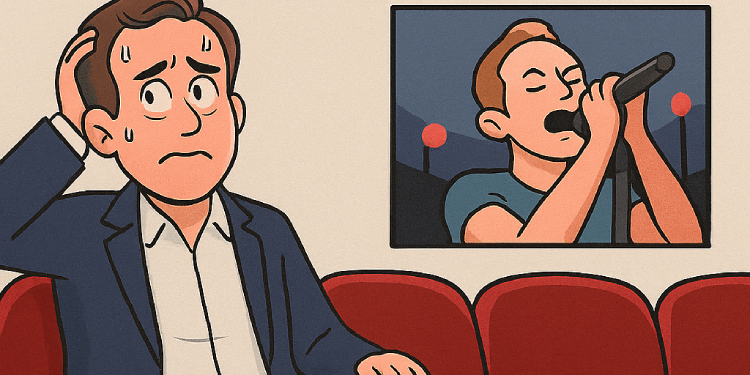
The intersection of personal vulnerability and public scrutiny played out in real time this week, not in a boardroom or on a quarterly earnings call, but under the stage lights at a Coldplay concert. What should have been a fleeting, light-hearted kiss cam moment became a full-blown social media spectacle—placing Andy Byron, CEO of data orchestration firm Astronomer, and his Chief People Officer Kristin Cabot in an unwelcome spotlight.
At the center of it all is Byron’s own candid and measured public statement, released less than 24 hours after the clip began dominating TikTok and Instagram feeds. The tone was not defensive. It was human.
“What was supposed to be a night of music and joy turned into a deeply personal mistake playing out on a very public stage,” Byron wrote.
“I want to sincerely apologize to my wife, my family, and the team at Astronomer. You deserve better from me as a partner, as a father, and as a leader.”
The Coldplay concert in Boston had drawn tens of thousands, but it was the stadium’s jumbotron that arguably attracted the most attention that night. A brief embrace between Byron, who is married, and Cabot, who is recently divorced, was broadcast to the crowd during a kiss cam segment. What followed was an awkward parting, an offhand remark by Chris Martin (“Either they’re having an affair or they’re very shy”), and a viral moment that digital culture seized with familiar ferocity.
It wasn’t long before online observers had identified the pair as executives at Astronomer. Within hours, the video had not only gone viral but also triggered a deluge of speculation, memes, and criticism—none of it confined to the music fandom.
In the era of relentless visibility, the boundaries between private missteps and professional consequences are increasingly porous. Byron’s acknowledgment reflects this uncomfortable truth.
“This is not who I want to be or how I want to represent the company I helped build. I’m taking time to reflect, to take accountability, and to figure out the next steps, personally and professionally,” he said.
But perhaps the most poignant part of his message was a pointed observation on the culture that magnified his mistake:
“I hope we can all think more deeply about the impact of turning someone else’s life into a spectacle.”
It’s a plea for perspective in an attention economy that doesn’t distinguish between accountability and entertainment. When a private misjudgment—however brief—can trend worldwide before a single phone call is made, leaders today are not just navigating reputational risk; they’re grappling with the ethics of exposure.
What makes this incident particularly complex is not just the nature of the moment, but the roles involved. As CEO and Chief People Officer, Byron and Cabot stand at the top of Astronomer’s organizational pyramid. Their conduct, even in informal settings, inevitably invites questions about professionalism and judgement—fairly or not.
To date, Cabot has not released a public statement. Internally, Astronomer has not commented on whether the incident will have formal ramifications. But the incident has already reignited broader conversations in corporate America about executive behavior, company culture, and the increasingly blurred line between the personal and the professional.
Byron closed his statement with a lyric from Coldplay’s Fix You—a rare move for a tech CEO, but one that perhaps signals the emotional toll this episode has taken:
“Lights will guide you home, and ignite your bones, and I will try to fix you.”
It’s hard to say where the dust will settle—whether this moment will mark a turning point in Astronomer’s leadership narrative or become a fleeting chapter in the company’s story. But for now, it stands as a reminder: in today’s business world, crisis doesn’t always come from a failed strategy or market downturn. Sometimes, it comes from a stadium screen, a viral clip, and the unforgiving mirror of the internet.