In a market flooded with choices, Peps Industries has carved a unique space for itself as India’s leading spring mattress brand, combining innovation, comfort, and durability. With a robust pan-India presence and state-of-the-art manufacturing facilities across the country—including its flagship 11-acre industrial campus in Coimbatore—Peps has consistently set benchmarks in quality and consumer satisfaction. At the heart of this success story is a commitment to research-backed design, evident in their patented technologies like Marvelous Middle for spinal support and Zero Disturbance for uninterrupted sleep.
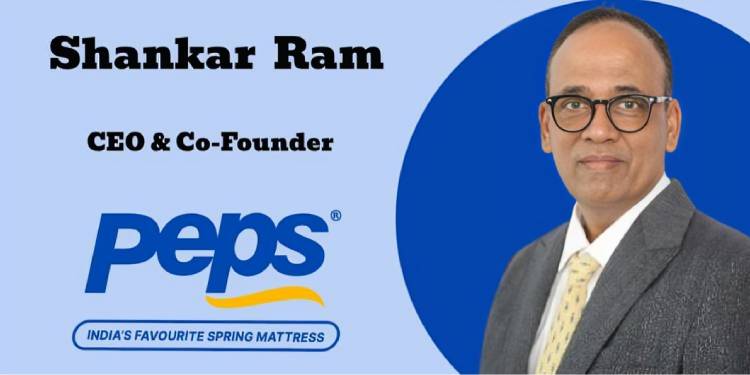
To delve deeper into the brand’s journey, innovations, and future roadmap, MediaNews4U.com caught up with Shankar Ram, Managing Director and Co-founder of Peps Mattress, a veteran with over four decades of manufacturing expertise.
Q. From a marketing perspective, what are the focus areas and goals of Peps Mattress in 2025?
In 2025, our marketing goals are anchored in three strategic priorities: educating the consumer about sleep wellness as spring mattress is a natural progression (cotton to coir or foam to spring mattress), building omnichannel trust, and differentiating through innovation.
We’re not just selling mattresses—we’re selling deeper rest, better posture, and healthier lifestyles. Our focus is to take that conversation beyond metros, into the heart of Tier II and III India, where awareness is still nascent but aspirations are growing.
We’re also investing heavily in digital-first storytelling—content that demystifies mattress choices, explains our innovations in simple terms, and connects emotionally with users at different life stages, whether it’s a young couple setting up their first home, a mid aged couple who is upgrading their mattress as they are moving to their own home or a senior looking for orthopedic comfort.
Q. Will most marketing activities look at driving awareness around sleep quality?
Absolutely. The marketing mandate has moved from “why Peps” to “why sleep quality matters” and we’re using that to redefine category conversations. Poor sleep is linked to everything from mental health issues to chronic lifestyle diseases, yet mattress decisions are often made based on discounts or impulse.
Through content partnerships, expert-led advisories, influencer videos, and interactive quizzes, we’re reframing the mattress not as a furniture item, but as a health investment. Our campaigns aim to shift consumer behaviour from short-term deals to long-term wellbeing.
Q. What are the marketing campaigns and innovations that will be rolled out and are currently ongoing?
In the latest Pocket Spring mattresses’ multilingual TVC series, emphasize the unique features that prioritise individual comfort and durability. With “Marvellous Middle Technology” for central support and “Zero Partner Disturbance” the mattress adjusts to individual body weight and sleeping patterns.
There are other campaigns we will be launching soon to engage with our target audience.
Q. Since sales come from both offline and online, is an omnichannel approach key to marketing?
It’s non-negotiable. For a tactile category like ours, omnichannel isn’t just about presence—it’s about experience continuity. A consumer might start their journey online, visit a dealer to test the product, and then complete the purchase through a marketplace offer.
Our job is to ensure that every touchpoint—be it a dealer demo, website experience, or call center support—speaks the same brand language. We’ve rolled out QR-linked in-store promotions, real-time inventory sync between online and offline, and geo-tagged ad campaigns to bridge the gap.
Q. An opportunity was seen in 2006 in terms of the spring mattress industry being largely untapped. Could you talk about the strategy to grow over the past two decades?
In 2006, India had limited exposure to spring mattresses. We saw that gap and positioned Peps as not just a product but a category pioneer. Our early strategy was built on four pillars:
1. To enhance product trust, we have partnered with Restonic USA for global credibility and standardised our manufacturing to international specs.
2. Great Sleep Stores : PEPS Great Sleep Stores are designed as immersive experience centers, bridging the gap between online Browse and in-store purchasing for mattresses. We allow customers to physically experience and select products in a bedroom-like ambiance. Our stores serve as a crucial contour bridge for multi-brand dealers, enhancing the buying process by showcasing the aesthetics and full range of Peps mattresses and sleep accessories.
3. We are strengthening our retail relationships. We created an exclusive dealer network that could be trained, nurtured, and rewarded—not just stocked.
4. We are working towards full integration: We have constantly upgraded our various manufacturing facilities to control quality, cost, and innovation.
5. Focus on customer education through our campaigns highlighting posture, hygiene, and longevity—creating informed demand.
This combination helped us not only become a leader in the spring market category, but scale, in a market that was deeply price-sensitive and dominated by traditional players.
Q. What is the company’s USP in a very competitive market?
Peps’ USP lies in being the only vertically integrated spring mattress brand in India. We control every step of the process—from wire drawing for springs to final packaging. This allows us to guarantee consistent quality, implement design innovations swiftly, and respond to market demand with agility.
Our springs are designed for longevity, and we use indigenously designed foams that are specifically tailored for Indian conditions. We also utilise 93% biodegradable materials in our products, incorporate health-backed product features like ‘Marvelous Middle’ and ‘Zero Disturbance’, and maintain a robust after-sales ecosystem. We’re not just a product brand—we’re a complete sleep partner.
Q. How has the company’s business model disrupted the market? How is it being fine-tuned?
Our disruption was quiet but deliberate. While others outsourced, we built our own supply chain. While many focussed on price wars, we focussed on category creation. While D2C brands chased performance marketing, we built trust at the dealer level.
Now we’re fine-tuning this model with data-driven forecasting, AI-led inventory planning, and a modular product strategy—where customers can customise features without compromising delivery timelines. We’re blending legacy resilience with new-age responsiveness.
Q. Is the target group NCCS A and B who can afford superior mattresses? Which are the key markets being targeted for growth?
Historically, our core target group has been NCCS A and A+—affluent, health-conscious households, aged 30–55, predominantly in urban centers. But that’s evolving. Thanks to credit options, regional aspirational behavior, and growing awareness, we’re seeing Tier II and III cities show comparable demand.
Markets like Indore, Coimbatore, Bhubaneswar, and Kochi are outperforming traditional metros in year-over-year growth. Our aim now is to adapt communication, distribution, and pricing without diluting value—to serve this new India.
Q. Peps has had to file lawsuits against competitors for copying. Is lack of IP protection an issue in the country?
Yes, it’s a structural issue. Enforcement of intellectual property rights, especially in product design and terminology, remains weak in India. We’ve had to take legal action several times—sometimes against direct copycats who mimicked everything from our naming conventions to packaging colours.
This focus on continuous improvement has led to competitors imitating and blatantly copying our brand and strategy. So much so that Peps has filed over three dozen lawsuits against its competition for copying our innovations and brand elements.
We constantly monitor competitors and fight legally to protect our intellectual property and brand positioning. Our positioning of “waking up energised” is one that Peps has been following for years, and it was so successful that it led to countless competitors copying, imitating, and plagiarizing our approach.
While we do register trademarks and design patents, what truly protects us is our speed of innovation and the trust of our dealer network. That said, we continue to advocate for stricter enforcement mechanisms, especially in emerging categories like sleep tech.
Q. What B2B marketing activities will Peps be doing to strengthen relationships with its dealer network?
Our dealers are our lifeline. In 2025, we’re launching:
● Peps Partner Plus – a loyalty and training app with rewards, updates, and co-branded content
● Regional dealer summits to align on growth plans, new product rollouts, and digital integration
● Geo-specific campaigns co-funded with top dealers, including partnerships with regional influencers
● Exclusive dealer SKUs with localised branding and comprehensive support material
We want our partners to see themselves not just as resellers, but as stakeholders in the Peps ecosystem.
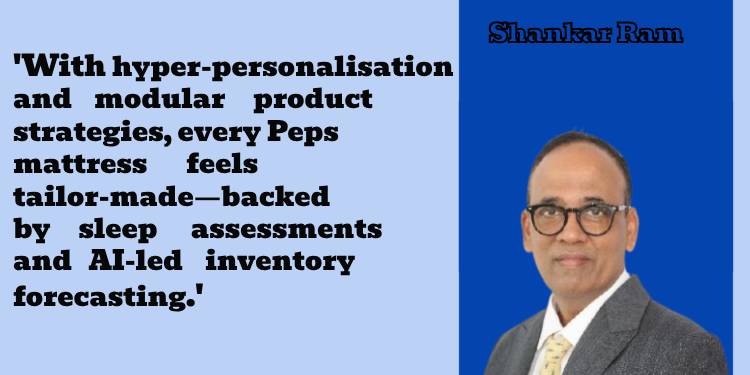
Q. Hyper-personalisation is an important focus area across categories this year. What plans does Peps have in this area?
The end goal is simple: make every Peps customer feel like the product was made just for them. All our stores and SKUs are designed to seamlessly integrate with individual customer needs.
We’re implementing personalized product recommendations based on sleep patterns, body types, and comfort preferences.
Our Great Sleep Stores are equipped with sleep assessment tools that help customers identify their specific requirements, allowing us to recommend the most suitable mattress configuration from our modular product range. This approach ensures that each customer receives a truly customised sleep solution.