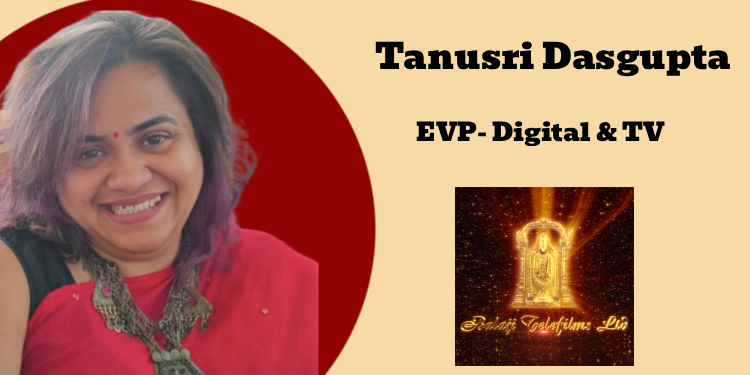
Tanusri Dasgupta currently heads the television division at Balaji Telefilms. With over two decades at the company, she brings insights into how Balaji is evolving its television slate—drawing from its legacy while responding to changing viewer preferences.
MediaNews4U.com caught up with Tanusri Dasgupta EVP- Digital and TV Balaji Telefilms to discuss points like
- The rationale behind reviving flagship shows like Kyunkii Saas Bhi Kabhi Bahu Thi,Bade Achhe Lagte Hain, and Naagin
- Reinterpreting the classic Balaji format for today’s audience
- Balancing legacy storytelling with contemporary themes and character depth
- Embracing finite and seasonal formats for sharper narratives
- Addressing audience fatigue with fresh, grounded writing
- Regional expansion and the role of culturally nuanced storytelling
- Collaborating with broadcasters to reshape weekday primetime
Q. Is linear broadcasting going to still play an important role when it comes to mass entertainment despite the rise of OTT platforms?
Yes, absolutely. While OTT has changed the way some urban audiences consume content, there is still a large part of India that watches television daily. Television remains the primary form of escapist entertainment for millions. The idea that TV is dying has been discussed for years, but that shift isn’t happening anytime soon.
Appointment viewing may be on the decline, but audiences are still coming back to watch the same content on platforms like JioHotstar and Z5. That tells us there is a need to find ways to converge these experiences. It’s also important to note that it’s the television universe that has evolved—not the storytelling. The emotional connect, loyalty, and familiarity TV offers still hold strong, especially in Bharat.
Q. What is the rationale behind reviving flagship shows like ‘Kyunki Saas Bhi Kabhi Bahu Thi’, ‘Bade Achhe Lagte Hain’ and ‘Naagin’?
These shows are brands in themselves. Reviving them is part nostalgia, but also very much about today’s audiences. Kyunki Saas Bhi Kabhi Bahu Thi represents a family emotion. It’s era-agnostic. Ekta Kapoor always wanted to give it a “goodbye chapter.”
Similarly, ‘Bade Achhe Lagte Hain’ has always had a thematic soul across its versions. If we can mix nostalgia with relevant storytelling, then we’re offering something truly special to audiences who’ve grown up with these shows and to those discovering them afresh.
Q. What is the appetite for soaps today compared with 2001?
The appetite still exists, but the storytelling has evolved. Families remain at the heart of Indian viewership, but audiences now expect more layered narratives.
Appointment viewing may be declining in metros, but relatable family-based storytelling continues to resonate. Our job is to find fresh ways to present familiar conflicts, and if it connects, audiences lead the way.
Q. How is Balaji collaborating with broadcasters to reshape weekday primetime? Has the definition of weekday primetime changed compared to a decade ago?
Broadcaster partnerships are now more collaborative than ever. There’s active involvement in shaping narratives based on data and audience insights. The definition of primetime hasn’t changed drastically, but the stakes have.
With fragmented viewership, the pitch must be clear. Why would someone watch this today? Our disruptor is always the story, and if the emotional core is strong, audiences stay, regardless of time slots or platforms.
Q. How are the storylines being adapted given the tastes of Gen Z?
While my experience is rooted in television, we’re always finding new ways to innovate within the world we create for our viewers. TV continues to reflect societal realities. Gen Z might consume content differently, but they still connect with emotionally rooted characters.
Our effort is to retain the core of legacy storytelling while simplifying plots to add freshness, drama, and realism. That’s exactly the approach we’ve taken with ‘Kyunki Saas Bhi Kabhi Bahu Thi’ as it returns for today’s audience.
Q. How does the company balance legacy storytelling with contemporary themes and character depth?
Our shows are grounded in mass reality. We build characters that reflect real life while giving them aspirational arcs. That balance between the relatable and the larger-than-life is what defines Balaji’s content.
Women are our primary audience, and we focus on stories that speak to their daily struggles, triumphs, and emotions while evolving the storytelling to stay current. Kyunki Saas Bhi Kabhi Bahu Thi set the tone for this kind of narrative long ago and continues to inspire how we build stories even today.
Q. What role is AI playing in helping to reinterpret the classic Balaji format for today’s audiences?
We’re experimenting with AI, especially through a new short-form app that includes AI-generated shows. While AI tools are helping us explore new ideas and formats, we still believe that storytelling is a deeply human and emotional process. AI can support us, but it’s the human touch that drives our content.
Q. Could you shed light on what works for TV versus OTT? What are the differences in nuance?
TV and OTT serve different viewing patterns. OTT is about instant gratification and bingeing, whereas television builds a slow, emotional investment.
Weekly television thrives on anticipation. The audience waits to see what happens to characters they’ve grown with. On TV, it’s not just a story, it’s a part of daily life.
Q. How does Balaji address the challenge of audience fatigue with fresh, grounded writing?
Yes, saturation exists, especially when formats repeat. But family dramas remain universal. We constantly try to present familiar family dynamics through new lenses. The idea is to retain the emotional core while evolving the presentation.
Social media also helps us stay interactive. Audiences today give feedback in real-time, and sometimes that helps us navigate fatigue with renewed direction. ‘Kyunki Saas Bhi Kabhi Bahu Thi’ returning now, in a limited format, is a perfect example of that evolution.
Q. Could you talk about regional expansion plans and the role of culturally nuanced storytelling?
Regional markets are a key focus. We’ve already worked in South Indian and Marathi markets and want to do more. These audiences demand authenticity.
When storytelling is deeply rooted in regional culture, the connection is immediate. Many Hindi GEC shows are adaptations of successful regional hits. It’s about staying true to the culture while localising the core narrative.
Q. What role is data analytics playing in helping the company exploit viewer gaps?
Broadcasters now share research and data that help shape storytelling decisions. This partnership ensures we’re in sync with fragmented and evolving audience behaviours.
Data helps give perspective, but ultimately, if a character connects, the audience stays. That emotional connection is what drives us, and it’s exactly what we hope to recreate with every show.