Parnika India manufactures and exports women’s ethnic wear. It was established in 1984 and is primarily based in Surat. Their mission is to serve diverse communities across India while empowering the new generation through entrepreneurship.
With the vision to create a seamless channel from manufacturing to retail, Parnika India says that it ensures quality and innovation at every stage. Parnika India with 40+ years of experience and expertise, is a trusted brand with more than 150000+ customers and exports to over 68+ countries.
Operating on a B2B model the company is still bootstrapped, their production capacity is 500000+ pieces per month. With these figures, Parnika’s current annual revenue is Rs. 70 crores and they are aiming for Rs. 100 crores for FY 24-25.
Medianews4u.com caught with Parnika India MD Vishal Pacheriwal
Q. Parnika says that it is targetting Rs. 160 crores revenue by the end of the next fiscal. Could you talk about the strategy to get there?
We’re stepping into new segments like kidswear, festive casuals, and premium occasion wear, while strengthening our existing core categories.
Alongside, we are actively reaching out to new audiences and encouraging them to start their own textile businesses with our support. This dual focus—expanding our product lines and enabling new entrepreneurs—will not only help us achieve our revenue goal but also create a stronger ecosystem around Parnika.
Q. The company is eyeing deeper penetration in the US, Canada, and Southeast Asia. What does this entail? How is ethnic wear perceived overseas compared with India?
We already have a strong customer base in these countries, and the response has been phenomenal.
The Indian diaspora has a deep emotional connection with ethnic wear, and now we’re seeing a trend where local populations in these markets are also embracing it—especially during cultural events like Diwali parties and multicultural festivals.
Our plan is to expand distribution, invest in localised marketing, and introduce collections tailored to both Indian and non-Indian customers overseas.
Q. In India which are the key markets and TGs being targeted for growth? What is data analytics telling the company?
In India, our strongest growth is coming from Tier Two and Tier Three cities, where the appetite for affordable-yet-premium ethnic wear is rising sharply.
Data analytics shows that younger customers in these markets—particularly between the ages of 22–35—are driving purchase decisions for weddings, festivals, and community events.
We’re also seeing repeat orders coming from small retailers and boutique owners, which validates our B2B focus.
Q. The company is still 100% bootstrapped. What have been the challenges faced in scaling without external funding? Will the company be looking at a fundraise through VCs or an IPO at some point?
We’ve grown steadily without external funding by reinvesting our profits into the business. The biggest challenge is balancing aggressive expansion with financial discipline.
While many brands look to VCs for rapid scaling, we prefer the independence and control that bootstrapping provides. For now, we’re not considering any fundraising.
Q. From a marketing perspective, what are the focus areas and priorities in the coming two years? Are B2C and B2B marketing going to be equally important?
Absolutely. Both B2C and B2B will be equally important for us. For B2C, we’re focussing on community-building and direct engagement, while for B2B, our priority is enabling entrepreneurs, wholesalers, and boutique owners with tailored solutions, catalogues, and training.
Q. Could you talk about campaigns and innovations being done as we head into the festive season? What tactics will be used to stand out at a time when everybody is shouting?
This festive season, our campaign theme is “From Our Loom to Your Celebration”—emphasising craftsmanship and authenticity.
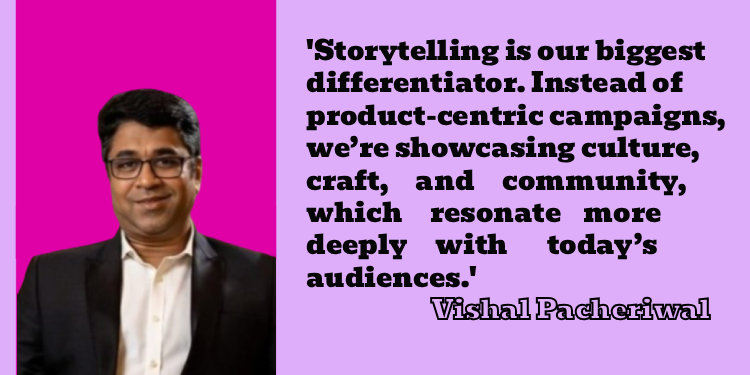
We’re mixing digital-first strategies with high-touch experiences: virtual showrooms, regional influencer collaborations, and hyper-local pop-ups in Tier Two cities. The key is storytelling—sharing real stories of artisans and customers instead of just product shots.
Q. How important are influencer marketing and word of mouth for Parnika?
They’re critical. Word of mouth has been our foundation for over 40 years—our loyal customers are our best ambassadors. Influencer marketing now helps us amplify that same trust on digital platforms, especially among Gen Z and millennial buyers.
We choose influencers who genuinely love ethnic wear, not just those with large followings.
Q. Could you talk about the company’s strategy to use social media platforms like Instagram to engage consumers and stakeholders and build a community?
Instagram is our digital showroom. We’re using it not just to showcase products, but to create a community space—sharing styling tips, behind-the-scenes content, customer stories, and even small business advice for our B2B audience. Engagement is more important to us than just follower count.
Q. The company says that it has a loyal customer base of 150,000+. What marketing tactics are used to build loyalty and get repeat business? Is on-ground marketing like roadshows important in this regard?
Loyalty comes from trust and consistent quality. We keep our customers engaged through personalised WhatsApp updates, early-access product launches, and special previews for our top clients. Roadshows are also a big part of our strategy—they help us connect directly with buyers, especially in smaller towns.
Q. Is CSR a key cornerstone of the company’s marketing initiatives? Sometimes companies just do it because it is mandatory to spend two percent of the topline.
For us, CSR is not a tick-box activity—it’s deeply integrated into our brand ethos. Through Saksham, our CSR wing, we support skill development for underprivileged women, provide school uniforms for children in need, and invest in sustainability in textiles. It’s about giving back to the communities that have helped us grow.
Q. Hyper-personalisation is an important focus area across categories. What are Parnika’s plans in this regard?
We are leveraging customer data to offer personalized recommendations, curated collections based on previous purchases, and custom tailoring options for select lines. For B2B, we offer customised catalog designs to suit their market needs.
Q. The company is over 40 years old. Is it doing branding innovations to make itself more relevant to Gen Z? Is the way in which Gen Z perceives ethnic wear different from other TGs?
Yes, Gen Z looks at ethnic wear differently—they want tradition with a twist. We’re innovating with contemporary cuts, lighter fabrics, and versatile designs that can be worn across occasions.
Our branding now uses digital storytelling, reels, and collaborations with young creators to make ethnic wear aspirational yet relatable.
Q. How is Parnika leveraging AI in areas like Gen AI, Agentic AI, AI chatbots?
We’re in the early stages but moving fast—AI is helping us analyse buying patterns, predict demand, and even create digital mock-ups of designs before sampling.
AI chatbots are already being tested for instant customer support and catalog sharing on WhatsApp.
Q. What role is predictive analytics playing in the area of creating trend-forward designs?
Predictive analytics is helping us understand what fabrics, colors, and patterns will trend months in advance—based on both global fashion data and regional sales patterns.
This allows our design team to stay ahead of the curve while still keeping our signature Parnika touch.