SocialTweebs is a data-driven, end-to-end influencer marketing agency that helps brands optimise 20%–50% of their influencer marketing spends. By leveraging advanced analytics and audience intelligence, SocialTweebs empowers marketers to identify the right creators, streamline execution, and measure impact with precision.
With capabilities spanning influencer discovery, campaign management, ROI benchmarking, and post-campaign insights, the agency ensures every collaboration is cost-efficient and outcome-driven. Positioned at the intersection of creativity and performance, SocialTweebs is redefining how brands engage with audiences in the evolving creator economy.
Medianews4u.com caught up with Fauzan Abdul Rahim, Founder SocialTweebs
Q. What trends are being seen in the influencer marketing landscape in 2025 and how is SocialTweebs leveraging these trends?
Influencer marketing has matured. Few years back, it was a nice-to-have experiment. Today, it is on boardroom agendas because creators are driving actual purchase decisions. The shift is clear: brands are betting on micro-communities instead of just celebrities, AI is changing how we select creators by focussing on quality over quantity, and commerce-first content is becoming the bridge between inspiration and purchase.
At SocialTweebs, our Tweeb Tool maps these conversations to show brands where real influence is happening. That’s how we ensure every rupee goes to influencers who don’t just create noise but actually move business outcomes.
 Q. What is the festive season looking like for SocialTweebs? What tactics will it use to ensure that the clients’ messages standout at a time when everybody will be shouting?
Festive season is the Super Bowl of Indian marketing. It drives a third of annual sales but also creates unbearable clutter. Most brands go wrong by treating influencers like rented billboards.
Our approach is sharper: build cultural story arcs around gifting and family rituals, use a tiered mix of creators for trust, reach, and commerce, and activate content across reels, podcasts, and live shopping.
We’ve designed a Festive Content System with pre-festive priming, peak urgency campaigns, and post-festive loyalty pushes. The goal is not to shout louder but to be culturally relevant so brands become part of the festive conversation.
Q. Having said that is an always on approach to influencer marketing better than festive boosts in categories like wellness? which approach drives a better impact?
Wellness doesn’t sell in bursts; it sells on trust. Habits take time to form, which is why always-on advocacy is critical in this category. But festive triggers like New Year resolutions or Diwali health pushes can accelerate adoption.
The right model is a hybrid: always-on to build credibility and festive bursts to convert. We’ve run this approach and seen ROI double compared to brands that only show up seasonally.
Q. Today clients expect influencer marketing to drive ROI. Mere engagement is not enough. How is this changing the dynamics for SocialTweebs? Is SocialTweebs linking remuneration to business outcomes driven for clients?
This is the biggest shift I’ve seen. Earlier, clients were happy with likes and comments. Today, those are hygiene. ROI is the only metric that matters.
At SocialTweebs, we’ve moved to outcome-linked models where part of our fee is tied to installs, coupon redemptions, or leads. We track everything through affiliate codes and geo-attribution. For us, a reel that trends but doesn’t sell is irrelevant. Our north star is business impact.
 Q. What role is data analytics playing for SocialTweebs in exploring market gaps? Where is the whitespace for growth for SocialTweebs?
In influencer marketing, intuition without data is just expensive guesswork. Data shows us where brands are wasting money and where they can unlock growth.
At SocialTweebs, we use AI-driven scans of creator conversations to build quarterly opportunity maps that guide smarter deployment of budgets. For instance, if a brand is spending a few lakhs, we analyze audience overlap across their influencer mix and re-engineer it so every creator adds unique reach instead of duplicating the same followers. We also identify growth-stage creators who have shot up by 50 percent or more in the last three months, allowing brands to ride their momentum early before costs spike.
And while many brands over-invest in saturated metro influencers, we uncover whitespace in tier-2 and tier-3 creators where competition is low but buying power is rising. This approach ensures brands aren’t just running campaigns, they’re getting ahead of the curve and investing where influence is truly compounding.
Q. How can a data-driven approach reshape how brands discover, vet, and collaborate with influencers?
Picking creators on gut feel or follower count is outdated. Fraud is rampant and audiences are fragmented. A data-led approach means we can verify authenticity, predict which formats a creator performs best in, and ensure brand safety.
Our Tweeb Tool checks growth anomalies, audience sentiment, and overlap to make sure clients don’t waste money on inflated or duplicate reach. The end result is fewer mistakes and higher ROI.
Q. Could you offer recent examples of work done with brands and creators that stands out? How important is it for brands to position themselves within meaningful narratives?
In influencer marketing, intuition without data is just expensive guesswork. Data shows us where brands are wasting money and where they can unlock growth.
At SocialTweebs, we use data-driven approaches to build quarterly opportunity maps that guide smarter deployment of budgets. For example, we recently helped an automotive brand optimise its influencer spend by running an audience overlap analysis.
By replacing overlapping creators with those who delivered fresh reach, we maximised unduplicated audiences and cut wasted impressions. For a leading QSR brand, we leveraged tier-2 creators to support a store launch and tracked performance at the pin-code level, driving actual store footfalls.
And with an FMCG client, we spotted trending creators who had grown over 30 percent in the last three months, helping the brand ride their momentum early before their fees spiked.
These are the kinds of whitespace opportunities that only data can uncover. Our role is not just to execute campaigns but to make sure every rupee is stretched for impact and invested where influence is compounding fastest.
Q. Which are the key categories that SocialTweebs works with?
Influencer marketing delivers the deepest impact in categories where trust, peer validation, and cultural relevance shape consumer choices. Over the last few years, we’ve built strong expertise across technology and handsets, automotive, FMCG, beauty and wellness, QSR and food, BFSI, and lifestyle or D2C.
In technology, launches depend on credible reviews and community buzz; in automotive, influencer-led test drives and lifestyle storytelling build aspiration; in FMCG, everyday creators drive mass familiarity and trial; in beauty and wellness, authenticity and relatability shape purchase intent; in QSR, influencers drive both cultural relevance and footfalls; in BFSI and services, creators simplify complex narratives and build literacy; while in lifestyle and D2C, influencer commerce links storytelling directly to sales.
What sets SocialTweebs apart is that we don’t apply a one-size-fits-all lens. We have developed category-specific playbooks, curated creator pools, and tailored measurement models to ensure that brands don’t just participate in trends but consistently create conversations that convert.
 Q. Recently someone put out a point of view that influencer marketing ignores the silent consumers. These consumers do not like posts, put up messages. They just scroll through in a focussed manner and they have money to spend. Often people who like posts, write messages don’t have money. So brands who use influencer marketing often wonder where the consumers are after seeing a lot of engagement with posts. Therefore forward looking marketers are looking at alternative marketing vehicles. Your views on this? Does influencer marketing ignore silent consumers?
Silent consumers are not only real, they are the majority. On Instagram, most people consume content by watching reels, swiping through stories, or scrolling feeds without leaving a like or comment.
On YouTube, audience retention and watch-time consistently prove that viewers can stay with a brand message without ever engaging visibly. These silent scrollers often carry higher purchase power, making them even more valuable.
At SocialTweebs, we look beyond surface engagement and track branding signals such as impressions, reach, video views, story completion rates, and audience retention to understand how deeply content is being consumed.
This ensures that the silent audience is not just acknowledged but placed at the center of how we measure influence. Visible likes and comments may be easy to count, but true brand impact lies in the audiences who quietly watch, remember, and build affinity over time.
Q. How does The Tweeb Tool combat the challenge of fake followers and fraudulent engagement by diving deeper than just surface-level engagement statistics?
Fake followers and inflated engagement waste brand money, which is why vanity metrics alone aren’t enough. Our Tweeb Tool solves this with a three-layer filter. First, it checks credibility by scoring followers and flagging suspicious accounts versus real ones.
Second, it validates audience quality by analysing reachability, interests, brand affinities, and location down to the city level. Third, it measures engagement authenticity by comparing real engagers against bots or non-relevant audiences. This layered vetting ensures every influencer we recommend has an audience that is credible, relevant, and capable of driving real brand impac
Q. Are better measurement tools needed to help brands and agencies make informed decisions about influencer partnership?
Yes. Measurement is still the weak link in influencer marketing, and vanity numbers like likes and comments don’t reflect true brand impact. Brands need tools that provide visibility into audience quality so partnerships are not judged on just popularity.
The future lies in platforms that support the full journey, from discovering the right influencers and curating credible lists, to deep-diving into audience insights, monitoring competition, tracking campaigns in real time, and finally measuring outcomes with transparency. Only then can influencer marketing be held to the same standard as other mainstream channel
Q. Is regulation and guidelines around influencer marketing strong enough for categories like BFSI?
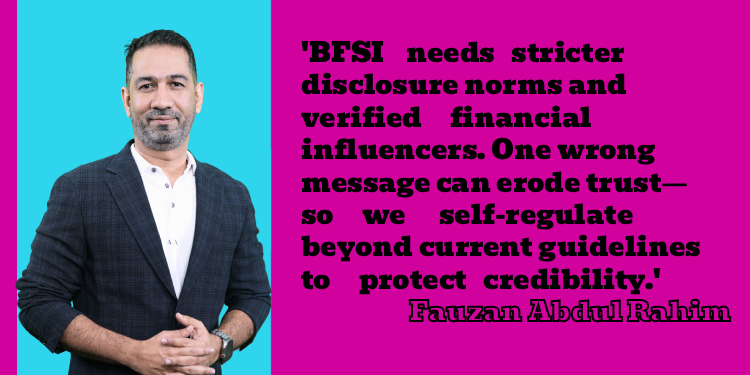
Not yet. BFSI is a trust-sensitive sector where misinformation can harm consumers. Current guidelines are not strong enough. We need stricter disclosures, mandatory disclaimers, and better vetting of financial influencers.
At SocialTweebs, we self-regulate well beyond what’s required because in BFSI, one wrong message can undo years of trust.
 Q. How did the partnership with AfterMath Ventures come about? What is the potential of gamers in influencer marketing?
Gaming is no longer a niche in India. With over 500 million gamers, it is now mainstream culture. Gamers are deeply influential and their audiences are highly engaged and commerce-ready.
We saw this early and partnered with AfterMath Ventures to build authentic brand entry points into gaming. We’re co-creating IPs, tournaments, and squads that let brands connect naturally with these communities.
Gaming is the next big cultural economy in India, and brands that miss it will be playing catch-up.