Skål International, founded in 1934, is the world’s largest tourism network with over 12,000 members in 450+ clubs across 85 countries. It unites professionals from all sectors of tourism—hotels, airlines, travel agencies, tour operators, and tourism boards—under the motto “Doing Business Among Friends.”
Skål promotes trusted partnerships, responsible tourism, and sustainability. It partners with major global bodies like the UNWTO, WTTC, and PATA.
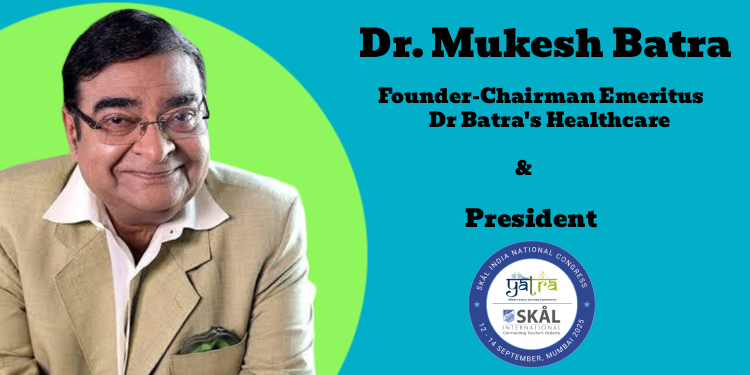
MediaNews4U.com caught up with Dr. Mukesh Batra, President of Skål International Mumbai South Division and Founder-Chairman Emeritus, Dr Batra’s Healthcare
Q. In advance of the festive season—what are tourism boards doing to woo Indians?
India is no longer a side market; we’re the priority. Travel boards around the globe now view India as one of their fastest-expanding source markets, and they’re adapting their plans accordingly.
Visa availability is a crucial enabler for Indian passport holders. Several tourism-driven economies such as Thailand, Vietnam and Sri Lanka have liberalised visa-free entry, offering 60-day visits, with bigger nations like Japan also hopping onto the trend to provide free domestic tickets to attract more tourist.
The campaigns are going India-specific as well, with Saudi Tourism Authority rolled out its very first Indian campaign, Spectacular Saudi, on the heels of welcoming 1.6 million Indians and aiming at 7.5 million by 2030.
Meanwhile, boards are conducting roadshows in metros such as Mumbai, Delhi, Bangalore, and even Tier-2 cities for augmenting closer trade relationships.
What’s fascinating is the way they are experimenting with cultural attraction, Bollywood product placements such as Yas Island with Ranveer Singh, AR/VR experiences in malls and airports, and language-storytelling specific to a region.
With itineraries tailored to Indians wants, vegetarian cuisine, shopping, family entertainment, and festival packages, boards are blending functionality and value for the India tourist with creativity and intent.
 Q. Could you talk about the effectiveness of Bollywood Stars in promoting destinations?
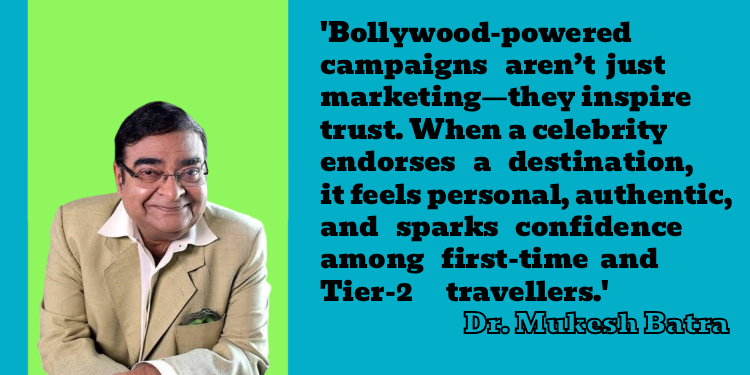
Celebrity destination marketing campaigns do more than just raise awareness, they create a desire and then fulfill it. The sight of a Ranveer Singh or a Katrina Kaif advertising a destination does not feel like a marketing campaign.
It feels like a genuine suggestion. It serves as a confidence booster to first time travellers, that if their favourite celebrity is endorsing a destination, it must be worth to check it out.
The influence is not limited to TV commercials. These personalities have a social media following of millions, directly bringing the destination to their fans Instantly on Instagram, YouTube, and reels.
It is a great tactic to target new travellers, or those located in tier two and tier three cities.
Q. Why does India lag behind iconic cities like Venice/Barcelona/Paris which attract tens of millions of tourists each year? What should government do?
India has unparalleled cultural depth, natural diversity, and heritage but not what Paris, Venice, or Barcelona possess in terms of global tourist destinations due to a significant structural deficit.
Our tourist infrastructure needs to be scaled-up with branded hotel rooms, quality accommodation, and a night economy to entertain tourists beyond sightseeing.
Connectivity is a challenge too. While Indian airports are upgrading fast and offer state-of-the-art facilities, last-mile connectivity and public transport stall behind. Foreigners traveling metros like Delhi and Mumbai are stuck in bottlenecks, due to poor roadways.
Put this together with dearth in hospitality and disjointed city branding, as compared to Paris: The City of Love, or Venice: The City of Canals, our cities still lack differentiated global identities.
A national tourism mission is the need of the hour. India ranks 39 on the WEF’s 2024 Travel & Tourism Development Index, having the richest heritage in the world. We require investment in city tourism infrastructure, single-window clearance for nights and events, world-class hospitality schools, and most crucially, targetted branding.
Q. What is Mumbai’s role as a global gateway for inbound travel, investment and hospitality innovation?
Mumbai isn’t only India’s financial hub, it’s the gateway to the world for India. More than 54 million visitors went through Chhatrapati Shivaji Maharaj International Airport last year. This along with capital Delhi bring in more than 57% of foreign tourists in India.
It’s also India’s top international tourist destination with more than 3.39 million in 2023. For most, Mumbai is their first impression of India, Bollywood starlight, colonial heritage, vibrant bazaars, or high-end hospitality.
It’s also a trial ground for international hotel chains with most brands setting up their base here before expanding nationally. And with its financial, film, and fashion sectors, Mumbai is a MICE business and foreign investment destination as well. The convention centre, cruise tourism, and luxury developments are also strengthening its position as the nation’s tourism innovation hub.
Q. How can brands (luxury, lifestyle, wellness, hospitality, aviation, F&B) use tourism as a growth + storytelling platform?
Modern tourism is not just location-based; it’s an excellent storytelling territory for luxury, wellness, aviation, and even F&B brands. Consider Louis Vuitton Venice pop-ups, or wellness brands constructing retreats in Kerala or Bali, those are getting woven into the travel story.
Airlines are making safety videos brand spectacles, hotels chef residencies and fashion partnerships. Singaporean hawker food is a great example of how restaurants are packaging culinary tourism into city experiences. The cleverest brands are co-creating: a jeweller + a palace hotel + craft cluster can all sell Indian heritage luxury together.
Dubai is another textbook case. Its round-the-clock event-based promotions, from shopping shows to art fairs, have turned it into a lifestyle destination. That is the promise of Indian brands: tourism as an emotional experience, not a transaction.
 Q. How is experiential marketing redefining touchpoints?
The age of the glossy brochure days is long gone. Now, the traveller must experience a destination before they buy it. And that’s where experiential marketing steps in, putting the development of emotional hooks at every point of contact first.
We are experiencing AR/VR activations in airports and malls that allow the ‘try before they fly’ experience, influencer-driven reels of real-life experiences, and even shoppable ads where a QR code brings the itinerary to it.
On the ground, you have mall pop-ups like the Dubai Mall or festival affiliations that become destination stands. Post travel, it’s about turning travellers into brand ambassadors by encouraging user-generated content. The idea is straightforward – Tourists no longer purchase packages, they purchase experiences, and marketers must play catch-up.
Q. What Skål International hopes to achieve in the coming years?
Skål has always been Doing Business Among Friends. But as the world’s largest network of tourism professionals, 23,000 members in 87 countries, the aim is to make the network equal parts meaningful, austainable, and digitally interconnected.
That translates to more powerful cross-border business platforms, cleaner processes better attuned to the UN SDGs, and developing the next generation through Young Skål. The Mumbai Congress is just one example the first paperless, fully digital Congress.
The vision is to influence policy discussion on visas, connectivity, and sustainability and provide real business opportunities through B2B marketplaces and global congresses in the future.
Q. Could you shed light on The Congress as launch-pad for alliances, brand collabs, policy talks?
Skål India National Congress Mumbai is not tourism, it’s where business, brand, and policy meet. With more than 200 delegates representing 22 clubs in 6 nations, it’s the biggest Skål Congress India has ever seen. Pre-arranged B2B meetings will hold airlines, hotels, OTAs, tourist boards, and investors, so networking equals real business.
We will also witness brand exhibits in luxury, wellness, aviation, F&B, and technology opening up co-branded experiences in the form of a wellness retreat or fashion-tourism tie-up. Eminent speakers and celebrated personlities like Shashi Tharoor, Maneka Gandhi, Subhash Ghai, and Ambassador Deepak Vohra are attending the event, making it a true forum for policy discussion.
Hosting the event in Mumbai is a strategic call, for the city received 3.39 million foreign tourists last year and keeps redefining India’s tourism story.
Q. Could you talk about tourism’s shift to an experience-driven, value-led economy? Any standout examples
Tourism today has changed from sightseeing to meaning making. Travelers no longer desire sightseeing but wish to cook pasta in Tuscany, experience an anime festival in Tokyo, or embark on a customized wellness retreat in Kerala. It’s immersion, not monuments.
Value is also being redefined. The conversation has gone beyond cheap deals, to access and enrichment. Consider private heritage excursions, sustainability-driven safaris, or customized diagnostics in wellness resorts.
- Japan’s record 233,000 Indian visitors last year attested to this, with 87% independent travellers instead of groups.
- Dubai is another example; it attracted 18.7 million visitors in 2024 with virtually flawless satisfaction, by continuously reinventing through events.
- Italy’s ‘99% Campaign’ is an inspired means of encouraging visitors beyond Venice or Florence to explore off-the-beaten-path attractions, addressing over-tourism and enhancing experiences.
 Q. How campaigns and partnerships shape demand, loyalty, and positioning?
In tourism, no brand stands alone, it’s always a collaboration. A destination campaign sparks aspiration, but partnerships with airlines, banks, and OTAs convert that into bookings. That’s why Dubai Tourism, Emirates, and Visa often co-create campaigns that bundle fares with shopping discounts.
Loyalty is built the same way, through ecosystems of airlines, hotels, and payment networks where repeat travellers get upgrades and recognition.
A destination’s brand is defined by its partner, where luxury labels elevate it, wellness tie-ups add authenticity, and local collaborations show cultural depth. Campaigns and partnerships are what transform destinations into living brands. Prime examples of this is how Spain was repositioned with Zindagi Na Milegi Dobara, or Japan leveraging anime culture.
Q. How is hyper-personalisation redefining India’s outbound travel beyond the metros?
India’s outbound travel story has entered a new chapter. Until a few years ago, it was largely metro-driven with travellers from Mumbai, Delhi, Bangalore visiting Europe and taking Dubai shopping trips. But now, Tier-2 and Tier-3 cities like Surat, Indore, Lucknow, and Coimbatore are fuelling growth. These travellers come with unique needs, habits, and aspirations, and that’s where hyper-personalisation becomes critical.
Travel boards and brands are no longer offering cookie-cutter ‘Europe in 10 days’ packages. Instead, they’re curating journeys around specific interests and regional expectations. For example, faith-based tourism packages for Gujarati families going to Italy or Israel, Ayurveda and yoga retreats for wellness seekers from South India, or cricket-and-shopping tied itineraries for young travellers heading to Australia or the UK.
Language is another big lever. Destinations are now creating Hindi, Tamil, Gujarati, or Bengali campaigns, so travellers feel personally invited. Airlines and OTAs are even experimenting with vernacular apps and EMI options, since affordability is a key factor for Tier-2 travellers.
AI-driven tools are amplifying this further, leveraging browsing histories and following social media cues to recommend customised itineraries or upgrade offers.
With this, every traveller feels seen. For a Mumbai-based HNI, that could be a bespoke luxury wine trail in Bordeaux. For a Surat family, it could be a vegetarian-friendly, shopping-heavy Dubai itinerary. The future of tourism is micro, not mass and hyper-personalisation is the engine powering this shift.
Q. One challenge is over-tourism and Italy’s “99%” campaign looks to address this. What should be the way forward?
Over-tourism is perhaps the single biggest challenge facing global tourism today. Cities like Venice, Barcelona, and Amsterdam are bursting under the weight of visitors. Venice alone sees over 20 million tourists annually for just 50,000 residents. This results in a strain on infrastructure, inflated costs, loss of cultural authenticity, and growing resentment among locals.
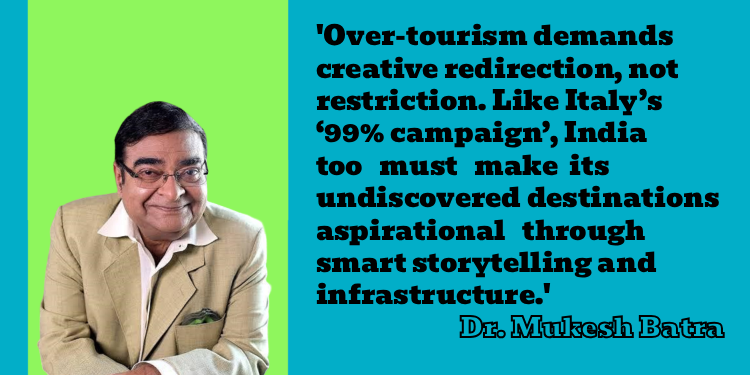
Italy’s response with its ‘99% Campaign’ is one of the most creative and forward-thinking strategies. The campaign reminds travellers that while 1% of Italy (Venice, Florence, Rome) is overcrowded, 99% of the country remains undiscovered. By spotlighting villages, wine regions, coastal escapes, and countryside trails, Italy is dispersing traffic, protecting its icons, and creating fresh aspirational value around offbeat destinations.
Venice has even piloted a day-tripper fee of €5–€10 on peak days. In its first run, the city raised millions of euros to reinvest into maintenance and crowd management. This is not just policy but also behavioural nudging. When tourists pay a premium to visit during rush season, many naturally shift to shoulder seasons or alternative locations.
For India, the lesson is urgent. Destinations like Manali, Shimla, and Goa are beginning to feel the same pinch. A ‘99% India’ campaign could redirect travellers to unexplored gems, redirecting travellers from Shimla to Tirthan Valley, and Goa to discover Gokarna or Varkala.
It requires conscious marketing, infrastructure, and storytelling to make offbeat aspirational. Over-tourism can’t be solved by limits alone. It needs creativity, incentives, and the courage to reposition new destinations as equally desirable.
Q. HNI spend is pivoting to travel. How can Indian brands leverage this white space?
Globally, we’re seeing a clear shift in how High Net Worth Individuals (HNIs) allocate their discretionary spend. The new luxury isn’t jewellery or cars, it’s experiences. For wealthy Indians, travel has become the ultimate status symbol, because it signals access, exclusivity, and enrichment.
Private jet charters for a long weekend in Europe, curated wine trails in France or Tuscany, wellness diagnostics in Kerala, or personalised safaris in Africa. These are no longer niche, they’re fast becoming the default indulgence.
Even destinations are reshaping around this trend: Japan saw a record 233,000 Indian arrivals in 2023, many opting for boutique, immersive itineraries instead of traditional group tours. Dubai’s luxury tourism offerings, from Michelin-star dining to desert glamping, are tailor-made for this segmentand contributed to its 18.7 million arrivals in 2024.
For Indian brands, this is a white space waiting to be owned. Palatial hotels can curate private festivals or royal-themed stays. Wellness brands can go beyond spa menus and offer personalised Ayurveda diagnostics with medical oversight. Designers and jewellers can tie up with luxury destinations to create ‘travel-anchored’ couture or showcase collections at heritage venues. Even aviation and tech brands can play a role, think smart concierge apps or branded private jet services.
The point is: this segment doesn’t want off-the-shelf packages, they want crafted journeys. And every brand that can make their travel more unique, personalised, and culturally rich will become part of their lifestyle. For HNIs today, a story-worthy experience is worth far more than a physical product.
 Q. How is AI transforming tourism marketing (boards → hotels → restaurants)?
AI is fundamentally reshaping how tourism is marketed, from boards to hotels to restaurants. For boards, predictive analytics forecast demand spikes like Diwali or long weekends, while content automation means campaigns can run in multiple Indian languages, reaching beyond metros. Chatbots now answer visa or itinerary queries 24/7.
Hotels use AI for dynamic pricing, upselling late checkouts or spa treatments, and personalising in-room experiences via voice assistants. Restaurants are tailoring menus for vegetarians, Jains, or halal diners while analysing reviews and reservations to refine offerings.
The impact is measurable—Oracle Hospitality’s 2024 report shows 76% of hotel executives believe AI is transforming the industry, with up to a 25% uplift in bookings where personalisation is AI-driven. Fundamentally, AI is helping the industry move from generic marketing to micro-moments of relevance, which is exactly what today’s traveller expects.