In a world where customer expectations are constantly evolving, mere connection is no longer enough—businesses must engage, convert, and retain through intelligent, two-way communication. With India’s CPaaS market poised to hit $121 billion by 2034 (Future Market Insights report), AI-driven, multi-channel engagement is rapidly shifting from an advantage to a necessity.
At the forefront of this shift, Sinch is focussing on redefining customer interactions with AI-powered chatbots, personalised video messaging, and real-time engagement tools. These innovations aim to go beyond enhancing experiences—they drive conversions, reduce churn, and build lasting brand loyalty.
This transformation looks to help enterprises future-proof their customer interactions with advanced automation, real-time analytics, and secure, scalable solutions.
Medianews4u.com caught up with Sunder Madakshira Chief Marketing Officer Sinch India
Q. For the coming two years what goals does Sinch India have in terms of revenue growth, profitability, client roster etc and what is the gameplan to get there?
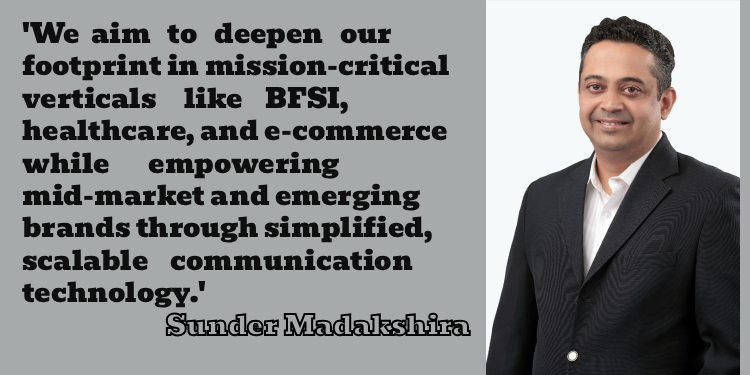
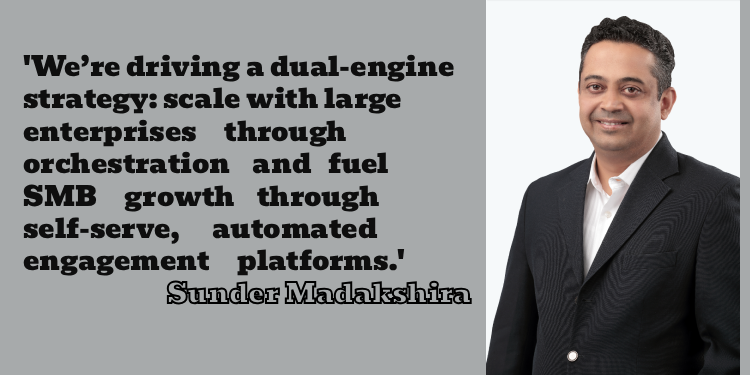
Over the next two years, our north star is to sustain strong double-digit growth while expanding deeper into industries where communication is absolutely mission-critical — banking, healthcare, e-commerce, and consumer services.
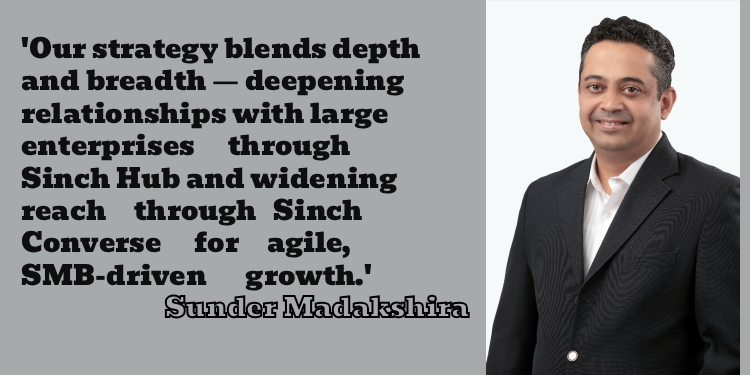
Our approach is two-fold: scale with large enterprises through orchestration platforms like Sinch Hub, while unlocking new growth with Sinch Converse, which empowers SMBs to run sophisticated, multichannel campaigns without heavy infrastructure.
India is at an inflection point: digital-first consumer behavior is accelerating, and brands of all sizes want enterprise-grade capabilities to engage customers at scale. By addressing both ends of this spectrum — large enterprises modernising their engagement stack and SMBs looking for agility — we are positioning ourselves for long-term profitability and a stronger, more diverse client roster.
 Q. How is Sinch leveraging AI and automation in marketing to drive better results for clients?
AI in customer engagement is still in its early chapters, but the momentum is undeniable. At Sinch, our focus is on laying the right foundations — combining AI with our Conversation API to help brands gradually move from transactional alerts to contextual, personalized interactions.
We’re already seeing strong adoption in areas like intent-based segmentation, real-time response automation, and multi-channel orchestration across SMS, WhatsApp, RCS, and email. The real value comes from making AI elastic and contextual — allowing brands to experiment today and scale tomorrow, without losing authenticity.
While the market is just beginning its AI journey, we are enabling clients to take practical first steps that balance automation with human touch. This approach ensures that as adoption matures — and studies show nearly 97% of companies plan to leverage AI in customer engagement by 2025 — our clients are already future-ready, with systems in place that can scale seamlessly.
Q. Could you talk about the amount of R&D that Sinch puts into its products to help clients discover their customers, segment their customer base?
At Sinch India, our philosophy around R&D is very clear: it’s not about scale for the sake of scale, it’s about solving the real, evolving challenges of our customers. Indian enterprises and SMBs are at different stages of digital maturity, and our innovation agenda is shaped by that reality.
This year, we’ve introduced four key products that directly address the demand for sharper customer discovery, segmentation, and engagement:
- Sinch Hub acts as a centralised CPaaS platform, bringing SMS, WhatsApp, RCS, email, voice, and push into one place — with analytics, compliance, and routing designed to improve both performance and cost efficiency.
- Sinch Converse simplifies omnichannel engagement by bringing automation, conversational AI, and in-chat payments into a single, easy-to-use dashboard — making advanced capabilities accessible not just to large enterprises but also to MSMEs.
- Sinch Visuals gives marketers creative freedom by enabling them to personalize images, GIFs, and videos at scale, backed by analytics that drive segmentation and richer engagement.
- DocxComm transforms what were once static documents — statements, onboarding kits, reports — into interactive, trackable assets delivered securely across channels.
The larger narrative is that we are helping Indian businesses move beyond “just sending messages” into building personalized, data-driven journeys. That is the real value of our R&D — not the number of products, but how those innovations empower brands to know their customers better, engage more meaningfully, and ultimately compete more effectively in the digital economy.
 Q. Does Sinch do the bulk of its work during the festive season and how challenging is it to break through the clutter in the festive season where everyone is doing blasts?
Festivities in India are more than just sales windows — they are cultural moments of coming together, celebration, and shared experience. For brands, the real challenge is not simply to be present, but to be relevant in these moments of high emotion and high competition.
That’s why much of the work starts before the festive season. Brands scale up their communication readiness, strengthen their personalization capabilities, and design segmented journeys well in advance. Our role at Sinch is to make sure they are ready at every stage — from building pre-buzz campaigns, to managing real-time spikes, to keeping engagement alive after the festive rush has passed.
Of course, the clutter is real. Everyone is competing for the same eyeballs. But cutting through that noise isn’t about louder messaging, it’s about precision, timing, and context. With tools like dynamic audience segmentation, refreshed creative assets, and smart orchestration across SMS, WhatsApp, email, and RCS, we help brands ensure their messages are not just seen, but felt.
At the end of the day, the festive season is when customers expect the most from their favourite brands — and our job is to help those brands deliver experiences that are timely, personalised, and memorable.
Q. In terms of delivering multichannel campaigns across SMS, WhatsApp, and email could you offer customer use cases across industries like retail, auto, hospitality, travel, telecom?
When we talk about multichannel campaigns across SMS, WhatsApp, and email, the use cases cut across industries like retail, auto, hospitality, travel, and telecom. At the most fundamental level, brands use these channels to build awareness—whether it’s a new product launch in retail, a seasonal offer in hospitality, or service updates in telecom. From there, campaigns evolve to driving consideration, encouraging customers to engage more deeply with the brand rather than just being aware of it.
Once customers begin engaging, enterprises use these platforms to run loyalty programmes, from personalised offers for frequent travelers, to membership rewards in auto and hospitality, to recharge and upgrade incentives in telecom. This naturally leads to repeat purchases, where the simplicity of WhatsApp or SMS allows customers to reorder, renew, or upgrade with just a click. Finally, the true power of multichannel lies in enabling a seamless, end-to-end experience, right from discovery to fulfilment.
For example, a customer might discover a product on WhatsApp or Instagram, place an order directly within the chat, track delivery updates via SMS or email, and even resolve service queries in the same thread.
Across industries, this ability to move from awareness to fulfilment, while building communities and driving repeat engagement, is what makes multichannel campaigns such a powerful tool for brands today.
 Q. WhatsApp has introduced a per message billing model. Will marketers now think twice? Does messaging now have to go beyond a CRM function?
WhatsApp charges per delivered message template, presenting marketers with new cost factors. When messaging costs are more transparent, brands will have to craft genuinely valuable, useful messages that are more than mere CRM notifications.
Campaigns need to achieve measurable engagement and business results, leading to a move toward richer, more interactive messages.
Marketers might analyse cost–benefit more closely, but sophisticated segmentation and automation can maintain return on spend at a high level. Sinch assists customers by providing insights and means for message performance and cost optimisation across channels.
Q. Sinch does a lot of work in the BFSI sector. While this is a serious category has messaging become more creative in this sector?
Absolutely. Traditionally, BFSI has been compliance-heavy, but today it’s moving toward humanised engagement.
We’ve helped banks design personalised onboarding journeys, set up two-way service desks, and run proactive reminders that feel conversational, not transactional. For instance, one leading bank saw a 30% lift in engagement and 12% higher conversions, while a fintech player achieved 5× growth in customer interactions and 13% increase in conversions.
When you blend compliance with creativity — across RCS, WhatsApp, SMS, and voice — messaging stops being a checkbox and becomes a growth driver. These kinds of outcomes are possible when you combine journey mapping with the right mix of channels like RCS, WhatsApp, SMS, email, and voice messaging, delivering contextual, value-driven communication at scale while staying fully compliant.
Q. Why does today’s CMO need a tech-first, insight-led mindset to drive business growth?
The role of CMO has changed more in the last five years than in the last fifty. Today’s customers move fluidly across channels — from WhatsApp to web to email to voice — expecting consistency, speed, and personalization at every step. Marketing is no longer about campaigns; it’s about orchestrating experiences across an interconnected journey.
That’s why CMOs need to be both tech-first and insight-led. Technology provides the scale — the ability to unify channels, automate at speed, and personalise at scale. Insights provide the direction — the intelligence to know which customer, at what moment, and with what message. When you combine the two, marketing moves from being a cost center to a direct driver of growth, loyalty, and revenue impact.
At Sinch, we see this every day, our cloud communications solutions help marketing leaders segment with precision, personalise with relevance, and optimise in real-time — tying engagement directly to business outcomes. But beyond tools, the real mindset shift is this: a modern CMO must act less like a campaign manager and more like a chief experience architect, designing journeys that are scalable, measurable, and above all, human.
 Q. Could you talk about Sinch’s upcoming campaigns and innovations?
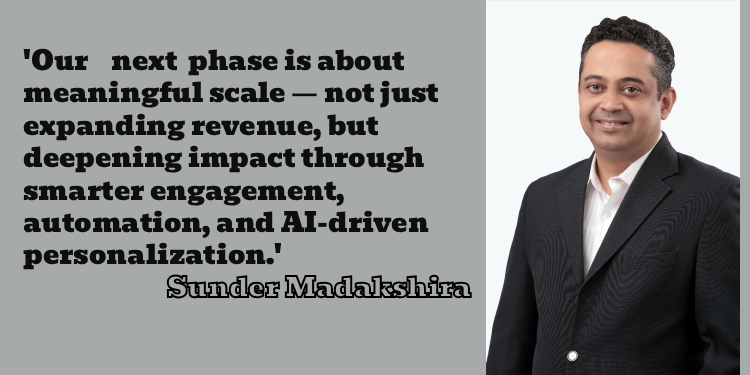
As we look ahead, our focus is on showcasing what truly connected engagement can achieve. The next phase of innovation is not just about adding more channels, but about making them work together — seamlessly, contextually, and at scale.
With Sinch Converse, we are enabling enterprises and MSMEs to design conversational journeys that combine automation, analytics, and in-chat payments—making interactions seamless and measurable.
Sinch Hub is bringing orchestration at scale, allowing large enterprises to unify SMS, email, WhatsApp, RCS, voice, and push into one centralized platform, ensuring compliance while delivering consistent customer experiences.
We are also seeing strong momentum with Sinch Visuals, where brands can deliver personalised images, videos, and GIFs at scale to enrich their storytelling and engagement. Alongside this, DocxComm continues to empower industries like BFSI and real estate with interactive documents that simplify onboarding, statements, and service communication.
Underlying all of this is the art of the possible with RCS and WhatsApp, two channels that are redefining customer journeys in India. When combined with the strong foundation of email and SMS, they allow enterprises to move from awareness to consideration, loyalty, and fulfillment—all within the same messaging flow. Our upcoming campaigns will continue to highlight these capabilities, showing how Sinch helps brands orchestrate multichannel engagement in smarter, more creative ways.