Omnicom Media Group (OMG) India is part of Omnicom Group, the global network of marketing and communications agencies.
Medianews4u.com caught up with Kartik Sharma, Group CEO – Omnicom Media Group India. He brings a thoughtful perspective on leadership, media, and marketing, and enjoys sharing insights on emerging trends and strategic approaches in the industry.
Q. Could you talk about the win-win tactics adopted that have helped OMG India achieve double-digit, healthy, sustainable growth of over 20 percent that should be long lasting and not temporary?
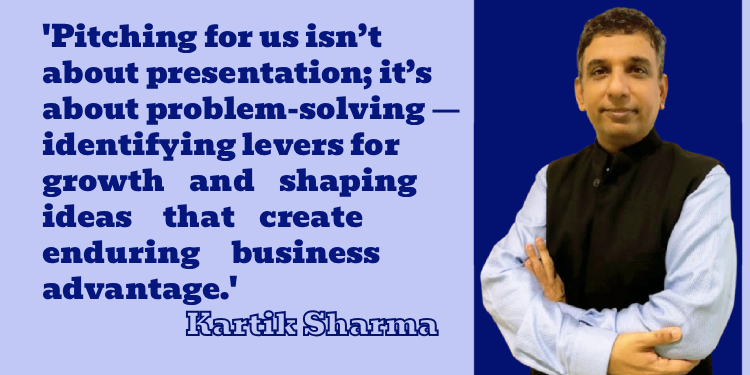
Every pitch is unique. We don’t believe in one-size-fits-all; each pitch is approached as an opportunity to bring together category expertise, strategic foresight, and the distinctive capabilities of our teams.
Wins stem from the ability to interpret the brief accurately, apply the right mix of tools and methodologies, and leverage the strength of our talent. This synergy, strengthened by our deep experience, enables us to take a long view of a client’s business and industry dynamics—allowing us to convert opportunities into results that deliver sustainable value to our clients.
Q. What new businesses were won recently? Is the business model of the agency increasingly being linked to clients’ business outcomes?
Recently, we’ve had the privilege of securing several marquee mandates, including HDFC Life, Piramal Consumer Healthcare, Shriram Finance, Atomberg, Bondbazaar, OpenAI, Agilitas, Encube, Watertec, Double A, Kimberly-Clark, and OPPO. These wins across industries are a clear signal that clients increasingly see us not just as a service provider, but a partner capable of meaningful impact at scale.
As for the business model, linking our success to client outcomes has always been integral to how we measure value. What has evolved is the depth of precision and accountability. Today, we’re assessing success across a much more nuanced set of dimensions—not just short-term sales or ROI, but longer-term brand strength, customer equity, operational efficiency, innovation impact, and even societal or sustainability metrics in relevant cases.
While outcome-based partnerships have gained visibility over the years, for us, this has always been our guiding principle. They allow us to move beyond campaign metrics to true business outcomes that matter to our clients.
Q. What kind of research does OMG India do before pitching a client? In winning businesses is it crucial to understand the various long-term growth levers in a client’s business?
Understanding the client and their category is vital to delivering meaningful outcomes. For newer categories, we begin with publicly available information as a foundation, then layer in deeper research and insights depending on the specific brief. This can include analysing category trends, market dynamics, competitor activity and consumer behaviour.
Equally important is identifying the long-term growth levers within a client’s business. Whether it’s digital transformation, brand equity, distribution scale, or consumer experience, these levers define where sustainable value can be created. Aligning our recommendations to those levers enables us to shape recommendations that drive the greatest strategic impact and actively shape the client’s future trajectory.
Q. Could you talk about how clients expectations from an agency have evolved compared with pre-COVID?
The world has changed significantly since the pre-COVID era, and with it, so have the expectations clients place on their partners. Consumer behaviour has become more discerning, digitally savvy and more demanding of seamless experiences — and that naturally recalibrates what clients look for in an agency.
Firstly, clients now seek full-funnel expertise and integrated teams that can connect brand, media, commerce, and experience seamlessly, whereas before, one can argue that many engagements were specialist-driven.
Secondly, the growing focus on AI and automation tools to bring efficiency, scalability and data-driven insights to the table. Finally, the end goal is how we can impact the business.
And perhaps most importantly, the question clients are asking today has shifted — from “how effective was the campaign?” to “How did you move the business?” The expectation from agencies is no longer limited to delivering strong marketing outputs; it is to enable measurable business transformation.
And that’s precisely how we define our role: as growth partners who bring together creativity, data, and technology to deliver outcomes that are both immediate and enduring.
Q. How is the festive season looking like for OMG India? Is most of the work being done for the gifting categories? Why is it important for brands to plan backward from Diwali, leveraging early festive triggers like Raksha Bandhan and Onam to maximize ROI and cultural relevance?
The festive season in India is a period of heightened energy for both consumers and brands – acting as an important marketing trigger, offering both cultural resonance and regional relevance. For marketers, that means planning backwards from Diwali is critical.
Leveraging early festive triggers allows brands to phase their storytelling, build cultural resonance, and capture consumer sentiment before media rates peak. Done well, this phased approach ensures campaigns are not only more cost-effective but also more impactful, guiding consumers from awareness to purchase at the right moments.
Gifting is, of course, a central theme of the season, but it is far from the only driver. Categories like e-commerce, automobiles, mobile handsets, BFSI, and retail are expected to deliver strong momentum. What’s different this year is the added impetus from the recent GST cuts, which have injected fresh spending power into consumers’ hands.
Q. Is trying to outshout the competition during the festive season a mistake or does it often work?
The idea of outshouting competition is an old approach. Today’s consumers are far more discerning — they gravitate toward brands that solve real problems, enhance quality of life, or bring cultural and emotional relevance into their lives.
That doesn’t mean high-volume messaging is obsolete; it still works when it’s backed by clarity of purpose and contextual relevance. For mass categories where reach and ubiquity are critical, greater visibility can certainly move the needle. But in more discerning categories, where consumer cohorts are sharper and expectations higher, thoughtful storytelling and precise targeting will often deliver stronger outcomes.
In essence, the most effective festive campaigns strike a balance, ensuring visibility, yes, but always grounded in meaningful value. Effectiveness today comes from impact, not noise and that requires combining creativity, data, and cultural intelligence to create engagement that endures well beyond the festive season.
Q. In terms of allocation of digital spends are spends shifting to an extent during the festive season from Google towards retail media like Amazon during the festive season?
Shifts in spends largely depend on the category and purchase behaviour. For planned-purchase or high-value categories like durables and automobiles, brands typically start building momentum months in advance, using digital to influence consideration, engagement, and ultimately conversion.
For FMCG and other fast-moving categories, investments tend to remain consistent throughout the year, reflecting the growing role of e-commerce and q-commerce in everyday consumer purchases. That said, the festive season does see incremental spending across the board, as brands layer on campaigns to capture heightened consumer attention and intent.
Q. What role does OMG India play for clients when it comes to predictive analytics, especially during the crucial festive season?
Our predictive analytics helps clients plan with precision during the festive season. We’ve developed proprietary predictive analysis tools powered by our AI capabilities that analyse past performance, category and competitor insights, and real-time signals.
This ensures campaigns are timely, targetted, and designed to maximise ROI, turning data into actionable growth opportunities.
Q. Is AI now playing a key role across the funnel?
Yes, absolutely. AI today is no longer confined to a single stage of the funnel — it’s embedded across the entire customer journey. At OMG, we’re leveraging our proprietary platform, Omni, to integrate AI seamlessly into every stage, right from audience development and planning to activation, measurement, and optimisation.
Omni Assist, Omnicom’s generative AI-powered virtual assistant, provides us with real-time insights, notifications, and recommendations, significantly accelerating workflows and enhancing collaboration across teams, helping teams move from analysis to action in a fraction of the time it used to take. Beyond speeding up workflows, our AI ecosystem includes synthetic audience agents that simulate real consumer behaviour, enabling smarter ideation, tailored content creation, testing, and campaign performance evaluation. By embedding AI at the heart of our processes, we’re treating it as a creative and strategic infrastructure that boosts both efficiency and impact.
What excites me most is how AI is allowing us to collapse silos — connecting creativity, media, and commerce in ways that were not possible before. We’re heading toward a future where AI doesn’t replace human ingenuity but amplifies it, allowing us to deliver outcomes that are faster, sharper, and more meaningful.
Q. How is AI transforming agencies by helping create better media plans, helping decide the most optimum media mix? Is OMG India focussing on its employees being fluent in AI and what is the big challenge in this area?
At OMG India, we believe in the responsible use of AI across the board. AI is transforming how we plan, optimise, and execute campaigns — from identifying the most effective audience segments to determining the optimal media mix for maximum impact. Complementing this, Omni ensures that data flows seamlessly across workflows, connecting insights, planning, activation, reporting, and optimisation.
Considering Omnicom’s work in the space of Artificial Intelligence dates back nearly a decade, we’ve been focusing on AI fluency for our teams for a few years now, so human creativity and judgment remain central while AI amplifies impact.
Q. Another challenge is diminishing consumer attention spans. Could you talk about the tools with OMG India that help clients understand if a creative will hold the consumer’s attention?
With consumer attention spans shrinking, understanding how content engages audiences is more vital than ever. We’ve been using attention-informed planning methodologies for years now to guide strategy and media investment. Proprietary tools leverage historical performance, real-time platform data, and insights from controlled attention tests to determine how long and where consumers need to engage with content to drive results.
This allows us to optimise media allocation, ensuring every rupee reaches the most effective channels and formats. Beyond media, these insights inform creative strategy, aligning messaging with the formats and platforms where consumers are most receptive.
Furthermore, we work with independent partners to measure attention metrics objectively, ensuring creatives capture and hold interest. Coupled with platform-specific insights, this enables strategies that maximise engagement and impact.
Q. Is not making enough use of first party data another challenge for brands in categories like FMCG?
First-party data on its own rarely unlocks full value unless it is enriched and applied strategically. In categories like FMCG, where the addressable audience is vast, enrichment adds depth and context — making the data more actionable. At the same time, there’s a balance to be struck: over-segmentation can dilute effectiveness and make large-scale campaigns lose their edge.
By contrast, in more niche industries, sharper segmentation of first-party data often proves far more impactful. Ultimately, it’s less about the volume of data and more about how intelligently it’s refined, contextualised, and activated.
Q. Tier 2–4 markets now drive over 50% of mobile-first consumption. How is OMG India leveraging this to drive more effective results for clients?
We deploy multiple strategies to maximise reach and engagement. For instance, YouTube Rural delivers a high proportion of engaged viewers, enabling us to connect with audiences in Tier 2 cities and beyond.
Through smart planning and segmentation, campaigns are tailored to reach the right people at the right time. Additionally, platform partnerships, such as with ShareChat, allow us to implement strategies that are closely aligned with both the brief and local market dynamics, ensuring relevance and impact across diverse markets.
Q. Ad fraud is an issue, especially online. Could you shed light on OMG India’s proactive measures in this regard?
We implement brand safety trackers through IAS or DoubleVerify and actively recommend their use to our clients. In addition, placement reports are reviewed every second campaign day, allowing for timely optimisation.
Non-performing placements are removed based on performance, viewability and brand safety, retaining focus only on the right ad placements.