Niva Bupa Health Insurance Company recently announced its latest campaign, ‘Yeh Hua Na Health Insurance’, to position its latest product offering, ReAssure 3.0 as the ultimate health insurance solution. The product aims to puts an end to the sum insurance race forever by offering unlimited coverage for every claim, every time, and for all illnesses.
The current way of choosing health Insurance forces a consumer to choose a sum insured without any understanding of what medical exigency may he or she will face in the future. This makes the overall concept of protection a bit risky even if one has health insurance. Unlimited sum insured plan is built to cater to the evolving healthcare needs of today’s times with rising healthcare incidence of hospitalisation, availability of modern treatment which while effective are often very expensive.
This leaves consumers wondering what amount of sum insured is adequate to ensure that any and all hospitalisation expenses get covered in their health insurance plan. The health insurance category therefore needed an innovation which would take the concept of sum insured out of equation and lets consumers focus on recovery rather than medical bills. With ReAssure 3.0, Niva Bupa has ensured that customers never have to worry about the adequacy of their sum insured again.
To capture this sentiment, the campaign film captures the journey of a protagonist whose life has been shaped by countless limitations and cautions to stay “limit mein.” But with ReAssure 3.0, he experiences a transformative moment — discovering a health insurance plan that truly lives up to the promise of unlimited sum insured, without the usual caveats. This emotional liberation symbolises a shift in how Indians can now protect their health without compromise.
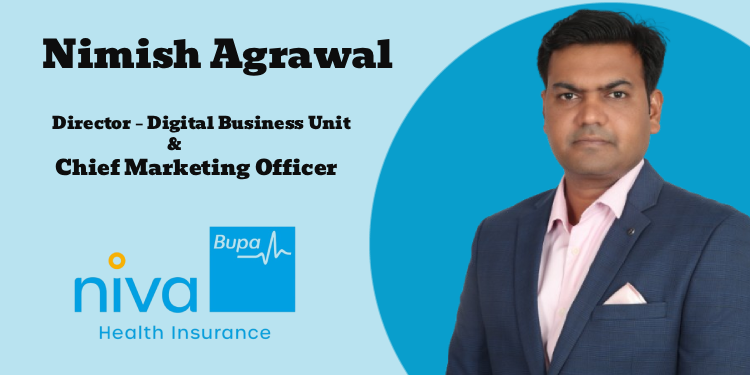
Medianews4u.com caught up with Nimish Agrawal, Director – Digital Business Unit & Chief Marketing Officer, Niva Bupa Health Insurance.
Q. The aim is to build a brand that is distinct, trusted and loved. What does this entail and what goals have been set in this regard?
Building a brand that is distinct, trusted, and loved means creating an identity that resonates deeply with customers at an emotional level while also delivering consistent value and reliability. For Niva Bupa, this involves offering transparent, customer-centric health insurance solutions and communicating in a way that demystifies health insurance complexities.
Our goals include increasing brand recall, fostering customer advocacy, and establishing ourselves as the most dependable partner in health insurance.
Q. There is a big lack of awareness about Health Insurance even in the Metros. Does the job of marketing mainly focus on building awareness?
Awareness is indeed a foundational challenge in health insurance, Marketing, however goes beyond mere awareness. It’s about educating, building trust, and ultimately driving action.
Our campaigns are designed to build relevance, break down barriers, answer common concerns, and showcase the tangible benefits of health insurance so that awareness evolves into informed decisions and long-term loyalty.
Q. Could you talk about the brainstorming with the creative agency that led to the ‘Yeh Hua Na Health Insurance’ campaign?
The brainstorming process was very collaborative and insightful. We needed to emphasise on the unlimited sum insured proposition of our product. The cultural insight that we gathered was that most Indians while growing up have been cautioned to “stay in limit” which has become their way of life.
The refrain of “limit mein” has shaped numerous choices, shrunk countless dreams, and made people settle for less. So much so that consumers have been conditioned to believe that “unlimited” can’t really be unlimited or it’s too good to be true.
The phrase ‘Yeh Hua Na Health Insurance’ is a natural and obvious response when the customer realises that this plan truly offers a limitless experience by offering unlimited coverage for every claim, every time, and for all illnesses.
Q. The company is focussing on moving beyond purely transactional messaging to craft narratives that humanise health insurance. How does the new campaign achieve this goal?
Our endeavour has to make health insurance part of regular conversations in relatable everyday environments such as gyms, salons, canteens etc. and not just a product which someone thinks of while thinking of hospitalisation. We want to be partners to our customers not in ‘sickness but also in their ‘wellbeing’. Our brand philosophy is Zindagi Ko Claim Kar Le and our campaigns uses storytelling to position health insurance as an enabler to live the life the way they want to.
Instead of just talking about policies and coverage, we show how insurance supports people through real, emotional moments. The tone is informal and comforting, which helps demystify health insurance and frames it as a partner in life’s unpredictable journey—not just a financial product. This narrative approach creates empathy and helps customers feel understood rather than just targeted.
Q. 75 per cent of the company’s media mix is digital. Does this medium allow the company to create more targeted, impactful messaging compared to traditional ad mediums?
Absolutely. Digital allows us to precisely target audiences based on demographics, interests, and behavior, ensuring that our messages reach the right people at the right time.
It also enables real-time feedback and optimisation, making campaigns more agile and cost-efficient. Moreover, digital formats allow for richer storytelling—through video, interactive content, and social engagement—enhancing impact.
Q. Could you shed light on the efforts being made in various areas of digital like SEO and are changing platform algorithms a challenge?
We have a dedicated team focussing on SEO to ensure that our content ranks well for relevant health insurance queries. Regular content updates, keyword research, and backlink strategies are key pillars.
Changing algorithms do pose challenges, but they also encourage us to prioritize authentic, high-quality content and user experience. Staying agile and informed is critical.
Q. Hyper personalisation is an important focus area in healthcare. How important is the company’s website and mobile app experience in this regard?
Our website and app are critical touchpoints for delivering hyper-personalized experiences.
By leveraging data and AI, we tailor content, product recommendations, and communication based on individual user profiles and behaviour. This not only enhances user satisfaction but also drives better conversion by making the journey seamless and relevant.
Q. What is the big challenge when it comes to online reputation management and how is the company approaching this?
The biggest challenge is managing misinformation and ensuring timely responses to customer concerns.
We actively monitor social media, review platforms, and forums to engage proactively and transparently. Our approach includes empowering customer service teams with real-time insights and fostering a culture of empathy in all digital interactions.
Q. How is AI transforming the marketing function at Niva Bupa in areas like content creation, doing consumer research more effectively?
AI helps us analyse large volumes of consumer data quickly to uncover trends and preferences, enabling sharper targetting.
For content creation, AI tools assist in generating data-driven copy and optimising messaging for different segments. It accelerates ideation, testing, and personalization, making marketing more efficient and impactful.
Q. How important will AI chatbots be for the company and the sector three years from now?
AI chatbots will be indispensable. They provide 24/7 support, reduce response times, and handle routine queries effectively, freeing human agents to tackle complex issues.
As chatbot technology advances, they will deliver even more personalised, context-aware experiences, becoming a frontline touchpoint for customer engagement.
Q. Attracting and retaining key talent in the marketing functions is a challenge for the company and the sector. Also the best talent is not going into advertising due to poor remuneration. They are going into AI, deeptech, crypto. What should be the way forward to address this issue?
We need to position marketing in health insurance as an exciting, impactful field that combines technology with real human benefits. Investing in upskilling, offering competitive remuneration, and fostering a culture of innovation will help.
To attract and retain top talent, the marketing sector needs to evolve its value proposition by integrating emerging technologies like AI and data science into everyday marketing functions.
Q. How is the role of the CMO evolving with rapid advances taking place in martech?
The CMO now wears multiple hats—strategist, technologist, and data analyst. They must integrate marketing technology seamlessly with customer insights to drive growth. Leadership involves fostering cross-functional collaboration and agility while championing customer-centric innovation.
Q. How does Niva Bupa approach B2B marketing through things like participating in retail events, doing roadshows, seminars, workshops?
B2B marketing is about building trusted partnerships. We actively participate in retail events and roadshows to engage brokers, corporate clients, and healthcare providers. Seminars and workshops focus on education and relationship-building, sharing industry insights, and showcasing how our products add value to their business.
Q. The focus is on offering a seamless customer experience where they spend as little time as possible in getting excellent care. What role does predictive analytics play in this?
Predictive analytics helps us anticipate customer needs, identify risk profiles, and personalise interactions proactively. It streamlines claim processing, recommends preventive care, and enables early intervention. This reduces friction and accelerates access to care, aligning perfectly with our goal of a seamless experience.