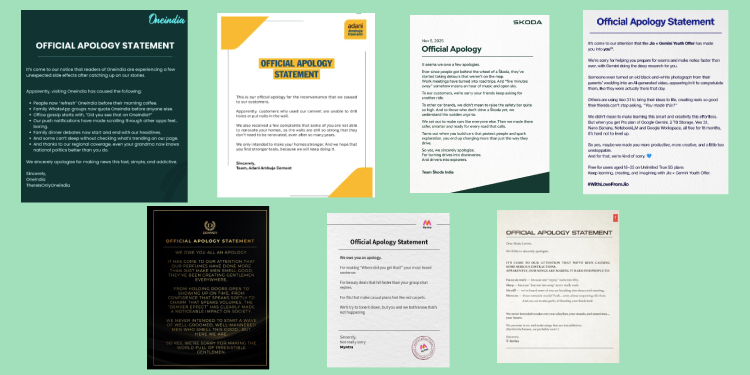
Apologies are usually about admitting mistakes, but not this time. The internet is now flooded with mock apology statements from brands and influencers who are “sorry” for being too amazing. From Skoda and Haldiram’s to designers like Rina Dhaka and chefs Ranveer Brar and Rakhee Vaswani — everyone seems to be jumping on the bandwagon. The tone? Playful, self-aware, and dripping with irony.
From remorse to mock remorse
The tongue-in-cheek trend, which reportedly began in the Philippines last year, has now found a massive following in India. Each post imitates the tone and format of a formal corporate apology — complete with subject lines like “Re: Unintended Customer Delight”, structured paragraphs, and even letterhead-like visuals. The twist: instead of admitting a blunder, brands apologise for being too irresistible, too efficient, or simply too good.
What started as a clever creative device has now turned into a full-blown social media moment. Electronics giants, snack makers, fashion designers, chefs, and even cement conglomerates are now posting mock letters expressing regret for “exceeding expectations” or “causing unintended cravings.”
Brands join the “apology spree”
In recent weeks, India’s social media feeds have seen an “apology spree” of sorts. Skoda, T-Series, Reliance Digital, Adani Ambuja Cement, Haldiram’s, Keventers, and Banana Leaf are among the brands that have issued their mock apologies. Even car dealerships such as Volkswagen Downtown Mumbai have joined in.
Adani Ambuja Cement, for example, jokingly “apologised” to customers who are unable to drill holes or put nails in their walls after using its ultra-strong cement.
But perhaps the most talked-about instance was Volkswagen Downtown Mumbai’s faux-apology, which went viral for all the right — and wrong — reasons. The dealership’s post addressed Volkswagen owners who were supposedly facing “unexpected side effects” after purchasing their cars. Among the listed “issues” were neighbours waving more often, family members borrowing the car for longer errands, and owners taking spontaneous road trips because the drive was too enjoyable to end.
The statement concluded with a tongue-in-cheek apology for making Volkswagen ownership “irresistible.” While many praised the wit and creativity, some critics found the move tone-deaf — especially since it came from a dealership, not the official automaker, leading to confusion and criticism from actual customers.
The psychology behind the “apology”
So why is everyone suddenly saying sorry for being too good? Marketing experts say the trend works because it flips expectations. The serious tone of an apology letter immediately grabs attention, and when the punchline is revealed — that the “fault” is being too desirable — it sparks delight and engagement.
“The format humanises brands,” said one social media strategist. “It shows self-awareness and humour — traits people relate to more than polished corporate messaging.”
On LinkedIn, the trend has triggered debate. One user quipped, “It’s rarer than a sincere corporate mea culpa, yet infinitely more effective.” Another argued, “Apologies should mean something. They’re for when a brand messes up and owns it — not for when it wants attention.”
Love it or hate it — it’s working
Critics may find the gimmick overused, but there’s no denying its impact. The format’s formal-meets-funny tone cuts through cluttered social feeds, and its shareable nature helps brands trend overnight.
Still, as some marketers point out, the joke works best when it feels authentic. For brands with real service issues or trust deficits, using the apology trope for humour could easily backfire.
Whether it’s seen as clever creativity or superficial self-promotion, one thing’s clear: India’s social media is in full-blown apology mode — but this time, everyone’s saying sorry not for mistakes, but for being just too good at what they do.