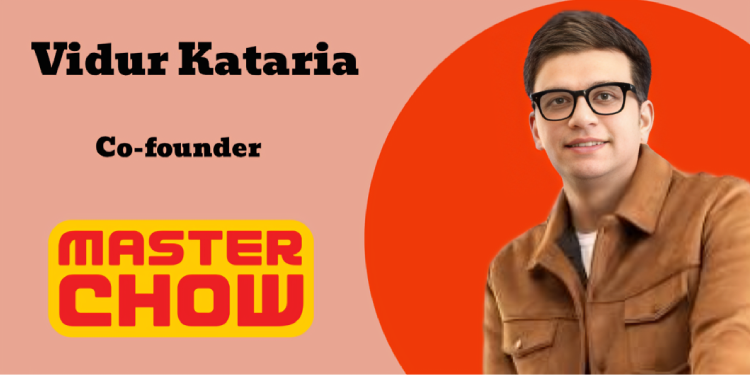
MasterChow is a fast-growing Indian brand offering ready-to-cook Chinese and Asian food. Launched in 2020 by Vidur Kataria in New Delhi, the brand aims to bring authentic Asian flavours into Indian homes and become a leader in the packaged Asian food category.
The idea grew from the founders’ earlier success with their QSR chain, Wok Me, which had eight outlets across Delhi NCR. Seeing the rising demand for authentic Asian cuisine, they decided to scale their passion into a packaged food brand.
MasterChow stands out for its focus on quality and authenticity. All products are made in small batches using natural, high-quality ingredients, ensuring freshness and traditional taste. The target audience is 18–45-year-olds looking for convenient, flavourful Asian meals.
The brand offers ready-to-cook noodles, sauces, instant noodles, and condiments. Its products are available on its website and on quick commerce platforms like Blinkit, Swiggy Instamart, Zepto, and BigBasket, as well as Amazon and Flipkart for easy delivery.
After building a strong online presence, MasterChow is now expanding offline. It is already available in around 700 stores in Delhi NCR and plans to reach over 3,000 stores across cities such as Ambala, Patiala, Chandigarh, Mumbai, and Bangalore by July.
The brand aims to become India’s go-to destination for all Chinese and Asian ready-to-cook products. By FY25, it hopes to reach ₹100 crore in revenue and build a strong offline presence in major cities. Chef Ranveer Brar has also joined the brand to strengthen its authenticity.
MasterChow has more than 100 team members and continues to focus on delivering authentic flavours with convenience. This year, the company launched KChow, a Korean-inspired noodle range with an Indian twist, tapping into the growing K-culture trend among Gen Z and millennials.
KChow noodles blend Korean flavours with Indian masala, are MSG-free, and feature a specially crafted texture for a satisfying slurp. The brand promoted the launch with the “Loudest Slurp Challenge,” offering a ₹5 lakh prize. With the tagline “From Seoul to Soul,” MasterChow plans to introduce more Asian cuisines like Thai and Japanese soon.
Medianews4u.com caught up with Vidur Kataria, co-founder MasterChow
Q. How is the festive season looking like for MasterChow? How will the GST reduction give a boost?
We have already started passing on better pricing to our consumers. This naturally encourages more trials and makes our products even more accessible. Our motto is simply “Jahan banega Chinese, wahan hoga MasterChow, har ghar mein.”
Q. How did the idea of ‘The Hero Ingredient Play’ come about? What does using a single product to anchor entire campaigns entail?
Certain products are brand builders while others drive volume. For us, our customers chose Chili Oil as the hero ingredient.
Three years ago, hardly anyone in India knew what Chili Oil was, and today, we are proud to say we pioneered this category and built awareness from scratch. Since then, the space has expanded with many more players joining in.
Q. What role is AI playing in helping the campaign for a product grow into both a cultural conversation and a driver of deeper consumer engagement? Any examples that standout?
At MasterChow, we work with real food, real ingredients, and real people. AI helps us mainly in research and insights, but when it comes to storytelling, we believe in showcasing the authentic experiences that our customers actually enjoy.
Q. Does the media mix for MasterChow heavily skew towards digital?
Yes.
Q. Is it becoming increasingly important to build marketing strategies that don’t just sell products but create experiences for companies in the F&B space?
Absolutely. People aren’t just buying a product anymore; they are buying into the story of how and why it was made. Experiences and narratives matter as much as taste.
Q. What tactics does MasterChow adopt to transform products into consumer experiences, blending creativity with relevance?
We listen to our consumers. Their problems and needs guide our innovations.
For example, whenever we showcase our food, we present it in a way that allows people to easily visualize the process and imagine how they can recreate it in their own kitchens.
Q. How does MasterChow use platforms like Reels, YouTube to create recipe series, community-driven content?
We create snackable recipe content and fun ‘how-to’ videos on reels to inspire everyday cooking.
On YouTube, we go deeper by sharing recipe series and long-form storytelling that builds community. Both platforms work hand-in-hand to show people just how versatile our products can be.
Q. Is it a challenge to keep the messaging constant regardless of the platform?
100%. If messaging isn’t consistent, the customer gets confused. We have experienced this in the past, and now we focus heavily on clarity and consistency across platforms.
Q. What new product innovations can one expect to see and how is the company leveraging the Korean craze in the country?
MasterChow isn’t just about Chinese cuisine; we are expanding into Thai, Japanese, and Korean flavours as well.
Q. According to data analytics, where is the whitespace for growth? Is both offline and online retail equally important?
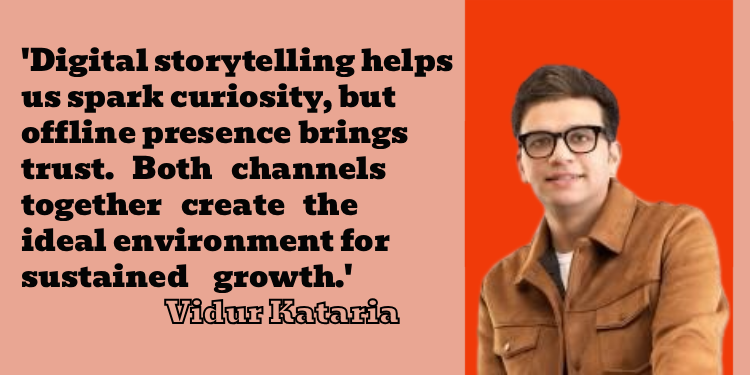
Both are equally important. Online helps with faster discovery and trials, since consumer feedback is immediate. Offline, however, provides deeper distribution. A balanced strategy between the two is key.
Q. How are partnerships with platforms like Blinkit and chefs like Ranveer Brar helping spread the message and drive conversions? How important are impulse purchases?
These partnerships are critical. Collaborations with chefs like Ranveer Brar lend credibility and creativity, while Blinkit helps us tap into instant consumption.
Together, they are powerful drivers for bringing new users into the MasterChow family.