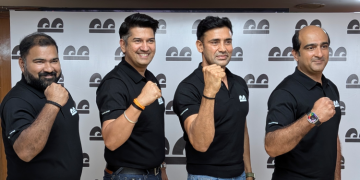
Launched in 2023 by Chirag Raheja and Imran Khan, Human Global is an integrated creative agency based in Mumbai, India. The agency’s client roster includes national and international brands like Fairdeal and Ashley Furniture Kenya, Parrogate Ginneries, HauteSpot, SMB Properties, and prominent names across categories.
Medianews4u.com caught up with Imran Khan Co-founder and Creative Head Human Global
Q. In 2025 spending kept moving, but attention became more fragmented than ever. Will this trend accelerate in 2026?
2025 wasn’t a year where advertising slowed down. Budgets moved, campaigns ran, and performance metrics continued to deliver. Yet beneath the surface, something fundamental shifted – attention became more fragmented than ever before.
People no longer engage with brands in long, uninterrupted stretches. Instead, they encounter them in quick, fleeting moments across platforms, formats, creators, and contexts. Attention has broken into micro-bursts. And while performance marketing continues to show results, brand presence and long-term memory are under pressure.
This trend won’t plateau in 2026. It will accelerate. The brands that win won’t be the loudest or the most visible. They’ll be the most relevant.
At Human Global, we believe the shift is clear: from chasing reach to earning attention by showing up meaningfully, not repeatedly.
Q. The aim is to be the agency that ‘gets it’. What does this entail?
In today’s landscape, being an agency that “gets it” has nothing to do with trends or tools. It means understanding the real problem before jumping into creative solutions.
Earlier, creativity often led the conversation. Today, consumers are overloaded with information, opinions, and content. Adding more noise doesn’t help. Solving the right problem does.
At Human Global, “getting it” means understanding the business challenge behind the brief, respecting the audience’s time and intelligence, and knowing when communication will help and when it won’t. Often, the most effective creative decision is choosing clarity over cleverness.
Clients work with us because they feel understood. And that’s where meaningful creativity begins.
Q. Ad work that is remembered focuses on building memory. What tactics will the Human Global Agency adopt to ensure that the message stays in the consumer’s memory?
There’s a long-held belief that consistency alone builds memory. In reality, relevance builds memory. You could see or read something once, and remember it for years.
Creators today constantly experiment with formats, tones, and storytelling styles to stay interesting. Brands need to evolve the same way, without losing their core identity. Playing safe or repeating formulas doesn’t create recall as much as it creates fatigue.
At Human Global, we focus on creating distinctive ideas rather than repeatable assets. We allow brands to play differently across platforms, as long as each piece adds something new. People remember work that feels human, timely, and worth paying attention to, not work that merely looks familiar.
Q. What goals does Human Global Agency have for 2026 in terms of growing the client roster, growing revenue? What is the gameplan to get there?
Our goals for 2026 are rooted in intentional growth, not scale for scale’s sake.
Our first two years positioned us as a dashing ‘Creative Project House’ – which was our intent. And it’s worked for us. But now I think the time is right to also move towards retainer-led partnerships that allow long-term thinking. Obviously, these would have to be well-chosen relationships, because our focus is depth rather than just volume, and alignment over accumulation.
Practically, this means adding a small number of meaningful retainers, doubling our revenue sustainably, building a lean and accountable team, and delivering kickass work across select international markets such as Dubai, Europe, Kenya, and the US.
We’re also building frameworks that can imitate our early-stage thinking, and strategic tools so value isn’t limited to hours billed. Revenue matters, but only when it supports better work, better people, and better decisions.
Q. How are creative agencies reclaiming their strategic value in the age of AI? Is sameness of work as a result of overusing AI going to be a big challenge in 2026?
AI is reshaping advertising but not by replacing what matters most.
Sameness will be a challenge only if AI is used without thinking. AI cannot replace strategy, taste, judgment, or cultural understanding. These remain deeply human skills.
At Human Global, we see AI as an execution accelerator, not an idea generator. It helps us move faster, explore more possibilities, and prototype better. But the point of view behind the work still comes from people.
When everyone has access to the same tools, thinking becomes the real differentiator.
Q. How is AI going to impact the workflow both from the client side and agency side in 2026?
AI is compressing timelines, but it’s also raising expectations.
Clients increasingly expect faster clarity, not just faster files. Deliverables matter less than direction. On the agency side, this means leaner teams, fewer layers, and greater ownership.
Agencies are evolving from being producers to orchestrators of strategy, creativity, and execution. AI doesn’t reduce the role of agencies; it raises the bar for what agencies are expected to deliver.
Q. How will creative agencies like Human Global Agency leverage and balance the usage of data and human instinct in 2026?
Data plays a critical role, but it has limits.
Data tells us what happened. Human instinct helps us imagine what could happen. Culture, emotion, and human behavior rarely show up cleanly in dashboards.
At Human Global, data is used to validate and refine ideas, not replace intuition. The agencies that succeed will be those that respect data without being ruled by it, and trust instinct without being reckless. Creativity lives in that balance.
Q. How has agency culture evolved in the past decade – and how will it change in the coming decade?
The last decade exposed what didn’t work in agency culture burnout, hierarchy, and hustle without purpose.
The next decade will value ownership over obedience, outcomes over long hours, and trust over micromanagement. Agencies will become smaller, sharper, and more human.
At Human Global, culture has evolved into one where responsibility is encouraged, transparency is non-negotiable, and saying “no” is respected. Work quality never suffers but people aren’t expendable.
Q. What does it take to build, sustain, and succeed as a creative agency in a competitive market like India?
India is a demanding market. Price pressure, fast churn, and constant pitching are realities.
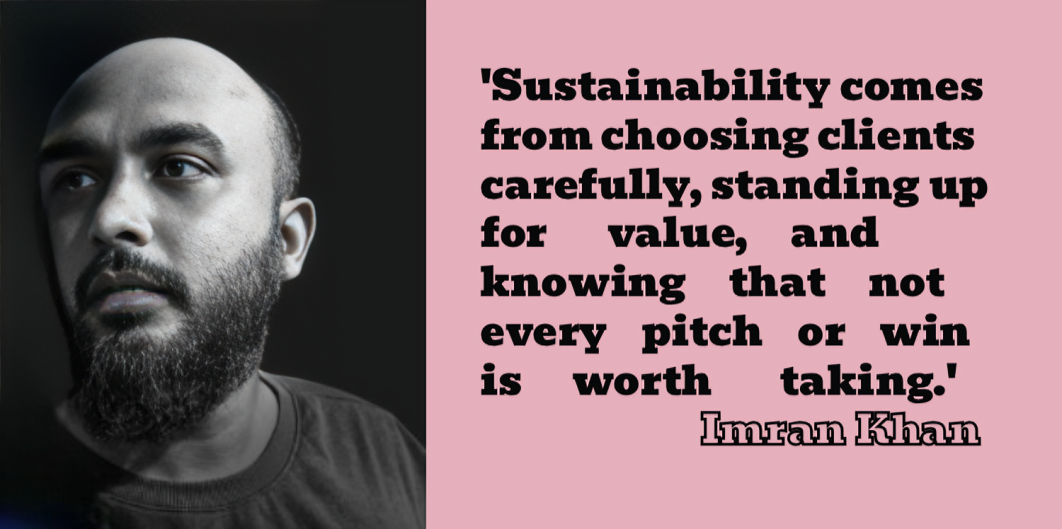
To sustain and succeed, agencies need to choose clients carefully, stand up for their value, and stop equating more pitches with more business. Not every win is worth taking. Alignment matters more than ambition alone. I speak from a business sustainability perspective, of course.
Q. The best talent is not coming into advertising due to poor remuneration. They are going into AI, crypto, and deep tech. What should be the way forward?
It’s true that some of the best talents are moving toward AI, deep tech, and emerging industries. Advertising must rethink its value proposition.
Talent today is looking for learning, ownership, purpose, and exposure to meaningful problems. Better business models will eventually enable better pay but agencies also need to offer growth beyond titles.
The future creative workforce will include hybrid roles – creative technologists, system thinkers, and problem-solvers not just traditional labels.
Q. Will the Full-service agency model continue to have demand from brands or lose relevance?
The traditional full-service agency model is giving way to strategy-led core teams supported by specialist partners. Gen Alpha audiences are setting higher standards for authenticity. Commerce media is maturing. Measurement systems need to evolve. And trust, especially in an AI-driven world is becoming the most valuable currency of all.
The next decade won’t reward agencies that do more. It will reward agencies that think better.
That’s the future we’re building toward at Human Global.
Q. Is it much harder to earn attention daily from Gen Alpha compared to Gen Z and Millennials?
Yes, it is harder and it’s fundamentally different.
Gen Alpha has grown up with creators, algorithms, and instant choice. They don’t consume content the way earlier generations did – they filter it instinctively. Anything that feels forced, repetitive, or inauthentic is ignored within seconds.
Unlike Gen Z and Millennials, Gen Alpha has zero tolerance for mediocrity. They expect honesty, usefulness, and entertainment to be built in not added later. Traditional interruption-based advertising won’t work for them.
To earn their attention, brands need to participate in culture, not interrupt it. Relevance beats reach, and authenticity beats polish.
Q. Is Commerce Media going to mature in 2026? Will it take ad share from Google and Meta?
Yes, Commerce Media will mature further in 2026 especially during high-intent periods like the festive season.
Brands are increasingly attracted to commerce platforms because they offer clear attribution, closed-loop measurement, and proximity to purchase. That’s hard to ignore in performance-driven environments.
Google and Meta will continue to dominate overall spend, but commerce platforms will take a meaningful share of performance budgets, particularly in categories where conversion matters more than visibility.
Commerce Media won’t replace the big platforms but it will become a serious, accountable alternative, not an experiment.
Q. There is a debate around the TV ratings system. Where do you stand?
TV still matters but the measurement system needs to evolve.
Viewing behaviour has fragmented across devices, platforms, and on-demand formats, but ratings systems haven’t kept pace. Measuring TV in isolation no longer reflects how people actually consume content.
The future lies in hybrid measurement models, ones that look beyond reach and focus on outcomes, engagement, and cross-screen behavior.
TV isn’t losing relevance. Outdated measurement is.
Q. In terms of tackling fraud and manipulated content, what needs to be done?
Trust is becoming the most valuable currency in advertising.
Platforms need stronger safeguards and clearer accountability. Agencies must uphold ethical standards. Brands need to take responsibility for where their money goes and what it supports.
With AI making content creation easier, transparency becomes non-negotiable. Audiences should know what’s real, what’s altered, and what’s synthetic.
Speed and scale can’t come at the cost of credibility. The industry needs to protect trust because once it’s lost, it’s very hard to earn back.