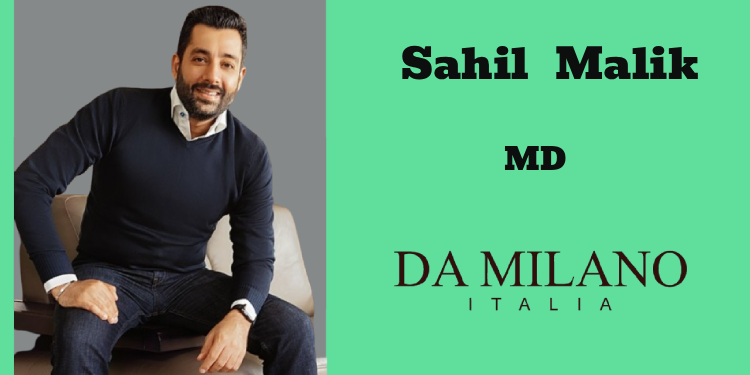
Sahil Malik has been serving as MD at Da Milano, Rosso Brunello. These are homegrown luxury brands.
A second-generation leader, he has redefined India’s bridge-to-luxury landscape, steering Da Milano from a single-store operation to a 120+ store network spanning India and international markets including Dubai, Bahrain, and the UAE. Under his leadership, Da Milano has built a reputation for Italian-inspired craftsmanship, timeless design, and its unmatched lifetime service promise.
Da Milano, a bridge-to-luxury leather accessories brand, continues to redefine contemporary leather craftsmanship by delivering refined luxury at an accessible price point. Inspired by Italian design sensibilities and powered by decades of expertise, the brand seamlessly blends sophistication, innovation, and timeless quality—making Da Milano synonymous with modern elegance and enduring style.
Established in 1989, Da Milano entered the Indian market with a clear vision to create world-class leather accessories that combine timeless design with modern functionality. Today, the brand offers an expensive portfolio including handbags, wallets, laptop bags. travel accessories, small leather goods, business essentials and gifting solutions, all crafted using 100% genuine leather and backed by a lifetime service warranty.
With a vertically integrated model, Da Milano introduces over 300 new designs every season, maintaining a fast-fashion cycle of just 60 days from design to shelf- an industry-first in the leather accessories space. This agility has enabled the brand to resonate strongly with evolving consumer aspirations, particularly among millennials seeking modern luxury with substance.
Rooted in innovation, modernity and luxury, Da Milano is driven by a vision of timeless style anchored in exceptional craftsmanship. The brand evolves season after season to meet changing customer aspirations. With designers attuned to international design and color trends, combined with the use of genuine leather, the brand has created a benchmark in quality and design.
Inspired by Italian sensibilities and an uncompromising attention to detail, Da Milano approaches leather as a couturier artistically selecting fine hides, creating design innovations and curating seasonal palettes that bridge fantasy and fashion which. resonate across generations.
Every aspect of the brand experience, from leather selection and product development to store ambience, aspirational retail locations, and responsiveness to customer feedback is curated to deliver a luxurious experience. At its core, Da Milano is committed to serving customers with grace, transparency, and convenience.
Da Milano currently operates 100+ stores across India and international markets including 18 stores at major Indian airports, along with a presence in UAE, Bahrain and Nepal. Each retail space is thoughtfully designed to deliver an immersive and elevated shopping experience, reflecting the brand’s contemporary aesthetic and commitment to customer excellence.
At Da Milano, luxury is defined not only by design, but by craftsmanship, authenticity and service,” says Malik. “Our journey has always been about redefining modern luxury while staying deeply rooted in timeless quality and craftsmanship.”
Guided by a long-term vision to emerge as a global leader in contemporary luxury leather. Da Milano is actively expanding its international footprint, with strategic plans to enter key markets such as the UK, the US and Russia, while strengthening its presence at leading global airports including Heathrow, DXB and Changi.
Da Milano’s commitment extends well beyond aesthetics and retail excellence. Since 2016, the brand has followed a zero-destruction policy for finished products, redirecting unused or defective items to charitable causes. Ongoing efforts to minimise plastic usage, along with sustainable office and store design, reflect Da Milano’s dedication to responsible growth.
Rooted in the philosophy that leather is integral to modern living, Da Milano is shaping a future-focused house of leather—uniting craftsmanship, contemporary luxury, and enduring design.
In 2025, Da Milano marked a milestone with seven new store launches in a single month, reinforcing the brand’s aggressive yet strategic growth vision. Malik’s next chapter focusses on taking Da Milano global — with planned entries into Singapore, Indonesia, Malaysia, and the UK.
Medianews4u.com caught up with Sahil Malik, MD, Da Milano, Rosso Brunello. These are homegrown luxury brands.
Q. Luxury commerce in India has evolved into a personalised interaction between consumers and luxury brands. What opportunities does this offer Da Milano and Rosso Brunello in 2026?
We see this shift as a powerful opportunity to build deeper, more meaningful relationships with our consumers. For us at Da Milano and Rosso Brunello, personalisation in 2026 goes beyond product recommendations—it’s about understanding intent, lifestyle, and occasion.
Whether through curated in-store experiences, clienteling, or tailored digital communication, our focus is on making every interaction feel considered and relevant. Luxury, for us, is increasingly about how well we listen.
Q. What are the similarities and differences between Indian consumers and their global counterparts when it comes to consumption and perception of luxury?
Indian consumers today are as globally aware as any luxury buyer in the world. They appreciate craftsmanship, heritage, and quality just as much as international consumers do.
What distinguishes them is a stronger emotional connection to their purchases—luxury here often marks milestones, gifting moments, or personal achievements. While global consumers may experiment more freely, Indian consumers still value trust, longevity, and brand credibility, especially in premium categories.
Q. From a marketing perspective, are the priorities for 2026 centred on deepening trust, broadening relevance, and inspiring long-term loyalty?
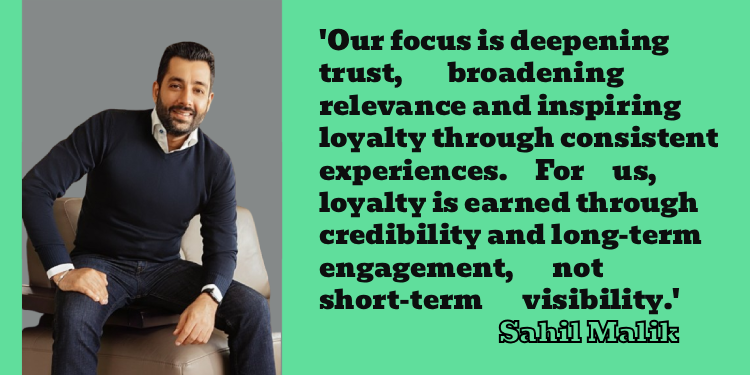
Yes, very much so. In 2026, our marketing priorities are rooted in consistency and credibility. We are focussed on deepening trust through transparency, broadening relevance by staying culturally and contextually connected, and inspiring loyalty through meaningful, long-term engagement rather than short-term visibility.
For us, loyalty is earned through experience, not incentives.
Q. What campaigns and marketing innovations can one expect in the coming months? Will an omnichannel strategy be followed?
An omnichannel approach is integral to how we operate today. Our consumers don’t differentiate between online and offline touchpoints, and neither do we.
In the coming months, our campaigns will seamlessly integrate retail experiences, digital storytelling, content-led launches, and CRM-driven engagement. Innovation, for us, lies in creating continuity—where every touchpoint reflects the same brand language and values.
Q. Print is an important medium for luxury brands. What role will this medium play in 2026?
Print will continue to play a prestige-led role. In a world of fleeting digital content, print offers permanence, tactility, and authority. For luxury, it acts as a brand anchor—used selectively for storytelling, seasonal narratives, and high-impact moments.
In 2026, we see print as a curated, high-impact medium—used to tell deeper brand stories and reinforce our positioning, rather than drive frequency.
Q. Luxury consumption has become more conscious and purposeful. Will purpose-driven marketing be important in 2026?
Purpose is no longer a marketing tool—it is a responsibility. For us, purpose needs to be authentic and embedded in the way we design, manufacture, and communicate.
In 2026, purpose will influence everything from product innovation to the narratives we choose to amplify. We believe consumers today can clearly distinguish between genuine intent and performative messaging.
Q. What role will sustainability play in marketing activities?
Sustainability will be communicated through action rather than claims. We prefer to let our processes, material choices, and product longevity speak for themselves.
Our marketing efforts will focus on educating consumers about craftsmanship, durability, and responsible consumption through specially designed IPs, instead of making broad or superficial sustainability statements.
Q. Premium consumers reward transparency and penalise superficiality. Is this a challenge for luxury brands?
It is a challenge, but also an important one. Consumers today are well-informed and expect honesty. Superficial storytelling doesn’t stand the test of scrutiny.
For us, transparency means being clear about our products, pricing, sourcing, and intent. While this demands discipline, it ultimately strengthens trust and long-term brand equity.
Q. How are Gen Z and Gen Alpha forcing luxury marketers to rethink strategies?
Gen Z and Gen Alpha are reshaping how luxury brands communicate. They are less influenced by traditional status markers and more by individuality, values, and authenticity.
This has encouraged us to move towards more participative and content-led engagement—where storytelling feels real, inclusive, and native to digital platforms. The focus is on building relevance, not just aspiration.
Q. What were the key learnings in scaling Da Milano from a single store to a 120+ store network across India and international markets?
One of our biggest learnings has been balancing scale with sensitivity. As we expanded across India and into international markets, maintaining consistency in quality, service, and brand ethos became critical.
At the same time, we learned the importance of adapting to local nuances without diluting our core identity. Growth, for us, has always been intentional.
Q. According to predictive analytics, where does the whitespace for growth lie in 2026?
Our insights point towards significant opportunities in occasion-led consumption, premium gifting, travel-related categories, and emerging markets beyond metros. We also see strong potential in tier-2 and tier-3 cities, where aspiration is growing rapidly and consumers are increasingly seeking accessible luxury with credibility.
In parallel, we’re actively eyeing international growth—particularly in the GCC and Emirates markets—where there is strong alignment with our brand’s craftsmanship, design sensibility, and demand for refined, contemporary luxury.
Q. What role is AI playing in offering consumers variety and distinction?
AI is increasingly helping us understand consumer preferences and contexts better. From intelligent recommendations to demand forecasting and personalised communication, AI enables us to offer variety without overwhelming choice.
Importantly, we see AI as a tool that enhances human judgement, not replaces it—especially in a category as nuanced as luxury.
Q. Could you shed light on the social media strategy for 2026?
Our social media strategy in 2026 is centred on storytelling rather than overt selling. We are investing in high-quality content, meaningful collaborations with creators, and platform-specific narratives—whether that’s long-form storytelling on YouTube or community-driven communication through WhatsApp.
The objective is to build connection and resonance, not just reach.
Q. How will Da Milano and Rosso Brunello approach B2B marketing?
B2B is an increasingly important focus area for us. We plan to strengthen our presence through industry seminars, workshops, and thought leadership on platforms like LinkedIn.
Our approach is centred on building credibility and long-term partnerships, especially in areas like corporate gifting and institutional collaborations.
Q. How do you see the future of premium retail in India and emerging markets over the next five years?
We believe the future of premium retail will be experiential, technology-enabled, and deeply trust-led. Consumers will gravitate towards brands that offer authenticity, consistency, and value beyond the product.
For investors, the focus will be on brands that are able to scale responsibly while preserving craftsmanship, culture, and credibility.