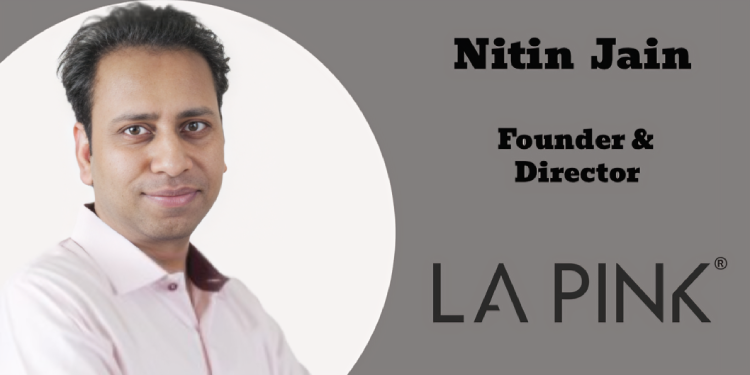
La Pink is the country’s first beauty brand with 100% microplastic-free formulations, featuring White Haldi as a core ingredient and crafted using natural ingredients sourced from France, Switzerland, and the US.
With a mission to raise awareness about the harmful use of microplastics in the beauty industry, Nitin aims to drive significant growth for La Pink in the coming years by expanding into new product categories and strengthening its offline presence in international markets.
Medianews4u.com caught up with Nitin Jain Founder, Director La Pink
Q. La Pink says that it is the country’s first beauty brand with 100% Microplastic-Free Formulations. How does this give the company a leg up in a competitive industry?
Being the country’s first brand to commit to 100% microplastic-free formulations gives La Pink a decisive and defensible differentiation. Beauty today is crowded, but credible innovation is rare. Our approach goes beyond marketing claims—we’ve embedded responsibility into formulation science itself.
As regulations tighten globally and consumers become more ingredient-conscious, microplastic-free formulation is not just a trend but a future necessity. By taking this position early, La Pink is building long-term trust and relevance rather than short-term visibility.
Q. It is very easy to enter the beauty category but very difficult to build a lasting brand. What tactics is La Pink following in 2026 to build a strong brand?
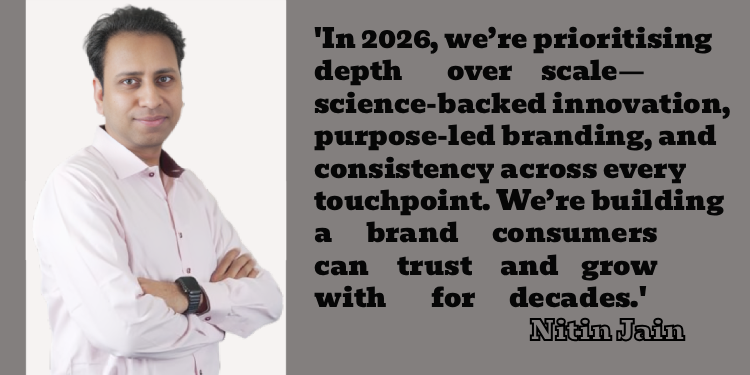
In 2026, our focus is on depth, not just scale. We are investing in three core areas:
1. Science-backed innovation – products that genuinely solve problems, not incremental launches.
2. Purpose-led branding – where sustainability and safety are non-negotiable, not optional.
3. Consistency across touchpoints – from formulations and packaging to retail experience and communication.
We are consciously avoiding short-term gimmicks and instead building a brand that consumers can grow with over decades.
Neither consumers nor manufacturers nor even industry experts had awareness about microplastic-free formulations. How did La Pink go about building awareness for something people were not aware about, let alone wanted?
We knew awareness would not be created overnight. Our strategy was to simplify the science. Instead of technical jargon, we explained why microplastics matter—to skin, to health, and to the environment. We used packaging, digital content, dermatologist conversations, and influencer education to build understanding step by step. Importantly, we did not shame the consumer; we empowered them with knowledge.
Q. What was the big challenge encountered in the journey of educating and convincing people about product value?
The biggest challenge was skepticism—people are used to greenwashing in beauty. Claims are plenty, proof is rare. Convincing consumers required transparency, certification, and patience.
We learned that trust is earned through repetition and consistency, not one viral campaign. Education is a marathon, not a sprint.
Q. When you look at evolving trends in the beauty category, what are the similarities and differences between India and other markets?
Globally, consumers are converging on clean, conscious, and science-backed beauty. The difference lies in maturity. International markets often start with ingredient scrutiny, while Indian consumers still begin with results and price—but they are rapidly catching up. India’s uniqueness lies in its openness to education once trust is established, which makes it a very exciting market.
Q. From a marketing perspective, will priorities for 2026 revolve around education and building trust?
Absolutely. In 2026, education is our primary marketing lever. Trust is the currency of modern beauty brands.
We are investing in expert-led content, ingredient transparency, consumer conversations, and long-form storytelling rather than just high-decibel promotions.
Q. What campaigns and marketing innovations can we expect in the coming months?
You will see campaigns that are conversation-led rather than celebrity-led—focused on ingredient literacy, skin health, and environmental responsibility.
We are also experimenting with phygital experiences, interactive education modules, and deeper collaborations with dermato
Q. Will an omnichannel strategy be followed in both marketing and distribution?
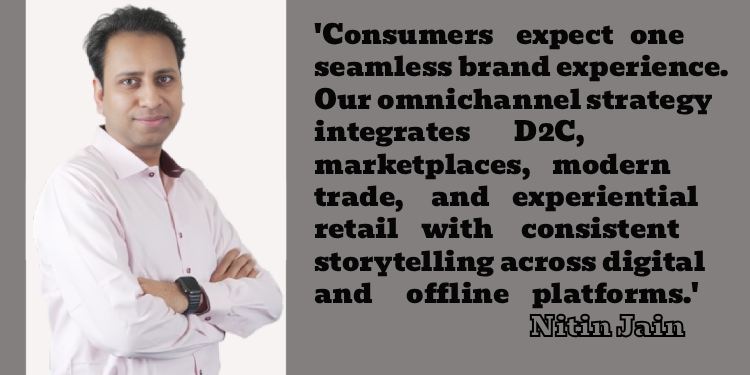
Yes, omnichannel is core to our strategy. Consumers don’t differentiate between online and offline anymore—they expect the same brand experience everywhere.
Our approach integrates D2C, marketplaces, modern trade, and experiential retail, supported by consistent messaging across digital and traditional media.
Q. Beauty brands often use female celebrities and co-created brands. Does La Pink have plans in this area?
We are open to collaborations, but only if they are value-aligned and credibility-driven. For us, relevance matters more than reach.
Any association—celebrity or otherwise—must strengthen our core narrative of responsible, science-led beauty.
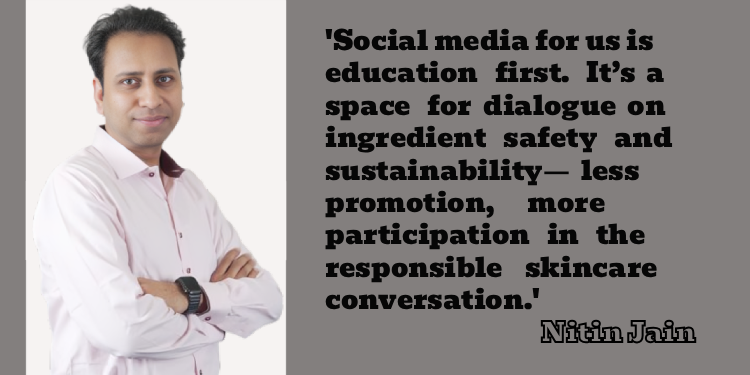
Q. Could you talk about the social media strategy to participate in the national conversation about responsible skincare?
Our social media strategy is built around education, dialogue, and community. We aim to move beyond product promotion to spark conversations about ingredient safety, sustainability, and informed choices.
Social media for us is not just a marketing channel—it’s a classroom, a feedback loop, and a movement-building platform.