The global direct selling and consumer entrepreneurship landscape is entering a defining phase, where resilience, trust, and community-led commerce are proving to be more critical than rapid scale or short-term growth metrics.
Despite ongoing global economic shifts, the recently released World Federation of Direct Selling Associations (WFDSA) 2024 STATS Report highlights that the direct selling industry has remained steady worldwide, underscoring the strength of relationship-driven business models, flexible entrepreneurship, and demand for wellness and lifestyle-led products.
Consumers today are gravitating towards trusted recommendations, peer-led engagement, and value-backed products, while individuals are increasingly seeking alternative income opportunities that offer flexibility, autonomy, and purpose. In this environment, direct selling continues to evolve, not just as a sales channel, but as a community-powered ecosystem.
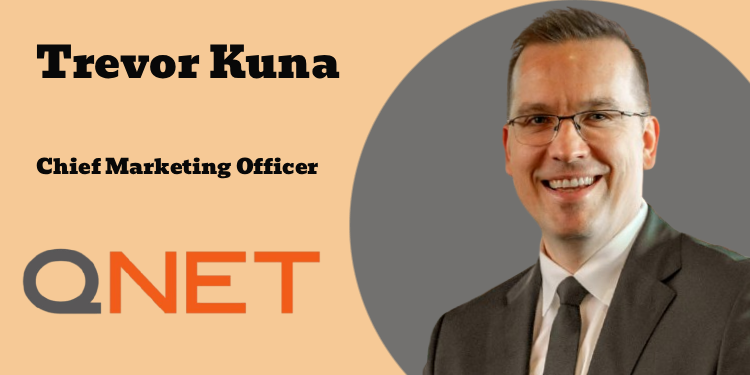
Against this backdrop, Medianews4u.com caught up with Trevor Kuna Chief Marketing Officer, QNET Ltd
QNET is a global direct selling company that offers a diverse portfolio of high-quality products across health, wellness and personal care. With a presence in over 25 countries through subsidiaries, branch offices, agency partnerships, and franchisees, QNET empowers individuals through a unique business model rooted in entrepreneurship and e-commerce.
In India, QNET operates through its sub-franchisee, Vihaan Direct Selling (India) Pvt. Ltd., one of the country’s leading direct selling companies. Vihaan manages QNET’s product offerings and distributor network in India, serving a growing base of nearly 900,000 independent distributors.
Global Vision, Local Commitment:
QNET’s philosophy is built on RYTHM—Raise Yourself To Help Mankind—which drives the company’s commitment to social impact and personal development. Through its products and business opportunity, QNET supports individuals in building sustainable livelihoods while promoting a healthier, more empowered lifestyle.
Product Portfolio:
QNET offers products spanning:
● Health & Wellness – Nutritional supplements, herbal beverages, and immunity boosters
● Home & Living – Air and water purification systems
Luxury & Lifestyle – Swiss watches, premium jewellery, and elegant porcelain
● Personal Care & Beauty – Skincare and grooming essentials
A significant share of products sold in India are Made in India, aligning with the government’s vision of supporting local manufacturing and self-reliance.
Innovation through Partnerships
QNET has entered into strategic partnerships with brands to deliver products:
● Sharp Business Systems India – for SHARP-QNET Zensational air purifiers featuring advanced plasmacluster ion technology
● KENT RO Systems – for the KENT-QNET SMART Mineral RO water purifier with alkaline water capabilities
These collaborations underscore QNET’s focus on quality, innovation, and consumer value in the direct selling space.
E-Commerce-Driven Model:
Operating via a robust digital platform, QNET ensures a seamless and efficient shopping experience. Its direct selling model, supported by Vihaan in India, allows distributors to build businesses with low overheads and flexible operations—making entrepreneurship accessible and scalable.
Commitment to Ethics and Compliance:
Vihaan adheres strictly to Indian legal and regulatory frameworks, operating with full statutory compliance. The company is also a strong advocate for ethical selling and consumer education in the direct selling ecosystem.
Q. Accusations of a pyramid scheme have hurt the direct selling industry for several years. Could you shed light on the Direct Selling Disinformation Centre (DSDC) that was launched to counter false narratives about direct selling and about QNET?
For years, direct selling has been misunderstood, and the term “pyramid scheme” has been used far too loosely. Social media and unverified content have made it worse because misinformation spreads fast and people form opinions before they see the facts.
That is why the Direct Selling Disinformation Centre (DSDC) was launched. Its role is to be a credible, fact-based reference point that explains what ethical direct selling is, how it is regulated, and how it is fundamentally different from illegal schemes. It also engages with regulators, media professionals, and consumers so that discussions are grounded in evidence, not assumptions.
For QNET, the DSDC reflects a long-term commitment to transparency and accountability. We are not here to argue online. We are here to educate, clarify, and keep the conversation rooted in facts. Facts beat noise.
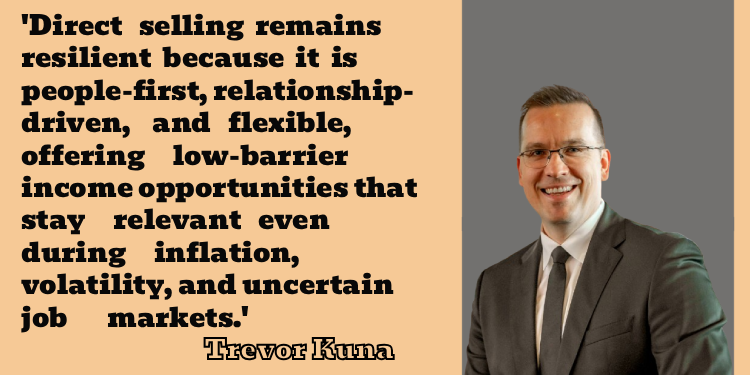
Q. Why has the industry remained stable despite inflationary pressures and market volatility?
The direct selling industry is resilient because it is people-first. It is built on relationships, community, and trust that develop over time, and those foundations tend to hold even when the economy is uncertain.
It also offers flexible income opportunities, which become more relevant when inflation is high and job markets feel unstable. For many, it is a practical way to earn supplemental income or start an entrepreneurial journey with relatively low barriers to entry and low fixed costs. That flexibility helps participation stay steady.
Another key factor is proximity to consumers. Direct sellers get real-time feedback from the market, which helps companies respond quickly to changing needs and preferences. That closeness creates stability, even in volatile conditions.
Q. QNet embraced e-commerce long before the rest of the direct selling industry saw digital platforms as the future. How did that help the company scale faster?
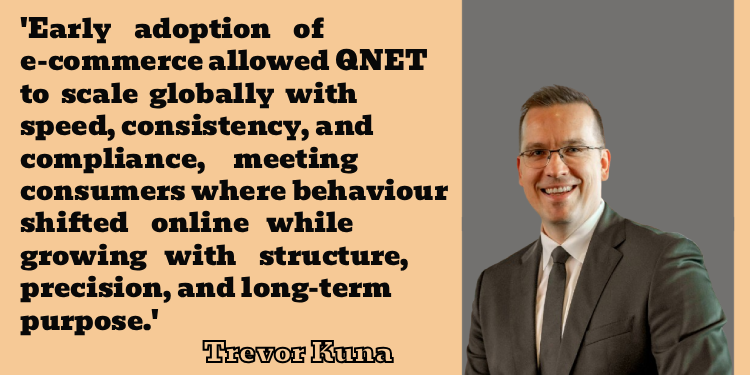
Early adoption of e-commerce changed the way QNET operates. It helped us move beyond physical boundaries and enabled our network to build businesses in a truly global environment. Digital platforms improved onboarding speed, transaction convenience, and overall operational efficiency.
It also improved consistency. With digital systems, product information, pricing, order tracking, and compliance processes are clearer and more standardised across markets. That builds confidence for both customers and distributors.
Most importantly, we were ready as consumer behaviour shifted online. People started researching, purchasing, and engaging digitally at scale, and QNET was already positioned to meet them there. We didn’t just grow fast; we scaled with purpose, precision, and without chaos.
Q. QNet is shifting from transactional marketing to a community-driven, outcome-focussed approach. What does this entail?
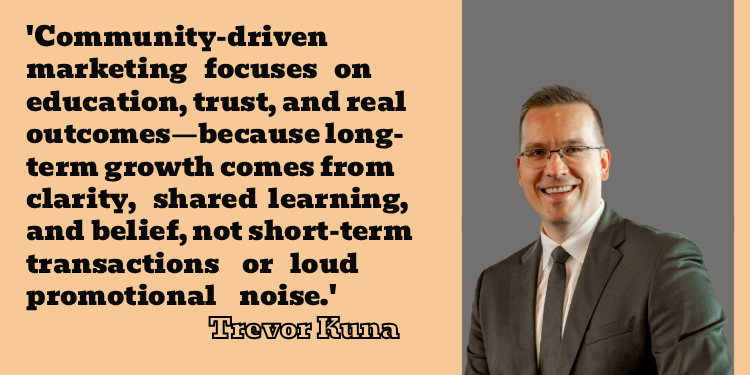
Transactional marketing focusses on short-term sales. A community-driven, outcome-focused approach is about long-term value and real impact. Today, consumers want more than product features. They want to understand how something fits into their life and what results they can realistically expect.
For QNET, this shift means putting education, shared learning, and consistent engagement at the centre. It means supporting people with knowledge and tools so they can make informed decisions and build relationships that last.
It also aligns business success with real outcomes. Strong communities create stronger belief, and stronger belief creates better long-term growth. In the long run, clarity outperforms noise.
Q. Why are consumers leaning more on peer recommendations and personal networks?
People are more cautious today. They are surrounded by ads, sponsored content, and influencers, and they know much of it is paid for. Peer recommendations feel more trustworthy because they come from real experience, not a marketing script.
Personal networks also add context. You do not just get a recommendation, you get the story behind it, practical tips, and honest feedback. That reduces uncertainty, especially in lifestyle and wellness categories where trust matters.
In many ways, this is a return to human connection. Technology has expanded access, but confidence is still built person to person.
Q. What marketing tactics would work in boosting repeat interactions, testimonial engagement and community-driven referrals in 2026 for QNet and the direct selling industry?
The future of marketing in direct selling will be driven by depth, not just reach. The biggest lever will be authentic storytelling that shows real journeys, including challenges and learning, not only polished highlights.
Interactive platforms that encourage dialogue will matter more, especially content that teaches, supports, recognises progress, and invites feedback. Testimonials work best when they are transparent, relatable, and specific, not exaggerated or overly aspirational.
Consistency will also win. Regular engagement, ethical conduct, and value-led communication naturally drive repeat interactions and referrals. Communities do not grow from one big campaign. They grow through steady trust-building.
Q. We are seeing a growing importance of credibility-led engagement. How will adopting the direct selling route help brands and QNet in this area in 2026?
That is exactly why credibility-led engagement is becoming the new advantage. People are not looking for louder brands. They are looking for brands that act responsibly and communicate clearly.
Direct selling supports credibility because it is built on real people representing the brand and standing behind it through ongoing relationships. That creates accountability. Engagement is not anonymous or one-off, it is personal and sustained.
For QNET, credibility is reinforced through long-term market presence, regulatory compliance, and continuous education of our network – because growth is meaningful only when standards never slip.
Q. In terms of the future of direct selling in a digital-first world, how can brands strengthen credibility, compliance and transparency while scaling?
Achieving responsible scale in a digital-first world requires strong systems and clear values. Technology should be used to improve traceability, monitor compliance, and keep communication consistent across markets.
Brands also need to invest in training, governance frameworks, and clear disclosures so growth does not dilute standards. Transparency has to be built into the platform itself, from product information and pricing to clear grievance and redress mechanisms.
Sustainable scale comes from balancing innovation with integrity. The brands that lead the future of direct selling will be the ones that grow with discipline, protect credibility, and hold the line as they expand.