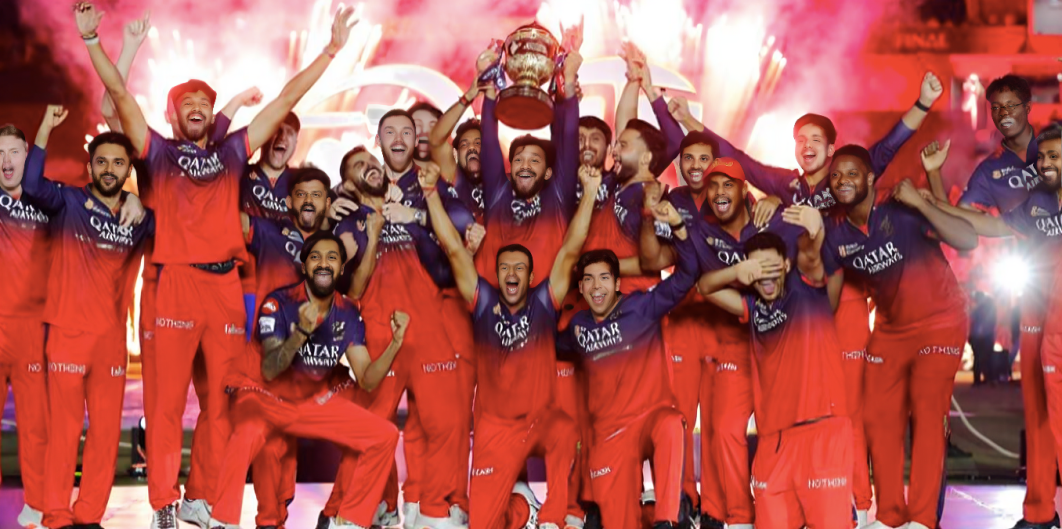
Mumbai: A consortium led by the Aditya Birla Group, along with The Times of India Group, Bolt Ventures (David Blitzer) and a Blackstone fund, has acquired Indian Premier League (IPL) franchise Royal Challengers Bangalore (RCB) for $1.8 billion, marking one of the highest valuations in T20 cricket, according to a media report by The Economic Times.
The deal signals a sharp escalation in IPL franchise valuations, with RCB’s price more than doubling the $900 million benchmark set in 2023, when Torrent Group acquired Gujarat Titans. It also reflects the deepening interest of global capital in Indian cricket. In a parallel transaction, Rajasthan Royals were valued at around $1.6 billion in a stake sale backed by global investors including Rob Walton of Walmart and members of the Ford family, indicating the growing participation of international sports franchise owners in the IPL ecosystem.
Strong valuation growth driven by scale and monetisation
RCB’s valuation highlights the IPL’s expanding commercial strength, powered by massive fan engagement, rising media rights income and robust sponsorship demand.
For the seller, United Spirits Ltd (USL), a subsidiary of Diageo Plc, the transaction represents nearly a 16-fold return on its original 2008 investment. The acquiring consortium will gain ownership of both the men’s IPL team and the franchise’s Women’s Premier League (WPL) team, strengthening its presence across formats.
Under the new ownership structure, Aryaman Vikram Birla will serve as Chairman, while Satyan Gajwani will take on the role of Vice Chairman.
IPL emerging as a global sports investment asset
The report underscores the IPL’s evolution from a domestic cricket league into a globally investable sports property, attracting interest from private equity firms, strategic investors and global sports owners.
This transformation has been underpinned by the $6.2 billion IPL media rights deal signed in 2022, which significantly boosted franchise economics. Teams are now estimated to generate annual profits in the range of ₹100 crore to ₹200 crore, supported by strong revenue streams and consistent audience growth.
In FY25, the Board of Control for Cricket in India (BCCI) generated ₹12,005 crore in revenue from the IPL, reflecting continued expansion in media rights, sponsorships and franchise fees.
Competitive bidding reflects rising investor appetite
The RCB acquisition followed a highly competitive bidding process involving several prominent investors. The winning consortium outbid offers from Serum Institute’s Adar Poonawalla and Aditya Mittal of ArcelorMittal, among others. Early rounds also saw participation from Premji Invest in partnership with EQT, as well as a consortium comprising Ranjan Pai, KKR and Temasek.
Commenting on the acquisition, Satyan Gajwani said the consortium aims to build RCB into a global sporting institution while remaining deeply rooted in Bengaluru and Karnataka. The focus will be on strengthening the franchise’s legacy, fan base and on-field success.
Scarcity and global capital driving valuations
Industry experts cited in the report noted that IPL franchises are increasingly being viewed as “trophy assets”, driven by their scarcity and strong growth potential. With only 10 teams in the league and a cricket audience exceeding one billion in India, demand for ownership continues to outstrip supply.
The surge in IPL valuations also mirrors broader global trends in sports investments. According to Forbes, the world’s top 50 sports teams were collectively valued at over $53 billion in 2025, with even the lowest-ranked teams commanding multi-billion-dollar valuations.
Outlook remains strong amid media rights growth
Looking ahead, further upside in franchise valuations is expected as competition for media rights intensifies and new advertisers enter the ecosystem. IPL Chairman Arun Dhumal noted that while current broadcasters are seeing strong monetisation, future bidding cycles are likely to attract even greater interest.
With rising revenues and sustained fan engagement, the IPL continues to reinforce its position as one of the most valuable and resilient sporting leagues globally.