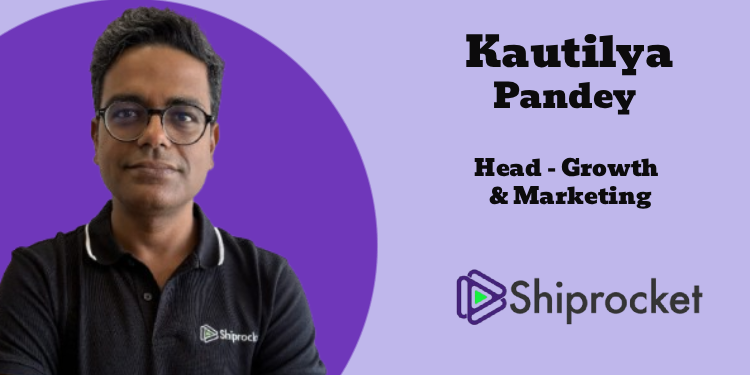
Medianews4u.com caught up with Kautilya Pandey, Head, Growth & Marketing Shiprocket, around the evolving dynamics of India’s e-commerce and seller ecosystem. Shiprocket is an eCommerce enablement and logistics platform that empowers online sellers, D2C brands, MSMEs, and marketplaces with a unified stack of shipping, fulfillment, customer experience, and growth solutions. Launched in 2012, the company’s mission is to simplify logistics and enhance operational efficiency for sellers of all sizes across India and globally.
With the launch of its first-ever brand film, ‘Let’s Build Big Together’, Shiprocket has highlighted a reality that resonates widely across the industry, the everyday complexity faced by D2C and e-commerce entrepreneurs managing shipping, payments, checkout, marketing and growth across multiple, often fragmented systems. Rather than idealised success stories, the narrative reflects the ambition, pressure and decision fatigue that increasingly define India’s new-age founders.
Together, these developments point to a broader shift underway in India’s e-commerce ecosystem, where infrastructure players are evolving beyond single-function roles to become more integrated enablers of seller growth. This transition reflects changing founder needs, rising delivery expectations and the growing importance of operational simplicity in scaling digital businesses.
Q. How did the idea to launch its first-ever brand film “Let’s Build Big Together” come about? What was the brief given to the creative agency?
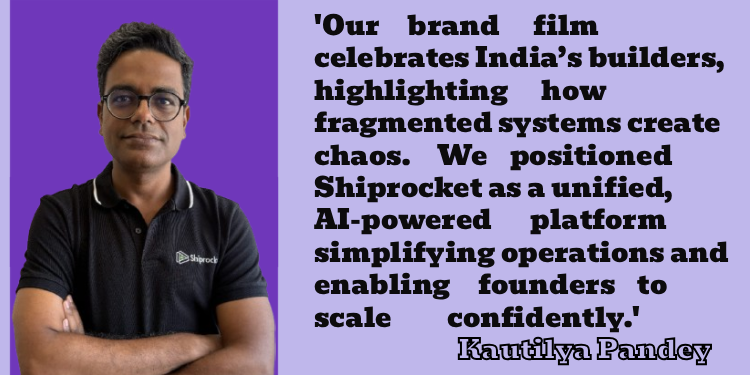
Our film is our tribute to the doers and builders of India, who just need reliable systems behind them to truly scale and achieve their full potential.
This idea came from countless conversations with founders who told us the same story: they love building their brand, but get sucked into chaos, delayed deliveries, stuck payments, managing multiple partners, and constant pressure to keep orders coming in. This also led to a significant amount of anxiety among founders about whether they were doing the right thing for their business.
The creative brief for the brand film “Let’s Build Big Together” captured this in a simple Get–Who–To–By framework. We wanted to speak to D2C and e‑commerce sellers who are currently juggling multiple disconnected partners and platforms for shipping, payments, checkout, and marketing. The task was to get them to see Shiprocket as a unified tech platform, complete with shipping, checkout, marketing, finance, and intelligence solutions, and to perceive us as simple, seamless, and seller‑first.
 Q. Besides the brand film, will on‑ground activities like participating in retail events, organising seminars, workshops play an important role in getting the message out?
Absolutely. The film gives us an emotional, memorable articulation of our story, but the real work of brand building for a platform like ours happens in the rooms where merchants learn, network, and solve problems together. Flagship properties such as Shiprocket SHIVIR and initiatives like Yatra are proof of our belief in high‑touch, on‑ground engagement with the “brands of Bharat.”
The idea is to let founders feel the emotion of the film, and then immediately experience the tools, playbooks, and partners that make that promise real in their daily operations.
Q. Have satisfied clients become influencers for Shiprocket?
More than any celebrity, our most credible influencers are the founders whose brands have grown on top of the Shiprocket stack. The brand film itself is framed as a tribute to these “dreamers, doers, and disruptors,” and our larger content strategy mirrors that by putting merchants at the centre of the story rather than Shiprocket.
We already see many of our high‑NPS merchants acting as evangelists, speaking at SHIVIR, Yatra, and partner events, co‑creating case studies, and sharing their journeys on LinkedIn and other platforms. As we scale this, you’ll see more structured programmes that turn customer stories into playbooks, short films, and co‑marketing campaigns, so founders can learn from each other while also discovering what Shiprocket can do for them.
Q. How does Shiprocket’s AI‑first approach solve the everyday complexity faced by D2C and e‑commerce entrepreneurs managing shipping, payments, checkout, marketing and growth across multiple, often fragmented systems?
The core problem is fragmentation: different tools for shipping, payments, checkout, marketing, and support mean founders spend more time stitching systems together than serving customers. Shiprocket’s AI‑first approach starts by unifying data across these touchpoints and then using machine learning to make better decisions at each step, from courier selection and route optimisation to fraud checks, COD risk scoring, and marketing automation.
On the shipping side, AI helps assign the right courier, predict delays, and surface proactive interventions so orders move faster and more reliably at a lower cost. On the marketing side, products like Engage 360 use data‑driven segmentation and automation to help sellers run smarter campaigns, reduce cart abandonment, and communicate in a timely, personalised manner without needing an enterprise‑size marketing team.
Because all of this sits on a single platform, founders experience it less as “yet another AI tool” and more as an intelligent operating system that quietly takes away complexity, freeing them to focus on product, brand, and customer experience, which is exactly what the brand film celebrates.
 Q. How is AI going to impact the dynamics of India’s e‑commerce and seller ecosystem in 2026?
In 2026, AI will be the difference between growth that is expensive and fragile, and growth that is efficient and compounding. As models become better at understanding demand patterns, geography, and consumer behaviour, MSMEs will be able to plan inventory more effectively, select optimal shipping options, and personalise communication in ways previously reserved for the large enterprises.
AI will also lower the barrier to sophisticated decision‑making: founders will increasingly expect “copilots” that sit inside their commerce stack and answer questions like “Where am I leaking margin?” in natural language. Combined with India‑specific rails like UPI and ONDC and the rise of Bharat’s digital entrepreneurs, this will push the ecosystem from hustle‑led hacks to system‑led, insight‑driven scale, a shift Shiprocket is deeply invested in enabling.
Q. What improvements can we expect in Shiprocket’s ad stack to help clients achieve maximum ROI from commerce marketing through campaign audits?
The next wave of our ad‑stack evolution is about making campaign audits continuous, granular, and action‑oriented rather than a one‑off post‑mortem. By tying first‑party behavioural data, order data, and marketing touchpoints together, we can give brands a much clearer view of which channels, creatives, and journeys are actually driving profitable orders instead of just clicks.
The goal is to move from generic best practices to prescriptive, account‑specific recommendations that close the loop between media, on‑site experience, and fulfilment, thereby maximising ROI from every rupee spent.
Q. WhatsApp has been introducing new tools steadily over the past couple of years. How has this helped the platform grow in value for MSMEs and D2C brands?
For MSMEs and D2C brands, WhatsApp has effectively become the default operating environment for customer relationships. Features like business profiles, quick replies, catalogues, and broadcasts have turned it into a full‑funnel surface for discovery, purchase, and support, all in a channel customers already trust and use daily.
When platforms like Shiprocket plug into WhatsApp, the value multiplies: order updates, support queries, cod confirmations, abandoned‑cart nudges, and even repeat‑purchase campaigns can all move into a conversational, two‑way format rather than one‑way notifications. This is especially powerful for Bharat’s entrepreneurs, many of whom run their businesses primarily through mobile and social channels, because it collapses the distance between marketing, commerce, and service into a single thread.
Q. Do you expect to see clients leverage the creator economy in a bigger way in 2026?
Yes, but with a shift from vanity to value. In 2026, the most interesting work will come from brands using creators not just for top‑of‑funnel awareness, but for measurable commerce outcomes, live demos, shoppable content, affiliate‑driven sales, and community‑led product drops.
For MSMEs and emerging D2C brands, micro and nano‑creators will be especially important because they combine trust, relevance, and cost‑efficiency. As attribution, affiliate infrastructure, and commerce platforms mature, it becomes much easier for a founder to know which creators genuinely move product and to structure always‑on, performance‑linked partnerships rather than one‑off campaigns.
With the advent of technology, particularly AI, producing high-quality videos has become and will continue to become increasingly easier. This will allow a founder to take their brand’s message to a wider audience with a single click.
 Q. How is India’s D2C and e‑commerce ecosystem maturing from rapid expansion to more sustainable, system‑led scale?
The last decade was about getting online, acquiring customers quickly, and pursuing growth at almost any cost. The next decade is about building resilient unit economics, reliable operations, and brands that can withstand platform shifts, and you can already see this happening.
Sellers are realising that stitching together five different tools for shipping, payments, checkout, and marketing creates operational drag and eats into margins, and are therefore gravitating towards integrated, system‑led platforms.
At the same time, infrastructure such as UPI, ONDC, improved shipping networks, and platforms like Shiprocket are democratising access to capabilities once the preserve of large enterprises.
This is pushing the ecosystem from a “growth at any cost” mindset to one where founders obsess over reliability, automation, AI‑driven decisioning, and full‑stack partners, exactly the shift we are speaking to in “Let’s Build Big Together,” where the hero is the entrepreneur, and Shiprocket is the system quietly making scale possible.