As media and marketing continue to evolve, one powerful intersection is emerging: AI and performance marketing.
BrandBooster.ai is leading this shift with a next-gen platform that replaces traditional high-retainer agencies with a smarter, faster, results-driven model. Powered by its AI engine QuickAds.ai, it delivers data-led ad campaigns in hours—not weeks—using real-time creative insights.
Medianews4u.com caught up with Nitin Mahajan founder, CEO BrandBooster.ai and QuickAds.ai
Q. AI has become an integral part of marketing workflows. How is that helping companies make quicker, more efficient decisions?
AI reduces the time between insight and action. By processing vast datasets in real time, it empowers marketers to make data-backed decisions faster.
Whether it’s optimising ad placements, personalizing creative, or adjusting bids dynamically—AI eliminates guesswork and manual delays. It’s not just about speed; it’s about smart speed.
Q. How is AI challenging the traditional agency-client model?
AI is disrupting the traditional agency model by shifting power back to the brand. Brands no longer need to rely solely on long retainers or siloed teams.
With platforms like BrandBooster.ai, they get access to intelligent systems that continuously learn, adapt, anoptimizese. The agency-client dynamic is evolving from manpower to machine intelligence—faster, leaner, and more transparent.
Q. BrandBooster.ai is helping brands ditch high-retainer agencies. Could you share client examples and results?
One D2C apparel brand we worked with saw a 42% drop in CAC and a 3X increase in ROAS within 60 days—without a large marketing team or agency dependency.
Another SaaS client used BrandBooster.ai to generate and test 30+ ad creatives across five platforms in under 48 hours. For them, what used to take weeks, now happens in days—with better outcomes.
Q. What is the business model of BrandBooster.ai and how is it being finetuned? What are the scaling challenges?
Our model is performance-first. We charge based on value delivered—whether that’s conversions, leads, or measurable engagement. We’re constantly refining the AI to better understand intent signals, behavioral shifts, and platform-level changes.
Scaling challenges include data integration across channels and ensuring creative quality at scale. Balancing automation with brand nuance is something we are always working to perfect.
Q. Does your client base mainly consist of startups, or are legacy brands adopting AI as well?
While startups are naturally inclined to adopt AI for speed and efficiency, we’re seeing increasing interest from legacy brands, especially in FMCG and retail.
These brands are looking to modernise their marketing stack and AI offers them a way to run agile campaigns without overhauling internal systems.
Q. How does QuickAds.ai use data and real-time creative insights to launch campaigns in hours, not weeks?
QuickAds.ai ingests first-party data, industry trends, and real-time performance signals to generate, test, and deploy ad creatives almost instantly.
Our AI engine continuously learns what’s working and auto-adjusts formats, copy, and audience segments—ensuring campaigns launch faster and perform better.
Q. How are AI-powered ads disrupting D2C growth?
For D2C brands, growth is all about agility and ROI. AI-powered ads eliminate delays and bring precision targeting, real-time optimization, and predictive analytics into play. It’s no longer about running ads—it’s about running the right ads to the right people at the right time, every single day.
Q. How important is real-time automation for fast-scaling brands?
It’s absolutely critical. When you’re scaling, every hour counts. Real-time automation allows brands to adjust budgets, creatives, and targetting based on live feedback—maximising ROI and minimizing waste. It’s the difference between reacting and proactively growing.
Q. How do tools like BrandBooster.ai fit into the startup mindset of speed, clarity, and ROI?
Startups can’t afford to spend months on brand decks or weeks on ad testing. They need actionable data, fast deployment, and measurable outcomes.
BrandBooster.ai gives them exactly that—a plug-and-play performance engine that respects time, money, and momentum.
Q. How is AI shifting focus from vanity metrics to revenue outcomes?
AI doesn’t just look at clicks or impressions—it connects the dots to conversions, revenue, and customer LTV. That’s a fundamental shift.
Brands can now track true business impact rather than just surface-level engagement, making marketing accountable and growth-focused.
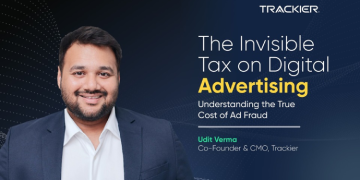
Q. How does BrandBooster.ai help reduce ad fraud and wastage?
We use AI to detect unusual patterns in traffic, clicks, and conversions. This allows us to filter out bots, irrelevant audiences, or low-quality placements.
Our algorithms continuously optimize spend towards high-intent channels—ensuring every rupee spent is better justified.
Q. Is it a challenge to keep brand messaging consistent across traditional and digital media?
It is a challenge, but it’s solvable. Our AI tools are trained on brand tone, guidelines, and audience data.
This allows us to generate on-brand creative variations at scale, while preserving message consistency. The key is to blend human brand insight with machine precision.
Q. What role is AI playing in improving marketing measurement and ROI tracking?
AI is helping marketers move from siloed dashboards to holistic ROI models.
By aggregating data across channels and connecting it to business outcomes, AI makes marketing performance measurable, transparent, and actionable in near real time. It’s bringing clarity where there used to be chaos.