Maison Élan, a joint venture between AVS and UAE-based entrepreneurs Purva Kumar Pethani and Hem Sevak, recently announced an exclusive collaboration with the Picasso Trust, granting Maison Élan the sole rights within the United Arab Emirates to license selected works of Pablo Picasso.
The collaboration includes a curated portfolio of over 200 Picasso artworks and authorises Maison Élan to develop licensing partnerships across premium sectors including real estate, banking, fine jewellery, haute horology, automobiles, fashion, hospitality, lifestyle products, experiential spaces, and limited-edition collectibles. All licensed applications will operate under strict curatorial, brand, and legacy frameworks established by the Picasso Trust.
Maison Élan has been established as a luxury art and brand licensing platform designed to manage high-value cultural intellectual property while enabling thoughtful collaborations with premium brands and institutions across the UAE.
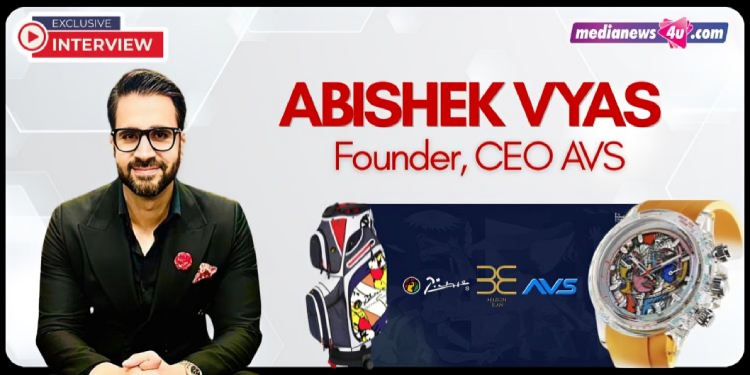
The initiative is backed by AVS, the Dubai and Mumbai based arts and entertainment company founded by media entrepreneur Abishek S Vyas, which operates across film production, content driven intellectual property and art licensing. With over 16 years of experience across companies including Viacom18, Disney, Eros International, Zee Entertainment and Netflix, Vyas brings a strong understanding of how global creative ecosystems operate across entertainment, culture, and commerce.
For AVS, the collaboration represents a natural extension of its larger vision to connect storytelling, cultural assets, and global intellectual property with contemporary audiences.
Medianews4u.com caught up with Abishek Vyas Founder, CEO AVS
Q. AVS approaches entertainment not just as content production but as cultural asset creation. What does this entail?
For me, entertainment has always been much more than producing films or series. At AVS, we look at storytelling as a cultural asset that can live across multiple formats and industries over time. A strong piece of content can evolve into intellectual property that extends into licensing, audio storytelling, brand collaborations, experiential formats, and even luxury or lifestyle partnerships.
Our approach is to build IP with longevity. That means thinking beyond the immediate release window of a film or a show and understanding how that story, character, or creative asset can exist across platforms and markets. In many ways, it is about treating entertainment the way other industries treat heritage brands or cultural icons, something that can be preserved, interpreted, and experienced in different forms. That philosophy is central to how we are building AVS.
Q. AVS has moved on from only focussing on film production and funding company to having multiple verticals. How are they coming along? What goals have been set for each of them in 2026?
When we started AVS in 2022, the focus was primarily on film production and funding. But very quickly we realised that the future of the entertainment industry lies in building integrated ecosystems around content and intellectual property. That led us to expand into multiple verticals.
Our film and series development pipeline continues to grow with projects being developed for both theatrical and global streaming platforms. At the same time, Maison Élan, our luxury art and brand licensing vertical, has become a very important pillar for us, especially with collaborations like the Picasso licensing initiative in the UAE.
For 2026, the goal across these verticals is very clear: build fewer but more meaningful projects, expand international partnerships, and position AVS as a platform that operates at the intersection of entertainment, art, and cultural IP rather than a traditional production house.
Q. Is predictive analytics playing an increasingly important role in helping the company build a connected ecosystem where creativity and commerce strengthen each other?
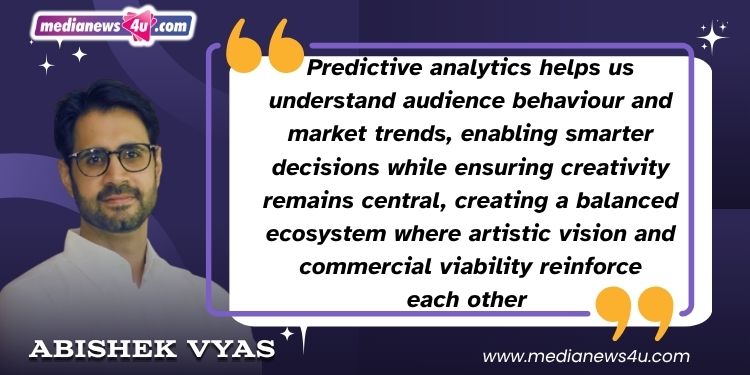
Absolutely. Data and analytics are becoming extremely important in how entertainment companies operate today. Predictive analytics helps us understand audience behaviour, platform trends, and emerging consumption patterns much earlier than before.
At AVS, we see analytics as a tool that supports creative decision making rather than replacing it. It helps us evaluate which formats travel well across markets, which genres are seeing sustained engagement, and how content can be positioned across different platforms.
The goal is not to let data dictate creativity, but to ensure that strong creative ideas are supported by intelligent market understanding. When creativity and analytics work together, the result is a more sustainable ecosystem where artistic vision and commercial viability reinforce each other.
Q. How do you see Dubai and the Middle East evolving as a creative hub in the coming five years? What role will AI play in this journey?
Dubai and the wider Middle East are entering a very exciting phase as creative economies. Governments in the region are actively investing in culture, media infrastructure, and global partnerships. Over the next five years, I believe we will see the region emerge as a significant hub not just for production but also for content financing, intellectual property development, and cross border collaborations.
AI will play a meaningful role in this transformation. From visual effects and production workflows to content discovery and audience engagement, AI will help make the entire creative process more efficient. At the same time, the human element of storytelling will remain central. Technology will enhance creativity, but the emotional connection that audiences feel with stories will always come from human imagination.
Q. What trends are being seen when it comes to cross border co productions between India and the Middle East? What role is AVS playing in this?
Cross border collaborations between India and the Middle East are becoming far more common. Both regions have strong storytelling traditions, rapidly growing audiences, and increasingly aligned business interests in entertainment.
We are seeing more conversations around co productions, shared financing structures, and content designed to travel across multiple markets. Streaming platforms have also accelerated this shift by encouraging stories that resonate beyond one geography.
For AVS, operating between Dubai and Mumbai gives us a unique vantage point. We are actively exploring collaborations that bring together talent, production capabilities, and investment from both regions. Our aim is to build projects that feel culturally authentic while still having global appeal.
Q. Will the current geopolitical tensions in the Middle East impact AVS and the industry in the short term or mid term?
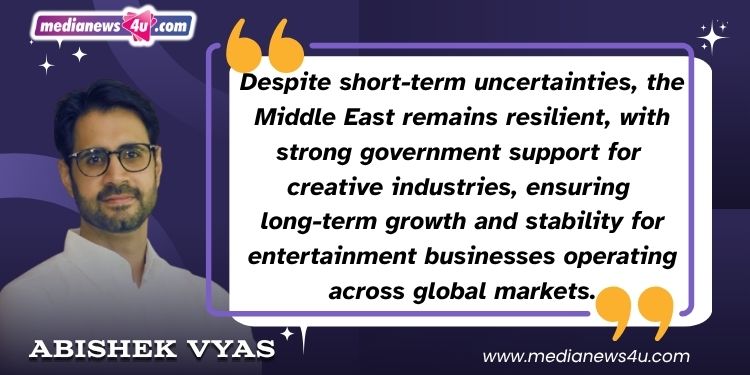
The Middle East has historically demonstrated strong economic resilience even during periods of geopolitical uncertainty. Cities like Dubai have built ecosystems that remain stable and attractive for global business and creative industries.
In the short term, there can always be fluctuations in sentiment or investment cycles, but the broader trajectory of the region’s media and cultural sectors remains extremely strong. Governments continue to prioritise culture, tourism, entertainment, and creative industries as long term pillars of economic growth.
For companies like AVS that operate across multiple markets, the focus is on maintaining diversified partnerships and building projects that can travel globally. In that sense, the long term outlook for the entertainment ecosystem across India and the Middle East remains very promising.
Q. What are the major projects that AVS is working on across different verticals?
At AVS, we are currently developing projects across two key verticals. The first is our film and series pipeline, where we are working on a slate of premium stories intended for both theatrical release and global streaming platforms. These projects are at different stages of development, and the focus is on strong narratives that can travel across markets.
The second vertical is art and brand licensing through Maison Élan. Our collaboration with the Picasso Trust in the UAE is an important milestone in that journey, as it brings together cultural heritage and carefully curated brand partnerships across sectors such as luxury, hospitality, and design.
Q. Does the focus rest on big entertainment stories that will be built across borders?
Yes, increasingly the focus is on stories that can resonate across geographies. The globalisation of streaming platforms and the growing cultural exchange between markets means that audiences are more open to international stories today than ever before.
At AVS, we are particularly interested in stories that feel rooted in a specific culture but still carry universal themes. When a story has emotional authenticity, it naturally travels. Our approach is to develop projects that can work both in local markets and internationally, especially across regions like India and the Middle East where there is already strong cultural and creative connectivity.
Q. How does AVS balance creative ambition with commercial discipline in today’s content climate?
Balancing creativity and commercial discipline is one of the most important aspects of building a sustainable entertainment company. At AVS, we approach this by being very selective about the projects we pursue.
Creative ambition is essential because audiences are always looking for fresh and meaningful stories. At the same time, we are equally mindful of the economic realities of the industry. That means structuring projects responsibly, building partnerships early, and ensuring that the scale of a project aligns with its market potential.
Ultimately, the goal is to build stories that are creatively fulfilling but also commercially sustainable.
Q. How are streaming corrections reshaping content development and commissioning decisions being made by AVS and the industry?
The streaming industry is currently going through a phase of recalibration. Over the last few years there was a period of very aggressive content commissioning, and now platforms are becoming far more selective and strategic.
This shift is encouraging creators and studios to focus more on quality and long term value rather than simply producing high volumes of content. For companies like AVS, this actually creates an opportunity. It means projects that are thoughtfully developed, well packaged, and creatively strong are more likely to stand out.
The emphasis now is on storytelling that feels distinctive and sustainable rather than purely driven by scale.
Q. What does the future of mid budget and premium theatrical cinema look like?
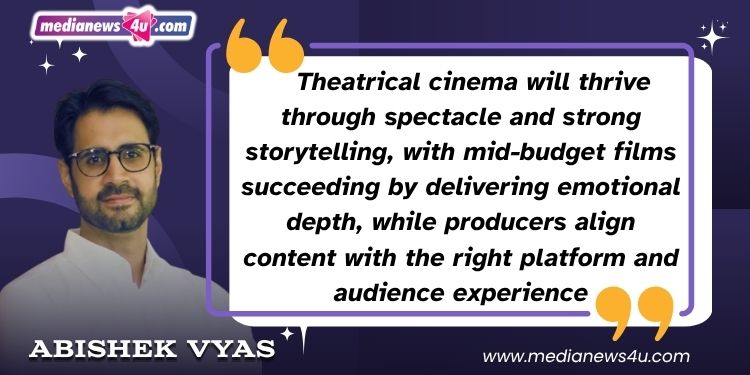
The theatrical experience continues to hold a special place in the entertainment ecosystem. Large spectacle driven films will always draw audiences to cinemas, but I believe there is also a strong future for well-crafted mid budget films that offer compelling storytelling.
What we are likely to see is a clearer distinction between projects designed for theatres and those designed for streaming platforms. Theatrical films will increasingly need to deliver a strong cinematic experience, whether through scale, storytelling, or emotional resonance.
For producers, the key will be to match the right story with the right platform and release strategy.
Q. Audio is an underestimated storytelling format. How do you see formats like podcasts coming along?
Audio is one of the most interesting and underexplored storytelling formats today. It allows for very intimate and immersive storytelling, and audiences can engage with it while commuting, travelling, or multitasking.
Globally, podcasts and audio series have already demonstrated that they can build very loyal audiences and even become the starting point for films and television adaptations. In India and the Middle East, this space is still evolving but it has enormous potential.
At AVS, we see audio as a creative playground where new ideas can be tested and developed before expanding into other formats.
Q. Microdramas are competing with short form video for consumption time. Does AVS have plans in this area?
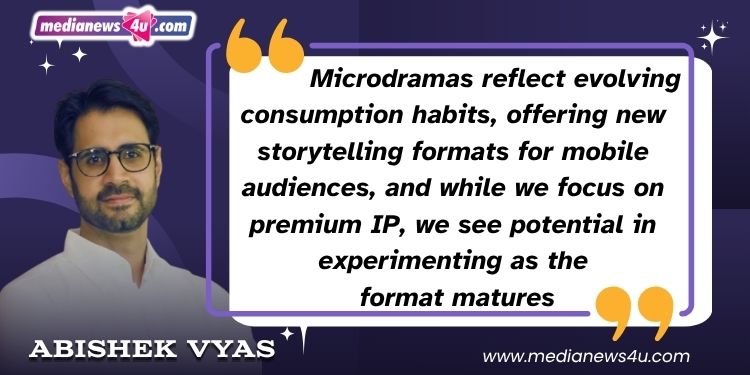
Microdramas and short form storytelling are becoming increasingly popular, particularly with younger audiences who consume content on mobile platforms. These formats require a very different narrative style, where stories unfold in shorter bursts but still maintain strong engagement.
While AVS primarily focuses on premium storytelling and intellectual property development, we are closely observing how microdrama formats evolve. They represent an interesting opportunity to experiment with storytelling structures and audience engagement.
If the format continues to mature in terms of creative depth and monetisation models, it is certainly an area we would consider exploring in the future.