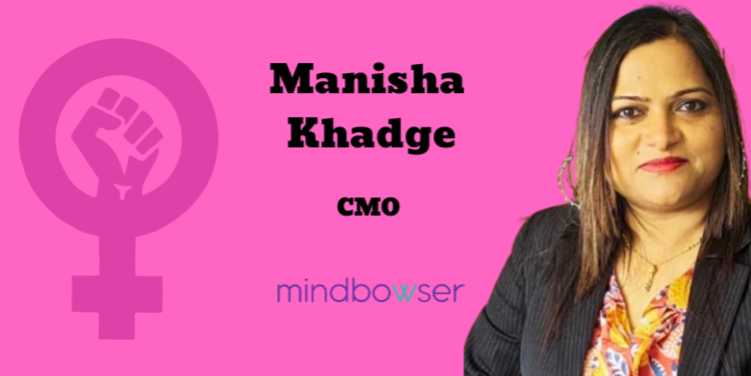
On the occasion of International Women’s Day Medianews4u.com caught up with Manisha Khadge CMO Mindbowser.
With nearly two decades of experience in B2B IT services and product engineering, she has led impactful marketing and brand transformation initiatives at organisations such as Synechron, Tavisca, Icertis, and Signzy. At Mindbowser, she drives growth through customer-centric strategies while actively championing Diversity, Equity, and Inclusion through initiatives like the “Support Women at Work” programme and the DEI Podcast Series.
She has also been recognized among Top 10 Women CMOs 2022 by Entrepreneur India and Asia’s 100 Women Power Leaders 2023, among other accolades.
Q. What role are women playing in leadership roles at Mindbowser?
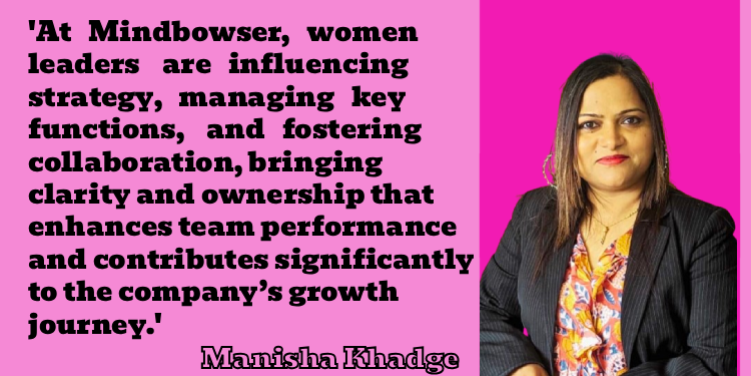
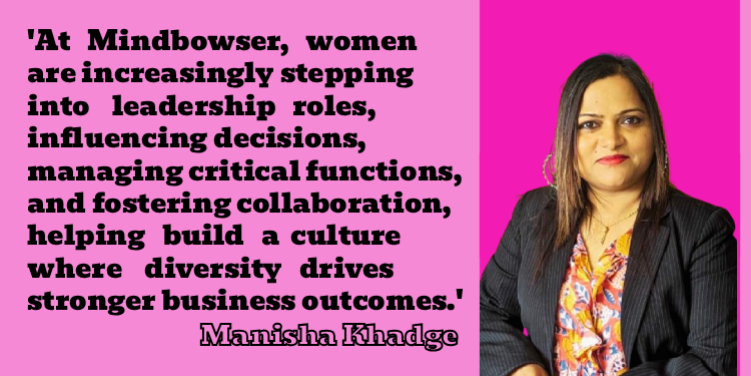
At Mindbowser, women are becoming a lot involved in leadership roles. They are managing client relations, directing important departments and taking part in strategic choices which influence the expansion of the business across all teams. I’ve closely seen women contribute a collaborative approach that improves teams and results, a strong feeling of ownership and clarity in decision-making.
Our focus has always been on opportunity and capability, giving women the room to develop, assume leadership roles and define the direction of the company. This has contributed to the development of a culture in which different viewpoints greatly impact the growth and expansion of our company.
 Q. The company champions Diversity, Equity, and Inclusion through initiatives like the “Support Women at Work’ programme and the DEI Podcast Series.. What role do these play in attracting and retaining female talent?
Initiatives like the DEI Podcast Series and the Support Women at Work programme highlight our dedication to creating a work environment where women feel appreciated, supported and inspired to grow. The Support Women at Work programme helps women manage their professions with more clarity and confidence by promoting peer support, open communication and mentoring.
Through the DEI Podcast Series, I engage with founders, innovators and industry leaders to discuss diverse perspectives and real experiences around inclusion and leadership.
These initiatives encourage meaningful conversations, strengthen our collaborative culture and convey to female professionals that Mindbowser actually supports their ideas, aspirations and leadership.
Q. There is a lot of talk about DEI versus merit. If programmes are well designed can they co-exist?
From my perspective, the conversation around DEI versus merit often exists because the playing field has not historically been equal. For many people, opportunities, access, and visibility have not been the same, and that’s where thoughtfully designed DEI initiatives can help bridge the gap.
The goal of DEI should never be to replace merit, but to ensure that merit has a fair chance to be seen and recognized. When organizations remove structural barriers and create equal access to opportunity, the focus naturally returns to merit. In that sense, well-designed DEI programmes and merit are not in conflict, they are complementary steps toward a more equitable and high-performing workplace.
Q- How effective is the podcast as a medium in getting out the message among women consumers?
Podcasts have become very efficient for meaningful conversations, particularly on issues like inclusion, diversity and leadership. Through the DEI Podcast Series, I have found that the format allows for deeper, more authentic discussions with founders, innovators and industry leaders who share their real experiences and perspectives.
These discussions provide realistic insights, useful advice and a sense of community for a large number of female listeners. The accessibility of podcasts also makes it easier for people to engage with these ideas while going about their daily routines. It helps amplify conversations around inclusion and encourages more women to see themselves as future leaders and change-makers.
Q. What customer-centric strategies is Mindbowser doing to target women effectively?
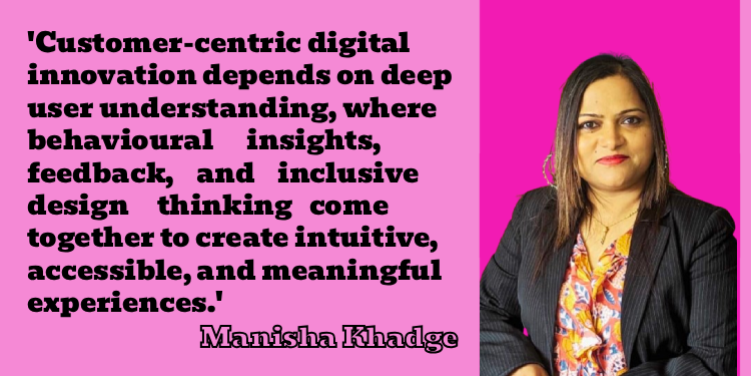
Building effective digital products requires a thorough understanding of customer demands, which includes closely observing how women use technology. I really think that listening is the first step in customer-centric strategy. Teams may create platforms that are user-friendly, accessible and adaptable to a range of user expectations by using behavioral insights, feedback mechanisms and user research.
A strong design thinking approach helps ensure that products are built with empathy and real user contexts in mind. When organisations prioritise inclusive design and continuously learn from user interactions, they are better positioned to create experiences that genuinely resonate with women consumers.
 Q. What have been the key learnings from being in leadership roles?
One of the most important takeaways leadership has taught to me is that progress is rarely a solo effort; rather, it is built by enabling others to succeed. The performance of teams is greatly impacted by creating an atmosphere where employees feel trusted, inspired to take responsibility and at ease exchanging ideas.
I’ve also learned how important it is to pay close attention and be flexible, particularly in a field that is changing frequently like technology. Leading teams with clarity and purpose is more important than possessing all the answers. People naturally bring their best ideas and energy to the table when they feel empowered and appreciated.
Q. How important has female mentorship been in your career?
Female mentorship has certainly been valuable in my journey, although when I started my career nearly 25 years ago, there were far fewer visible examples of women in leadership. The few who were there were truly pathbreakers, and simply seeing them navigate complex roles with confidence made a strong impression.
Over time, interactions with senior women leaders—sometimes formal mentors, sometimes just leaders you observe closely, helped shape my perspective on leadership, resilience and decision-making. Mentorship does not always have to be structured; even honest conversations about challenges and trade-offs can be incredibly valuable.
As the ecosystem evolves, I believe it’s equally important for women who have progressed in their careers to support and mentor others. That ripple effect helps build confidence, expand possibilities and gradually make leadership more representative.
Q. What advice would you give to women targetting a leadership role?
Women that aspire to be in leadership positions must focus on developing solid expertise in their field while keeping an open mind to new ideas. It’s important to speak up, share ideas and seize opportunities because confidence comes from being clear about what you contribute to the table. Seeking mentorship, learning from diverse perspectives, and building supportive professional networks can also make a meaningful difference.
However, as leadership paths are rarely linear, resilience is essential. Women can overcome difficulties and work their way toward leadership roles by remaining inquisitive, flexible and dedicated to personal development.
Q. What trends are being seen in terms of women driving impactful marketing and brand transformation initiatives at organisations?
Women leaders today are very essential in shaping more authentic and consumer-focussed marketing strategies. Today’s female CEOs are crucial in developing more genuine and customer-focused marketing tactics.
One obvious trend is the move toward purpose-driven storytelling, that involves companies developing sincere relationships with their consumers over depending solely on traditional advertising.
In order to provide personalised experiences, there is also a greater focus on data-backed insights combined with a thorough comprehension of customer behavior. Women executives are also promoting more inclusive and cooperative team cultures in several companies, which frequently results in better brand transformation projects and more innovative thinking.
 Q. In the coming three years what would you like to see companies do to empower women in tech?
I would like to see companies go beyond their mission over the next three years and concentrate on establishing clear pathways for women to advance into leadership positions in the technology industry. Stronger networks of mentors, chances to oversee important projects and more exposure in positions of decision-making.
Companies should also fund education and skill-building initiatives that assist women in keeping up with fast developing technology like artificial intelligence and data. More women will remain, develop and occupy leadership roles in the tech ecosystem if inclusive workplace cultures are created where all viewpoints are respected.