Lens Vault Studios (LVS) – the newly launched, tech-driven entertainment company – recently announced its debut production, ‘Bal Tanhaji’. The show represents the studio’s first original IP and sets the tone for its ambition to build expansive story worlds through next-generation technology.
Arriving six years after ‘Tanhaji: The Unsung Warrior’, ‘Bal Tanhaji’ takes audiences deeper into the universe, exploring uncharted territory and expanding the narrative canvas beyond conventional Bollywood content creation. With this launch, Lens Vault Studios positions itself at the forefront of cinematic universe-building that extends well beyond theatrical releases. Prismix Studios, the in-house generative AI powerhouse, is the creative and technological force behind this content.
For Devgn, the launch of Lens Vault Studios represents a vision that goes beyond traditional cinema. The focus is on building long-format IPs and diverse content—both fiction and non-fiction—designed for evolving audience preferences across digital-first platforms.
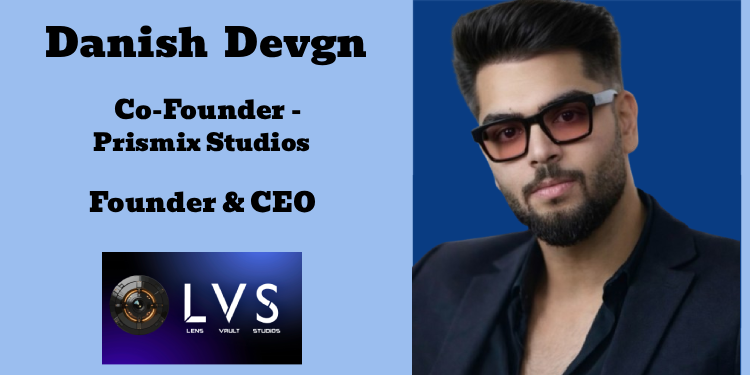
Medianews4u.com caught up with Danish Devgn, Founder, CEO Lens Vault Studios; Co-Founder Prismix Studios
Q. Can you take us through the idea behind LVS and why the need to adapt to AI? How is AI shaping production houses in India?
Lens Vault Studios was created to future-proof storytelling by blending cinematic legacy with AI-driven creation and new technology in general. The core idea was simple: storytelling itself hasn’t changed, but how stories are imagined, built, and distributed has. AI allows us to compress timelines, expand imagination, and experiment without the traditional cost and risk barriers.
In India, production houses are now moving away from purely linear filmmaking toward tech-enabled content ecosystems. AI is reshaping pre-production, world-building, concept visualization, VFX pipelines, marketing, and even audience testing it really does help us cut a lot of costs as What earlier took months, and large teams can now be prototyped in days allowing creators to focus more on narrative and emotional depth rather than logistics.
Q. In terms of Gen AI making content more relevant for new-age audiences, what trends are expected in the coming three years?
We’re entering an era of hyper-personalised storytelling. Audiences no longer want one-size-fits-all content. AI enables stories to adapt culturally, linguistically, and emotionally across regions and platforms.
Over the next three years, we will see shorter cinematic formats, virtual characters with evolving personalities, AI-assisted writers’ rooms, and story universes designed natively for social, gaming, and immersive platforms. Content will become interactive, allowing audiences to influence narratives rather than passively consume them. AI will also make experimentation cheaper, faster, and more frequent, which is critical for staying relevant to Gen Z and Gen Alpha.
Q. What is the opportunity that led to the launch of Lens Vault Studios? What is the investment being made? Is there VC funding?
The opportunity lies in building IP-first story universes, not just producing one-off films. We saw a gap where Indian studios were creating content, but not scalable worlds. LVS is making long-term investments in technology, IP development, and next-generation creative talent.
We are currently self-funded with strategic partnerships. Institutional or VC funding will be considered only when it accelerates scale without compromising creative control.
Q. How much R&D has gone into creating the in-house generative AI engine Prismix Studios?
Prismix Studios represents significant in-house R&D combining generative AI models, cinematic design pipelines, proprietary workflows, and human creative oversight. It’s not a single tool it’s a production-grade creative engine designed to generate visuals, worlds, and characters at scale while maintaining cinematic quality.
Q. What is the content pipeline for Lens Vault Studios in the coming three years?
Our first IP, Bal Tanhaji, is going live soon and sets the tone for LVS’s ambition. Beyond that, we have a slate of original story universes, digital-first franchises, AI-powered series, immersive narratives, and experimental formats across YouTube, OTT, gaming, and experiential media. The goal is depth, not volume.
Q. The strategy is to develop story universes beyond traditional theatrical releases. What does this entail?
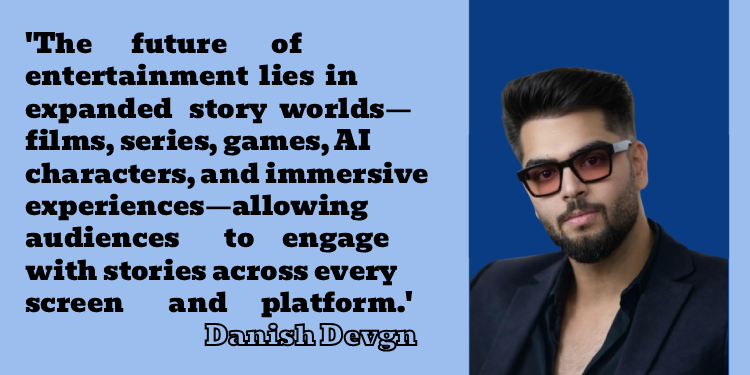
A single IP today can live as films, series, shorts, games, AI characters, and interactive experiences. Consumer attention is fragmented across screens, and expanded IPs allow us to meet audiences wherever they are not just in theatres, but on every platform that matters.
Q. With so many entertainment options, do traditional theatrical releases need to have a cinematic feel for them to work on the big screen?
Absolutely. The big screen must deliver spectacle, scale, and collective emotion something phones can’t replicate. Cinema should feel like an event, not content.
Q. Could you talk about some of the formats and mediums that are still largely untapped, like gaming experiences?
Gaming, virtual worlds, AI characters, and interactive storytelling remain largely unexplored in India. These formats let audiences enter the story, not just watch it and that’s where the future lies.
Q. What goals have been set for 2026, and what is the game plan to get there?
By 2026, LVS aims to launch multiple original IPs, establish itself as India’s leading tech-driven studio, and build globally scalable story franchises across platforms.
Q. Tilly Norwood an AI actor was launched recently and has caused a stir in Hollywood. Is this a sign of things to come, where AI turns the entertainment world completely on its head?
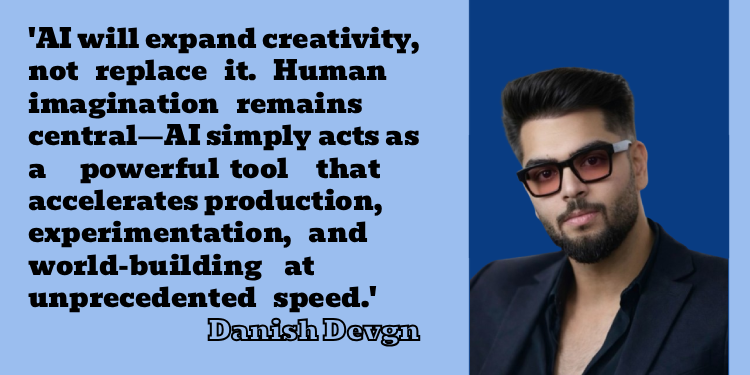
AI characters signal expansion, not replacement. Human creativity remains central. AI simply widens the canvas.
Q. Is the traditional studio model going to disappear as a result of AI?
No. Studios will evolve. Those who adapt will thrive those who resist will struggle AI is a friend a tool not an enemy it assists us in ways we couldn’t before it’s our own human brain at machine speed.
Q. Do we need guardrails and regulatory frameworks for Gen AI and AI?
Yes. Ethical use, consent, and creative ownership are non-negotiable. Innovation needs structure to scale responsibly.
Q. What other forms of content will Lens Vault Studios build?
Digital franchises, animated universes, immersive experiences, AI characters, short-form cinematic series, and technology-driven storytelling IPs and were also stepping into gaming all designed for the future of entertainment.