ThinkROI, a digital marketing agency, recently won the digital programmatic mandate for Hamilton Sciences’ flagship personal care brands, including Denver, ENVY, Vanesa, Pour Home.
The mandate includes a digital push across Hamilton Sciences’ product lines—ranging from Denver’s perfumes and deodorants, the newly launched Denver Face Wash range, to fragrance-forward offerings from ENVY, Vanesa, and the popular home care brand Pour Home. ThinkROI will manage end-to-end programmatic strategy, media planning, execution, and performance optimisation, leveraging its proprietary technology and full-funnel growth solutions.
Denver is known for its masculine perfumes and deodorants. With ENVY and Vanesa delivering more nuanced fragrance experiences, and Pour Home expanding into lifestyle, the portfolio caters to a broad audience with strong online and offline retail presence.
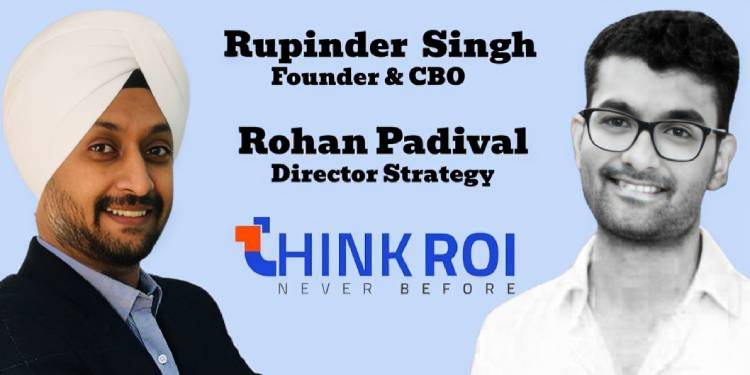
Medianews4u.com caught up with Rupinder Singh Founder and CBO ThinkROI and Rohan Padival Director Strategy ThinkROI
Q. What are the goals of ThinkROI in 2025 in terms of revenue, growing the client roster etc and what is the gameplan going to be to achieve this?
Rupinder Singh: In 2025 our Goal is to grow our revenue by 3X and establish ourselves as the fastest growing Independent agency in India. Currently Our Client Roster is spread across Fintech, BFSI, Cryptocurrency, Technology, FMCG and Retail. Our Gameplan is to win more clients in these categories and strengthen our tech and data capabilities across media and creative delivery teams.
Q. Does FMCG account for the bulk of the client base? How important is the media and entertainment sector as a client base like broadcasters, OTT platforms, agencies?
Rohan Padival: FMCG is a significant vertical for us, contributing to 30% of our client base, which underscores our stronghold in the category.
Q. ThinkROI recently won the Digital Programmatic Mandate for Hamilton Sciences’ Brand Portfolio. Programmatic is expected to contribute over 40 per cent to digital media this year. What factors like CTV are driving this growth?
Rohan Padival: CTV has become highly significant due to a sharp rise in content consumption across Tier One and Tier Two audiences who are now accessing premium content via Smart TV’s and OTT platforms. Its high engagement and brand safe environment make CTV an integral part of programmatic strategies, especially in wellness categories where contextual targeting and household reach matter
AIDCF(All India Digital Cable Federation) has reported “ 30% drop in Pay TV since 2018”
Q. At the same time are factors like limited tech knowledge and complexity challenges for clients in traditional sectors to adopt programmatic?
Rupinder Singh: In our three Years of being in business, we have experienced that few Digital agencies and Publishers have misled and made it complex for Traditional sectors to adopt and trust the medium.
In my view nobody understands Bharat and its consumers persona and consumption habits better than FMCG players, hence if agencies and publishers are able to explain them in their language on how power of programmatic can be harnessed and efficiencies and efficacy both can be increased, I think Agencies and Publishers will be able to unlock the traditional sector.
Q. One area of focus of ThinkROI is to expand its creative-tech stack and analytics capabilities. What does this entail?
Rupinder Singh: On the creative-tech side, we’re adopting advanced platforms and AI-driven content creation to keep our storytelling fresh and engaging.
On the analytics front, we’re enhancing our ability to track, measure, and optimise campaigns in real time, ensuring every marketing effort is data-driven and delivers measurable ROI. Ultimately, this approach positions ThinkROI as an innovative, results-focused partner for our clients.
Q. Does the agency conduct workshops, seminars to educate clients on tech advancements?
Rohan Padival: We actively conduct workshops to educate clients on Tech advancements and evolving trends in the digital landscape. The workshop consists of platform changes, consumer behaviour shifts, ad tech innovations, & emerging formats
Q. Is data-driven targeting becoming more important in a digital environment where there is a clutter of content? How does this strategy reduce wastage of ad monies?
Rupinder Singh: Yes, Data driven targetting has become very important in the digital environment because of two factors- Growing Digital Audience footprint, Buy Type/Commercials involved and fragmented content consumption across various platforms and devices.
For example, YouTube as per sensor tower today clocks 710Mn DAU for India market, Now it becomes very important that for any brand we approach their TG and Markets on Youtube backed by User Identifier data taking all the aspects of Content consumption, Demographics etc, into consideration while stitching it to their marketing and business objectives and goals across Marketing funnels.
By using platforms like GWI to identify audience profiles and media consumption patterns, and layering that with insights from digital market intelligence and analytics tools like Comscore, Similarweb, or Sensor Tower, brands gain a deep understanding of their audience behavior across channels.
Evolved platforms like Google, Meta, and DV360 then enable precise execution of these insights, ensuring sharper targetting and significantly reducing ad spend wastage
Q. The agency offers full-funnel growth solutions. At the same time some people are of the view that the traditional marketing funnel is becoming obsolete as consumers increasingly make spontaneous decisions without going through the three stages like Consideration. But the traditional funnel approach is still used by agencies and clients due to convenience. What are the agencies views of this?
Rupinder Singh: We at ThinkROI believe that Marketing funnels aren’t dead—they’re evolving. Today’s consumers often make snap decisions instead of following linear paths, but the funnel framework still provides valuable structure for planning and measurement.
Smart agencies understand and leverage funnel’s benefits while building flexibility for real-world behavior. One has to recognise that some purchase journeys follow methodical paths while others happen on impulse.
The winning approach? Use traditional funnel structure for clarity and organisation, but adapt it to accommodate both the researcher who compares every option and the impulse buyer who makes emotional, split-second decisions.
For growth-focussed agencies, success means being ready for all types of decision-making journeys—not fighting against human nature, but working with it.
Q. What role is data analytics playing in helping the agency create meaningful, measurable growth for clients?
Rohan Padival: At a strategic level, tools like Google Analytics help us map the user journey, MMPs such as Branch and Appsflyer provide accurate attribution across channels, and CDPs like CleverTap enable personalised, behavior driven engagement.
Together, these platforms empower us to identify high-LTV user segments, optimise marketing spends by channel, and drive more targeted, measurable growth for our clients.
Q. Are campaigns that agency works on usually about driving performance or is digital also used as a brand building tool?
Rupinder Singh: Digital marketing agencies work on campaigns that serve both performance-driven objectives and brand-building goals, recognizing that these approaches are complementary rather than mutually exclusive.
The most successful agencies help clients find the right balance between driving immediate results through performance marketing while building long-term brand equity.
Our FMCG clients Hamilton Sciences and RSPL-Detergent category are leveraging Digital for Branding, by maintaining continuous presence across platforms where the existing and prospective consumers are present, also leveraging platforms where topicality drives users periodically, like OTT, Music and Sports.
Now, As the digital landscape continues to evolve, a balanced approach remains essential for sustainable growth and competitive advantage. By integrating both strategies, agencies can help clients achieve short-term wins while laying the foundation for long-term success in an increasingly crowded marketplace.
Q. Are brands using digital marketing to help meet the needs of India’s next-gen consumers, is authenticity perhaps the most important thing?
Rupinder Singh: In the rapidly evolving digital marketing landscape of India, authenticity has indeed emerged as perhaps the most important factor for brands looking to connect with next-generation consumers. As Gen Z and Millennials continue to dominate the consumer base, their preference for honest, transparent, and purpose-driven brands is reshaping marketing strategies across industries.
Brands that successfully navigate this shift toward authenticity will not only capture market share but also foster lasting consumer loyalty. The key to thriving in India’s dynamic market involves leveraging digital platforms, crafting compelling and authentic brand narratives, and aligning with consumer values such as sustainability.
I believe that several Indian brands like Tata Group, Zerodha and Bamboo India have successfully embraced authenticity in their digital marketing strategies
As we move forward, the brands that prioritise authenticity in their digital marketing efforts will be best positioned to meet the needs and expectations of India’s next-generation consumers, building lasting relationships based on trust, transparency, and shared values
Q. There is a debate on the role that AI should play versus human creativity. What is the agency’s view on this? Is a balance important or is allowing AI more leeway better since it allows work to be done faster and more efficiently?
Rohan Padival: At our agency, we don’t see AI and human creativity as competing forces — we see them as complementary. AI is a powerful enabler, especially when it comes to speeding up tasks like research, data processing, and predictive targetting.
The final creative direction, nuance, and relevance still come from people who understand the audience, the brand, and the context deeply.
So yes, balance is absolutely important.
Q. Large platforms like Google and Meta frequently change their algorithms. Does that add a layer of complexity to digital marketing and what the agency does?
Rohan Padival: Yes algorithm changes add complexity but they also elevate audience refinement, deeper engagement and staying evolved