Founded in 2018, TABP Snacks and Beverages is a Bharat-first FMCG company focused on formalising India’s unbranded food and beverage market. The company transforms popular local street drinks and snacks into hygienic, standardized, and affordable packaged products, typically priced between Rs.5–10, making everyday nutrition accessible to mass and rural consumers.
TABP represents a new wave of FMCG brands built on value pricing, regional taste preferences, and trust through safety and hygiene. Its portfolio spans juices, beverages, millet-based foods, cereals, and quick-eat snacks, with a growing footprint across Tamil Nadu, Karnataka, Andhra Pradesh, Telangana, and Odisha. The company recently raised $3 million (₹26 crore) in a funding round led by LC Nueva to scale manufacturing and distribution.
He brings a unique perspective, having transitioned from a global consulting and retail career in the US (TCS, The Home Depot) to building a mass-market FMCG company in India. His journey combines strategy, operations, pricing innovation, and grassroots execution, making for a strong, insight-driven interaction.
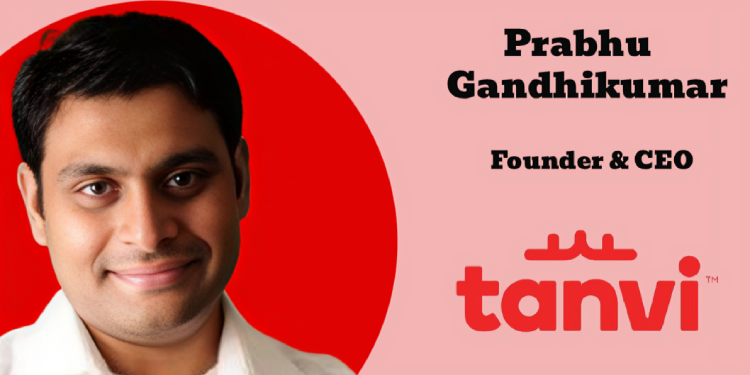
Medianewsu4u.com caught up with Prabhu Gandhikumar, Founder, CEO TABP Snacks and Beverages.
Q. TABP Snacks and Beverages raised $3 million in a funding round led by LC Nueva last year. What are your investors’ expectations from the business at this stage?
LC Nueva backed us because they believe the “Real Bharat” (Tier-2/3 consumers) is upgrading from loose/unorganised street drinks to packaged brands. They expect TABP to be the primary beneficiary of this formalisation trend, effectively becoming the “Parle-G of Beverages”—low margin, massive volume, and unbeatable distribution.
Q. How is TABP building a scalable FMCG brand in the ₹5–₹10 price segment, a space where many large players hesitate to operate? Are there any parallels you see with brands like Campa Cola?
MNCs hesitate to operate here because their centralised cost structures make low-margin products unviable. TABP bypasses these hurdles through three specific strategies:
A. The “Hub-and-Spoke” Manufacturing Model (Killing Freight Costs)
- The Problem: In beverages, water is 90% of the volume. Shipping a Rs.10 bottle from a central factory to a rural village eats up the entire profit margin in fuel costs.
- The TABP Solution: Instead of mega-factories, TABP uses a decentralised Hub-and-Spoke model. They set up compact manufacturing units closer to consumption clusters (Tier-2/3 towns).
- Scalability: This keeps logistics costs rock-bottom, allowing them to sell a full 200ml bottle for Rs. 10 while competitors are forced to shrink quantities (shrinkflation) or exit the price point.
B. “Trade Push” vs. “Consumer Pull” Marketing
- The Problem: MNCs spend 10–15% of revenue on TV ads and celebrity endorsements to create “consumer pull.” This cost is added to the bottle price.
- The TABP Solution: TABP spends near-zero on above-the-line advertising. Instead, they invest that budget into Retailer Margins.
- Scalability: By offering a shopkeeper Rs.2–3 profit per bottle (vs. Rs. 0.50–Rs. 1.00 from MNCs), the retailer becomes the brand ambassador. In rural India, if the shopkeeper recommends it, the customer buys it.
C. Regional Palate Engineering
- The Problem: Global giants struggle to authenticate hyper-local flavors (e.g., Jeera, Paneer Soda) because their R&D is centralised and standardised.
- The TABP Solution: TABP formulates specific “Desi” blends like Plunge Lemon Salt, Jeera Masala, Paneer soda that cater to the regional preference for savory/spicy drinks. This builds a “moat” of taste that is hard for a standard Cola brand to breach.
Q. As a challenger brand, do you view success as taking market share from incumbents, or as expanding the overall consumption pie?
Challenger Brand Strategy: Market Share vs. Market Expansion
As a challenger brand operating at the “Bottom of the Pyramid,” we view success primarily as expanding the overall consumption pie, rather than engaging in a zero-sum game for existing market share.
Here is why our strategy is built on “Conversion, not just Competition”:
1. Expanding the Pie (80% of our Strategy):
· Formalizing the Informal: Our biggest competitor isn’t a multinational corporation; it is the unorganised market—loose beverages sold in plastic pouches or unhygienic local glass bottles. By offering a sealed, quality products at Rs. 10, we are converting consumers from unbranded/unsafe consumption to branded/safe consumption. We are bringing millions of first-time consumers into the organized FMCG fold.
· Increasing Frequency: For a rural consumer, a Rs. 20 or Rs. 40 drink is an “occasion-based” luxury (weddings, festivals). At Rs. 10, TABP transforms a soft drink into an “everyday” affordable indulgence. This drastically increases the frequency of consumption, thereby growing the total category volume in rural markets.
2. Taking Market Share (20% of our Strategy):
· Disrupting the “B-Brands”: We do aggressively take market share from the thousands of hyper-local, semi-legal “B-brands” that exist in every district. We offer better taste, better packaging, and better safety at the same price point, effectively wiping out lower-quality competition.
· The “Value Switchers”: In times of high inflation, we see consumers trading down from premium MNC brands. While we don’t actively court the metro consumer, the semi-urban consumer who feels the pinch of a Rs. 20 price tag naturally migrates to our ₹10 value proposition.
In Summary, We are not fighting for a slice of the existing “urban cake.” We are baking a massive “rural cake” that didn’t exist before. Our success comes from unlocking the consumption potential of the 800 million Indians who were previously priced out of the branded beverage market.
Q. What are the key challenges and learnings in formalising street consumption while retaining affordability and local taste preferences?
Formalising “street consumption”—taking a chaotic, unorganized category like Jeera Soda or Paneer Soda and turning it into a standardized, packaged brand—is one of the toughest problems in the Indian FMCG sector. You are essentially competing with a street vendor who has zero tax, zero compliance costs, and zero packaging overheads.
Here are the key challenges we faced and the strategic learnings that allowed us to succeed:
Challenge 1: The “Freshness vs. Stability” Paradox
- The Challenge: Street drinks are mixed instantly and consumed immediately. They have a “raw,” punchy flavour profile because the spices (cumin, ginger, salt) haven’t been processed. When you bottle a drink for a 6-month shelf life, pasteurization and preservatives can often “flatten” these sharp notes, making the drink taste artificial or “syrupy.”
- The Learning: “Flavor Layering is Science.” We learned that we couldn’t just use standard fruit concentrates. To replicate the “street taste,” we had to engineer a specific layering of flavours—using natural extracts and rock salt to mimic that “freshly crushed” mouthfeel. We focused on maintaining the “throat hit” (high carbonation) that rural consumers associate with freshness, ensuring our PET bottles deliver the same aggressive fizz as a fresh soda.
Challenge 2: The “Packaging Cost” Penalty
- The Challenge: A street vendor washes and reuses a glass tumbler or serves in a plastic pouch costing pennies. TABP has to pay for a virgin PET bottle, a high-quality label, a closure (cap), and shrink wrap—all while keeping the final price at the same Rs. 10.
- The Learning: “Volume is the Only Antidote to Cost.” We realised that we couldn’t cut costs on the packaging materials without looking “cheap.” Instead, the only way to absorb the cost of the bottle was through extreme velocity. By running high-speed automated lines and producing millions of bottles, we reduced the fixed cost per unit to a fraction, allowing us to compete with the street vendor’s economics.
Challenge 3: The “Trust Gap” (Why is it ₹10?)
- The Challenge: In the formal market, a low price often signals low quality. Consumers sometimes hesitate: “If Coke is ₹20, why is this ₹10? Is it safe?” Street food doesn’t face this comparison because the vendor makes it in front of you.
- The Learning: “Transparency Builds Trust.” We countered this by using clear, high-quality transparent PET bottles where the product is fully visible, unlike the opaque coloured glass often used in lower-end local sodas. By strictly adhering to FSSAI standards and displaying manufacturing details clearly, we turned the “packaged” aspect into a safety guarantee. We taught the consumer that a sealed bottle is safer than an open street drink, justifying the switch.
Challenge 4: Standardisation of “Desi” Tastes
- The Challenge: “Jeera Soda” tastes different in every district. There is no single “correct” recipe.
- The Learning: “The 80/20 Rule of Taste.” We couldn’t hyper-customise for every village. Instead, we identified the “common denominator” taste profile that appealed to 80% of the Southern market—a specific balance of salt, spice, and sweet—and standardized that. We created a “referent taste” that became the new standard for what a bottled Jeera Soda should be.
Q. Based on predictive analytics and consumption trends, where do you see the biggest whitespace for growth in 2026, particularly in Bharat and kirana-led distribution networks?
Functional Hydration for the “Working Class”
· The Insight: Our core consumer—the farmer, the construction worker, the mechanic—doesn’t just drink for taste; they drink for energy and recovery. Currently, their options are plain water or sugar-heavy colas.
· The Gap: There is no dominant player offering “Functional Hydration” (Electrolytes/Glucose/Salts) at the Rs. 10 price point. ORS drinks exist but are positioned as “medical” and priced higher (Rs. 30+).
· The Opportunity: A “Working Man’s Gatorade” at Rs. 10. Products like Plunge Lemon Salt are the first step in this direction—offering salt and hydration replenishment that appeals to a physical labourer, filling a need that purely sweet MNC colas cannot.
Q. What lessons have you learned from running a high-volume, low-margin FMCG business with strong operational discipline?
Running a high-volume, low-margin business like TABP is less about “strategy” and more about operational religion. In the Rs. 10 segment, there is zero margin for error. If we lose 5 paise per bottle on inefficiency, we don’t just lose profit; we bleed out.
Here are the hard-fought lessons we’ve learned from scaling up:
1. The “Metric of Truth” is Not Revenue, It’s Velocity
- The Lesson: In a premium business, you can sit on inventory because high margins cover the holding cost. In a Rs. 10 business, inventory is a liability.
- The Discipline: We stopped obsessing over “Gross Sales” and started obsessing over “Stock Turn Per Retailer.” If a shopkeeper buys five cases but takes two weeks to sell them, we are losing. We learned to incentivise velocity—giving better margins to retailers who rotate stock faster (weekly) rather than those who just buy in bulk once a month. Speed protects cash flow.
2. Logistics is the Silent Killer
- The Lesson: We are essentially selling water with flavor. Shipping water more than 200 km is financial suicide because freight costs eat the entire margin.
- The Discipline: We learned to say “No” to expansion if we couldn’t establish a manufacturing node within a 150-200 km radius of the target market. We rejected demand from North India for years because servicing it from Coimbatore would have destroyed our unit economics. We learned that geography is strategy.
3. “Frugality” is Not About Being Cheap, It’s About “Asset Sweating”
- The Lesson: You don’t make money by buying cheaper machines; you make money by running standard machines 24/7.
- The Discipline: Our “Summer Readiness” relies on OEE (Overall Equipment Effectiveness). We learned that a machine running at 60% efficiency due to minor stops costs us more than raw material inflation. We implemented a “Pit Stop” mentality for maintenance—reducing changeover times between flavors (e.g., from Jeera to Orange) from hours to minutes. That recovered time is pure profit.
4. The “Ego” Trap of Modern Trade
- The Lesson: Seeing your product in a shiny supermarket or on a Quick Commerce app feels like success, but the listing fees, “damage returns,” and deep discounts they demand can bankrupt a ₹10 brand.
- The Discipline: We learned to swallow our pride. We consciously stay out of premium aisles where we can’t control the terms. We double down on the “unsexy” General Trade (Kiranas)—because paying a small retailer a fair margin yields better loyalty (and cash flow) than paying a platform a massive commission.
5. Innovation Must Be “Backward Compatible”
- The Lesson: You cannot launch a product that requires a retailer to buy a new fridge or a special rack.
- The Discipline: Every new product must fit into the existing infrastructure of our distribution network. If it doesn’t fit in the truck or on the standard shelf, it dies. We learned to innovate inside the box (literally) to ensure our distribution cost remains shared across categories.
- Our Golden Rule: In a high-volume business, boredom is good. If operations are boring, it means they are predictable, and predictability is the only way to scale pennies into crores.
Q. What does the marketing playbook for an FMCG challenger brand look like in 2026?
Target Audience: Tier 2, Tier 3, and Rural India (The “Next Billion” Consumers)
Core Philosophy: Don’t buy attention; earn trust. Don’t broadcast; infiltrate.
In 2026, the marketing playbook for a challenger brand like TABP flips the traditional FMCG model on its head. While legacy giants (MNCs) fight a “Share of Voice” war on expensive platforms (TV, OTT Premium), challenger brands fight a “Share of Influence” war in the streets and on the smartphones of the working class.
Here is the Playbook for winning in 2026:
1. The “Retailer-as-Influencer” Strategy (Trade Push 2.0)
- The Shift: In rural India, the shopkeeper (Anna/Bhaiya) is the algorithm. If a customer asks for “a cold drink,” the brand he hands over wins 80% of the time.
- The Tactic: Shift 60% of the “Marketing Budget” into “Trade Loyalty” rather than consumer ads.
- Gamified Margins: Instead of standard bulk discounts, use a “velocity bonus.” Retailers earn points not just for buying, but for selling fast (verified by app-based reordering).
- Shop Branding: Paint the shop. A Kirana store painted in Plunge Yellow is a 24/7 billboard that costs a fraction of a hoarding.
- The “Anna” Bonus: Small, tangible rewards for the shopkeeper (e.g., a gold coin for selling 5,000 bottles) create deeper emotional loyalty than a 1% cash discount.
2. “Dark Social” & Vernacular Viral Loops
- The Shift: The “Real Bharat” consumer isn’t checking email; they are on WhatsApp and YouTube Shorts. They trust content forwarded by friends more than ads.
- The Tactic: Create “Low-Fidelity, High-Relatability” content.
- WhatsApp Status Marketing: Create 15-second funny, regional-language clips (memes, movie dialogues) featuring the bottle. Distribute these to your network of 1.2 lakh retailers and ask them to post it on their WhatsApp Status.
Reach: Millions of local customers who have the shopkeeper’s number saved.
Cost: Zero. - YouTube Shorts > TVC: Abandon polished, high-production TV ads. Produce “raw” Shorts featuring local micro-influencers (e.g., a village cricket hero or a popular auto driver) drinking Plunge. The aesthetic should feel “user-generated,” not “corporate.”
3. The “Phygital” Label (Data from the Dust)
The Shift: First-party data is the new oil, but rural brands are usually data-blind.
The Tactic: Turn the ₹10 bottle into a data-collection device.
- QR Loyalty: Print a QR code on the label. “Scan to win Rs. 10 talktime.”
- The Loop: The consumer scans, enters their phone number and UPI ID to claim a small cashback or lottery entry.
- The Win: You now have the direct phone numbers of millions of rural consumers. You can re-target them via SMS/WhatsApp with new launches (e.g., “New Millet Snack available at your local shop!”).
4. Hyper-Local “Micro-Event” Marketing
The Shift: Mass media (IPL ads) is inefficient because you pay for eyes you can’t serve.
The Tactic: Dominate the “Micro-Moments” in your specific geography.
- Village Festivals (Jathres/Melas): Sponsor the local temple festival or village fair. For ₹50,000, you can be the exclusive beverage partner for an event with 10,000 thirsty attendees.
- Transit Hubs: Branded hydration stations at bus stands and railway stations in Tier-3 towns. This builds visibility where the “thirst need” is highest.
What We Do NOT Do (The Anti-Playbook)
- No Expensive Celebrity Brand Ambassadors: We don’t need a Bollywood star. Our star is the price point.
- No Modern Trade Listing Fees: We refuse to pay Rs. 25,000/SKU to be listed on quick-commerce apps or premium supermarkets. We win where the masses shop, not where the classes shop.
- No “Preachy” Ads: We don’t sell “happiness” or “revolution.” We sell “Refreshment & Taste.” Keep the messaging functional and fun.
The 2026 Summary: The winner in 2026 won’t be the brand with the best TV ad. It will be the brand that is most visible in the Kirana store and most shared on WhatsApp.
Q. Are marketing strategies for the bottom-of-the-pyramid consumer significantly different from those used for other consumer segments?
Yes, marketing strategies for the “Bottom of the Pyramid” are fundamentally different. You cannot simply take an urban strategy and “lite” it down (i.e., just making it cheaper). The physics of the business model change entirely.
While traditional marketing relies on the 4Ps (Product, Price, Place, Promotion), BoP marketing relies on the 4As(Affordability, Accessibility, Awareness, and Availability).
Here is the breakdown of the significant differences:
1. The Product Strategy: “De-featuring” vs. “Frugal Innovation”
Traditional (Urban/Premium): Focuses on “Feature War.” Brands add more features to justify a price premium (e.g., “Now with 50% more vitamins”).
Bottom of the Pyramid: Focusses on “Frugal Science.” You don’t just remove features to cut costs; you re-engineer the product to perform one core function perfectly at a specific price point.
- TABP Example: Instead of a generic fruit drink, TABP creates Jeera Soda. It serves a dual purpose—refreshment and digestion—making it a “functional utility” for a rural labourer, not just a treat.
2. The Pricing Model: “Cost-Plus” vs. “Target Costing”
Traditional: Design the product Calculate cost Add margin Set Price (e.g., ₹25).
Bottom of the Pyramid: “Reverse Engineering.” Start with the coin in the consumer’s pocket (e.g., Rs. 10). That price is fixed by the market. You must engineer the product, manufacturing, and logistics backward to fit inside that ₹10 while leaving a profit.
- TABP Example: TABP realized they couldn’t afford long-distance freight for a ₹10 bottle. So, they changed the factory location (Hub & Spoke) to fit the price, rather than changing the price to fit the factory.
3. Distribution: “Fill Rate” vs. “Velocity”
Traditional: Relies on “Pull.” Massive TV ads make consumers demand the product, forcing retailers to stock it. The focus is on “Shelf Presence.”
Bottom of the Pyramid: Relies on “Push.” The retailer is the gatekeeper. Consumers often say, “Give me a cold drink,” and the shopkeeper decides which brand to hand over.
- Strategy: Your marketing budget isn’t spent on TV ads; it is spent on Retailer Margins. You pay the shopkeeper to be your influencer.
4. Brand Messaging: “Lifestyle” vs. “Dignity”
Traditional: Sells a dream/lifestyle (e.g., “Open Happiness,” “Taste the Thunder”). It is aspirational and abstract.
Bottom of the Pyramid: Sells “Trust & Dignity.”
- The Insight: For a daily wage earner, buying a sealed, branded bottle is an act of dignity compared to drinking from a loose plastic pouch.
- The Message: “High Quality, Sealed, Safe.” The packaging must look more premium than the price to reassure the consumer they aren’t buying “cheap” goods, but “value” goods.
Q. Will hygiene and safety continue to be a key theme in TABP’s marketing communication in 2026?
Yes, absolutely. Hygiene and safety will not just be a “key theme”—they will be the foundational bedrock of TABP’s communication in 2026.
Here is why this narrative remains mission-critical for us:
1. The “Trust vs. Price” Equation In the ₹10 segment, the consumer’s biggest fear is not “bad taste”; it is “unsafe product.” There is a deep-seated stigma that “cheap” equals “dirty” or “adulterated.” To win, we must constantly reassure the mother buying Plunge for her child that Low Price ≠ Low Quality.
· 2026 Communication: We will continue to showcase our hygienically maintained automated factories and transparent bottles. Visual cues of safety (sealed caps, printed expiry dates, FSSAI logos) are our most powerful marketing assets against the unorganized “pouch drink” market.
2. The “Dignity” Differentiator For our rural consumer, drinking from a sealed, branded bottle is a status symbol. It elevates them from the “street” consumption level. Marketing hygiene is not just about health; it is about respect.
· 2026 Communication: Our messaging will reinforce that everyone—regardless of income—deserves world-class safety. “Quality is a Right, Not a Privilege.”
3. The Gateway to Food (Snacks) As we aggressively expand into snacks (millet sticks, cereals) in 2026, the “Trust Halo” we built with beverages becomes our launchpad. If a consumer trusts that Plunge is safe, they will trust that Tanvi Snacks are safe.
· 2026 Communication: We will position our snacks as the “Healthy & Hygienic” alternative to the loose, unbranded fryums often sold in jars at kirana counters.
In Summary: For an MNC, safety is a baseline assumption. For a challenger brand in the rural market, Safety is a Premium Feature. We will continue to shout about it because it is the primary reason a consumer switches from an unbranded local soda to TABP.
Q. Could you share insights into TABP’s social media strategy for 2026? At what times are consumers most receptive to messaging—weekdays versus weekends, for instance?
For TABP, our social media strategy isn’t about “likes” or “hashtags”; it’s about shareability in the family WhatsApp group.
In 2026, we are pivoting from “Broadcasting” (brand posting to page) to “Infiltration” (content travelling peer-to-peer). Our target audience—the daily wage earner, the student in a Tier-3 town, the shopkeeper—doesn’t scroll LinkedIn or Twitter. They live on WhatsApp, YouTube Shorts, and Instagram Reels.
Here is our strategic breakdown:
1. The Timing Strategy: The “Blue Collar” Clock
Our consumer does not work a corporate 9-to-5 job. Their digital consumption peaks at very different times compared to an urban office goer.
· Weekdays (The “Decompression” Window):
o Peak Receptivity: 8:00 PM – 10:30 PM.
o Why: After a hard day of physical labor or shopkeeping, the mobile phone is the primary source of entertainment. They aren’t looking for “productivity hacks”; they want comedy, movies, and news. This is when we push Entertainment-first content (comedy sketches featuring our brand).
o Secondary Peak: 6:00 AM – 7:30 AM.
o Why: The “Good Morning” forwarding culture is massive. Devotional content or positive quotes branded with TABP (subtly) works well here.
· Weekends vs. “Market Days”:
o Sunday Afternoons (1:00 PM – 4:00 PM): Sunday is the universal rest day. Consumption of long-form content (movies on YouTube) is high. We target ad spots within regional movies on YouTube during this slot.
o The “Market Day” Factor: In rural India, the “weekend” isn’t always Saturday/Sunday; it’s the local Weekly Market Day . On these days, footfall is high, but digital attention is low. We don’t post heavily then; instead, we focus on physical visibility.
2. The Content Mix: “Unpolished & Viral”
The “Real Bharat” consumer ignores polished, studio-shot creative because it looks like an “Ad.” They engage with content that looks User-Generated (UGC).
· The “Meme” Engine: We create localized memes (in Tamil, Telugu, Odia) related to trending movie dialogues or local cricket matches.
o Goal: Get the user to download the image and put it as their WhatsApp Status. If 1,000 people do this, we reach 100,000 views for free.
· Micro-Influencers > Celebs: We partner with “District Heroes”—the local mimicry artist, the village cricket captain, or a popular auto-rickshaw vlogger.
o Strategy: They make a 30-second Reel drinking Plunge to “cool down.” It feels like a recommendation, not a commercial.
3. Platform Hierarchy
1. WhatsApp (Dark Social): The #1 channel. We can’t run ads here, so we run “Contests.” (e.g., “Send a selfie with Plunge to this number to win ₹50 recharge”). This builds our first-party database.
2. YouTube Shorts: The new TV. We flood this with high-frequency, low-cost 15-second spots.
3. ShareChat / Moj: Essential for reaching the vernacular audience that isn’t on Instagram.
In Summary: Our 2026 Social Strategy is “Prime Time is Nap Time.” We catch the consumer when they are resting—late evenings and Sunday afternoons—and we serve them content that makes them laugh, not content that preaches.
Q. How does TABP plan to approach B2B marketing in 2026 to strengthen relationships with kirana stores, distributors, and online platforms?
In the low-margin ecosystem of Rs. 10 products, our B2B strategy is more critical than consumer advertising. For TABP, B2B marketing is not about sending brochures; it is about demonstrating Return on Investment (ROI) to our partners. We treat the Kirana owner and Distributor not just as channels, but as our primary customers.