For decades, the fashion industry has normalised women suffering in the name of style. This year Blissclub, which has focussed on redefining activewear for Indian women, had launched its latest fashion campaign — Bliss Police.
A cultural statement disguised as a style intervention, Bliss Police is here to call out the biggest fashion crimes of our time and to redefine fashion from being look-forward to feel-centric. With a nod to pop culture’s crime-fighting trios, the campaign is centered around a trio of influencers, Barkha Singh, Sakshi Sindwani and Rida Tharana. A power trio on a mission to bust fashion’s biggest crimes: mediocre fabrics, restrictive fits, and clothes that make women suffer in the name of style.
With a 360° blitz across digital, in-store, and experiential platforms — and even a Fashion Crime Hotline — Blissclub’s Bliss Police aim to enforce a new code where fashion finally feels like bliss.
Medianews4u.com caught up with Sushma R Rao marketing head Blissclub
Q. What progress did Blissclub make in 2025 in terms of market share, revenue etc? What goals have been set for 2026?
Over the last couple of years, Blissclub has successfully graduated from “activewear brand” to “movement-wear wardrobe essential.” Yes, overall performance remains strong — but the real story is how women have adopted our full range, from activewear to workwear, all-day versatile essentials, and for newer lifestyle occasions like travel. In 2026, we will double down: more fabric innovation, more solving real comfort problems, and a bigger share of wardrobes (and hearts).
Q. Could you talk about the retail expansion plans, new category launches and community-led initiatives done in 2025? What is being planned for 2026?
We have seventeen stores across the country right now and each of them has consistently proven a simple truth: once women feel our fabric, they’re in. To see that instant delight has been so gratifying, and it fuels our retail expansion — steady, intentional, meaningful.
Our BlissQueens community remains our centre of gravity. 2026 will be about giving her more: more innovation, more value and more engaging conversations.
Q. In its marketing activities in 2025 did Blissclub focus on disrupting conventional narratives around fashion?
I’ve come to realise, with much delight, that challenging fashion norms is Blissclub’s love language. Across both, product and storytelling. In 2025, with our fabric innovations — AirMelt, BareButter, RibSupreme — we tried to nudge travelwear toward a more luxury, comfort and refined co-ord aesthetic.
On the brand front, we played with the ‘beach vs mountain’ duality in BlissTerry, culture-coded through music in Travelwear, and questioned fashion norms with Bliss Police. We’re looking forward to taking the same playful energy into 2026.
Q. Could you talk about the kind of creative brainstorming with the creative agency that led to campaigns like Bliss Police, tying up with Karisma Kapoor etc.?
We create by listening first. Real comfort gaps, real wardrobe frustrations, real cultural tension. From there, we build ideas that bend the rules and strive to move both, culture and commerce. Bliss Police emerged from a session where we asked a simple question: What if we stopped policing women’s fashion and started liberating it? Karisma Kapoor was a deliberate choice — effortless confidence, nostalgic charm, and the right kind of iconic for our cheeky tone.
Q. Did the media mix heavily skew towards digital? Or did traditional media also play an important role in 2025?
As of now, we’re all-digital, all day, all year. Our audience lives online, so our full-funnel strategy does too — digital advertising, social, influencers, content ecosystems, and performance channels.
Q. The company has done campaigns on the word “bitch” to show the importance of a level playing field. Will this be taken to the next level in 2026?
Bitch Club was about reclaiming a word meant to shrink women — and flipping it into power. We have already run three consecutive and successful campaigns on this subject. The intent is to continue taking similar cultural stands that matter, with the same gumption, humour, and zero-apology energy.
Q. Today many brands focus on creating ads that have a cinematic feel. Will Blissclub follow a similar strategy in 2026?
Cinematic is resurging because people are tired of hyper-organic content; they’re craving polish, escapism, and a bit of larger-than-life magic again. We’ll use cinematic where it elevates the brand, and keep things raw and social-first where speed and authenticity win. Balance is the strategy.
Q. What role is AI playing for the company from product innovation to marketing efficiency?
AI will increasingly become a core enabler across how we build and tell the Blissclub story. On the product side, it helps decode massive data feedback so we can innovate stronger. In marketing, it boosts speed and efficiency — from rapid content generation and real-time optimisation to agile creative testing.
Q. What role does influencer marketing play in the media mix?
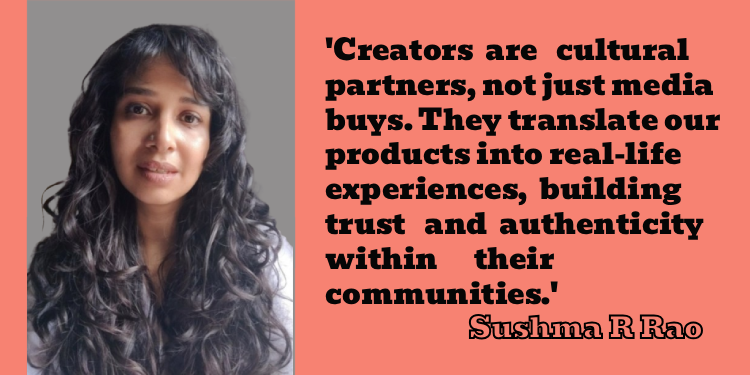
Creators are another community we cherish. They help bridge the gap between product and lived experience: creators bring authenticity and trust. At Blissclub, influencers aren’t just media partners; they’re cultural partners who help amplify our product experience and brand voice.
Q. How does Blissclub strike a balance between performance marketing and brand building? Are the lines between the two blurring?
The constant ideal is to run brand and performance as one orchestrated engine.
The lines do get blurred a lot of times and this blurring does help make marketing more efficient— brand assets can be tweaked to perform down the funnel, and performance assets can be reengineered to strengthen the brand.