CloudTV says that it is India’s first TV Operating System (OS) developed by Mumbai-based software company, CloudWalker Streaming Technologies. As India’s first and only provider, CloudTV OS brings all the features available in high-end TV brands to the affordable TV segment in India. A smart TV powered by CloudTV offers a wide range of content, and applications along with voice assistance designed to cater to users of all types, whether they are seasoned Smart TV owners in metro cities or first-time buyers in Tier-I and Tier-II cities.
CloudTV added that it has been ahead of the curve by introducing features like the content recommendation-based Home Page with various content categories and Live TV channels for seamless content discovery. While content discovery is important, many users want to search for content in their preferred language, which is why Cloud TV voice assistant supports regional languages like Marathi, Hindi, Punjabi, Gujarati, and more. Today, Cloud TV’s impact resonates across the Indian Smart TV landscape, powering over 12+ million users, 6+ million devices, 250+ Smart TV brands, and over 230+ content partners and 120+ App partners like Prime Video, Jio Cinema, etc. while working with over 25+ manufacturing companies.
Medianews4u.com caught up with Harshad Wadivkar, Business Head– Monetisation, CloudTV Ads
Q. Could you talk about the growth in CTV devices that led to CloudTV launching its new Connected TV ad platform, CloudTV Ads?
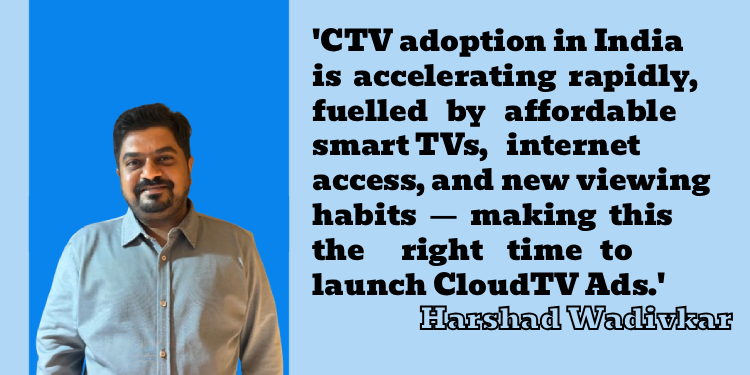
At present, we are powering more than 6 million CloudTV-powered devices across India and growing year on year. With this scale, we have seen a strong opportunity to monetise through a dedicated CTV ad platform. CTV adoption in India is rising rapidly, driven by affordable smart TVs, heightened internet penetration, and changing viewing habits.
As more households transition from linear TV to connected TV, the timing was right for us to launch CloudTV Ads, giving brands an exclusive, high-engagement medium to reach audiences on the biggest screen in the home.
Q. Is the target audience primarily premium brands like jewelry?
We are not constraining ourselves to super-premium brands. However, categories such as jewelry do make sense because they are visually appealing and aspirational which position well with the strengths of CTV.
As CTV is a highly immersive and visual medium, it is beneficial to categories like e-commerce, finance, retail, FMCG, automobiles, and of course, OTT app promotions that gain from strong visual storytelling. These are all strong fits for CloudTV Ads.
Q. What goals have been set for CloudTV Ads in the next three years?
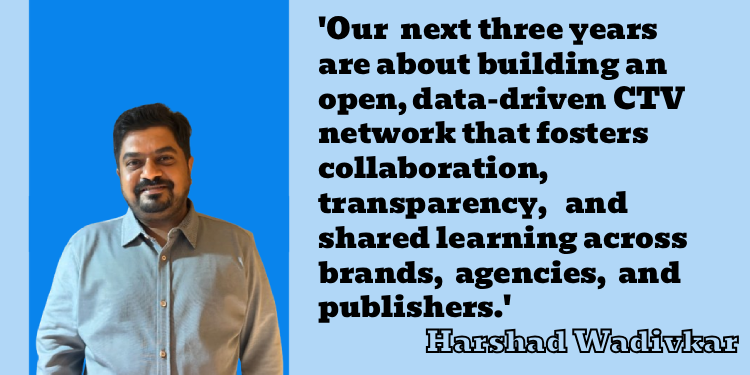
Our focus for the next three years is on developing stronger partnerships and building a collaborative ecosystem where knowledge sharing around CTV advertising doesn’t happen in silos. Even though CTV has a lot of potential in India, much of it remains untapped due to fragmented information and lack of transparency. We are focussed on adding new ad inventories as well and looking at new ways to engage the viewers.
At CloudTV Ads, we are pioneering the way in change by implementing an open, data-driven network that empowers brands, agencies, and publishers alike. Our goal is to make CTV advertising more transparent, efficient, and accessible, unlocking its full potential for the Indian market.
Q. What role will CTV play in the larger media mix during the festive season? Is Gen Z the main target audience?
The role of CTV during the festive season is crucial, as it is a period of family and collective viewing. This is when viewing time increases as people consume and enjoy entertainment together.
Most of today’s TV audiences are already consuming content via CTV rather than traditional cable. As a result, CTV will have a much bigger scope in the festive media mix, helping brands create and build awareness and drive performance across other channels.
As for the target group, it’s not limited to Gen Z. Kids, families, and adults across demographics consume connected TV. CTV ads often spark dinner-table conversations, and the ad recall rate tends to be high across all age groups.
Q. CTV advertising is still niche. When does it become mainstream?
CTV is evolving rapidly, it’s not a question of if, but how soon it becomes mainstream. We are already at a turning point due to the increasing use of smart TVs and changing viewing preferences.
Now is the moment for brands to focus. Early adopters will gain a first-mover advantage, learning how to engage audiences in this new, high-impact, brand-safe environment. CTV is fast becoming an essential part of the media mix, and those who invest now will help shape its future.
Q. What trends are you seeing in how CTV is helping reimagine brand messaging?
Among the ways CloudTV helps brands rethink their campaigns and make an impression on the big screen are Masthead, Super Masthead, and 3D ad banners. With CTV’s data-driven targetting, advertisers can now tailor messages by language, audience, and context, creating more relevant and resonant brand experiences.
We are transforming CTV into a platform where brands can establish more meaningful, quantifiable relationships with their audience by means of brand lift surveys and ongoing innovation in new ad formats.
Q. Is CTV advertising more about brand building than performance marketing?
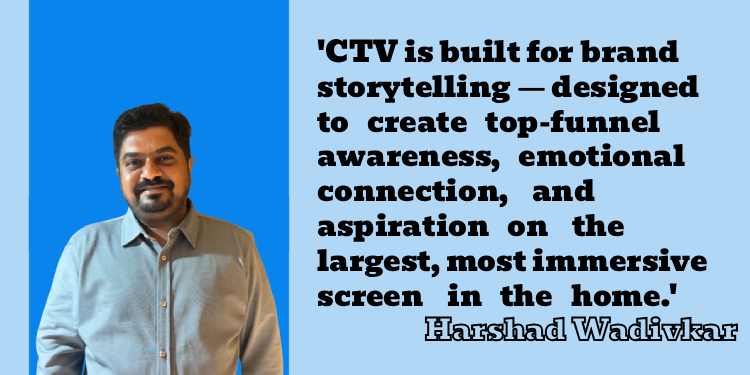
Absolutely. CTV is a tool for building brands. It’s designed to create larger-than-life experiences on the biggest screen in the home. Top-funnel awareness and aspiration-building, not immediate ROI or performance metrics, should be the main objectives of CTV.
Q. Does the immersive nature of CTV help engage Gen Z, who have shorter attention spans?
CTV’s immersive format appeals to all age groups and demographics, not just Gen Z. Whether families are watching together, children are discovering new content, or adults are revisiting their favorite shows, the large-screen experience naturally draws attention.
Because OS-level ads on CloudTV are non-skippable, every viewer – regardless of age – watches the full duration of the ad, leading to higher exposure and stronger brand recall. CTV offers a collective, high impact viewing environment that helps brands connect with diverse audiences in a way few other mediums can.
Q. How did the partnership with Magnite come about, and what role does it play?
Our partnership with Magnite combines CloudTV’s scale and connected TV expertise with Magnite’s strong programmatic capabilities through SpringServe. Through integration, we can increase monetisation opportunities in the CTV market while providing advertisers with simpler access to premium, brand-safe inventory. It’s a move in the direction of creating a more transparent and effective ecosystem that helps viewers and brands alike.
Q. How does being embedded at the OS level help CloudTV aggregate first-party data?
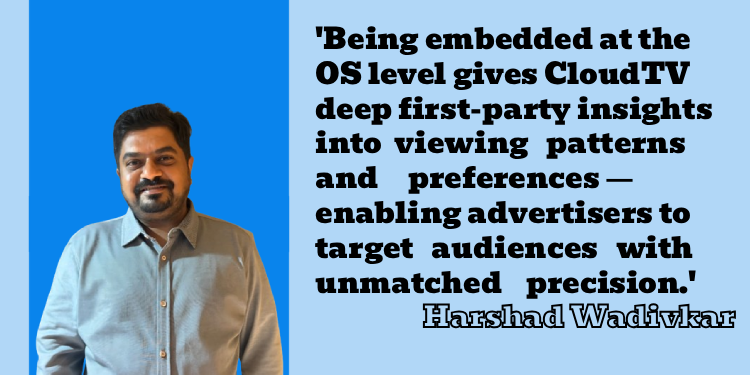
Operating at the OS level gives CloudTV a unique vantage point into how users interact with content and apps – revealing deep, real-time insights into viewing patterns, engagement, and preferences.
We can now better understand audiences thanks to this strong visibility, which also helps users find content they love and gives advertisers the confidence and accuracy to reach the right audience.
Throughout the CloudTV ecosystem, our first-party data powers sophisticated targeting and personalization, making the experience more intelligent and user-friendly for all parties.
Q. Does CTV complement digital advertising by enabling precise and personalised targetting?
Yes, CTV is highly complementary to digital advertising. It combines the impact and narrative potential of television with the accuracy and scalability of digital.
Advertisers can create customized campaigns that reach the right audience on the biggest screen at the right time with first-party data and contextual insights.
Q. What’s the advantage of OS-level CTV ads compared to web or mobile?
Because OS-level CTV advertisements are displayed on the biggest screen in the house and capture the full attention of viewers, they offer unparalleled viewability and first impact. In addition to facilitating new, high-impact ad inventories like mastheads, super mastheads, and 3D banners that improve brand visibility, the full-screen format amplifies creative storytelling.
Additionally, because of more stringent ad delivery protocols and standardized formats, invalid traffic is much lower on CTV than on web or mobile. This guarantees advertisers a genuinely measurable brand experience and premium, fraud-free impressions.