Medianews4u.com caught up with Dilip Kumar, Co-Founder, CEO IndiFrame. It was formerly GreenFortune Windows and Doors, which rebranded and changed its strategy to create a consumer-centric full-stack windows and doors brand.
GreenFortune has now transitioned to IndiFrame, a dedicated homeowner-facing brand backed by $5.55 million in funding from investors. IndiFrame is targetting India’s 90% unorganised fenestration market, bringing standardisation across design, manufacturing, installation and after-sales, and offering products engineered specifically for Indian climate and usage.
With implementation of 5,300+ projects in 150+ locations, IndiFrame is establishing itself as a vertically integrated, made-in-India solutions brand, with ownership of the entire design and production process along with service, installation and engineering with products designed to meet the Indian weather and usage environment.
Q. Why did GreenFortune rebrand as IndiFrame?
GreenFortune built strong credibility over the years across builders, institutions, and fabricators. But as we scaled, it became clear that a homeowner buying a finished window or door solution thinks very differently from someone buying materials. Their expectations are higher, more emotional, and far more outcome-driven.
IndiFrame was born to serve that end consumer with absolute focus. It allows us to bring clarity, to the brand, to the experience, and to accountability. The rebrand reflects a shift from being a strong backend operator to a consumer-first, performance-led windows and doors brand built specifically for Indian homes and conditions
 Q. Could you talk about IndiFrame’s expansion roadmap and its vision to build India’s most trusted windows and doors company?
Our roadmap is steady and deliberate. Today, we’re strong in Telangana, Andhra Pradesh and Maharashtra, with pan-India execution capability for larger projects. Over the next phase, we’ll deepen our presence in existing markets before expanding selectively into new cities where quality and trust gaps are most visible.
The long-term vision is simple but ambitious: to become India’s most trusted windows and doors brand. That trust will come from setting repeatable standards across design, manufacturing, installation, service, and even internal processes, so homeowners get predictable outcomes every single time.
Q. In building a focussed, consumer-first windows and doors brand, what is going to be the big challenge?
The biggest challenge is changing mindsets. Windows and doors are still treated as a distress purchase, something you decide late, compromise on, and hope works out.
We’re asking consumers to think differently: to evaluate performance, longevity, installation quality, and service just as seriously as aesthetics. Education takes time, but once homeowners experience what good fenestration actually does for comfort, noise, safety, and energy efficiency, the shift becomes natural.
Execution wise the biggest challenge is to manage customization at scale. We operate in a business where every unit is customized and precision engineered to the last millimetre of dimension.
The AoVs are high, designs are several, BoQs are complex and even a few millimetre variation can make the unit unusable. So, the business survives on efficiency and the stakes are high.
Q. What are the expectations from investors like Kunal Bahl, Rohit Bansal, and Varun Alagh? What do you learn from their success?
They bring far more than capital. These are operators who have built consumer brands at scale, navigated complexity, and stayed obsessed with fundamentals. Our investors look to us to build a category leading brand, built on strong fundamentals delivering top class products and led by Technology
The biggest learning from them is clarity of thinking, knowing what truly matters to the customer, building for the long term, and resisting the temptation to chase shortcuts. Their belief reinforces our conviction that if we build trust and performance consistently, scale will follow.
 Q. From a marketing perspective, what will the focus in 2026 revolve around consumer education on risks of compromising on products and services?
2026 will be about education, not noise. We want to help homeowners understand the real cost of poor windows and doors, water leakage, noise pollution, safety issues, energy loss, and recurring repairs.
Our communication will focus on demystifying technical terms, showcasing real-world performance, and helping consumers make informed decisions instead of emotional or price-led ones. The goal is confidence, not persuasion.
Q. What campaigns and innovations can one expect in the coming months?
You’ll see performance-led storytelling, both online and on ground. That includes live demo installations, experience-centre-led campaigns, and content that shows rather than tells.
On the innovation side, we’re investing in digital tools that allow customers to visualise outcomes, track their projects transparently, and experience predictability throughout the journey.
Q. Who are the creative and media agencies and what is the brief given to them?
We work with partners who understand that this is not a fast-fashion category. The brief is very clear: build trust, simplify complexity, and communicate performance without jargon.
Creativity for us is not about loud campaigns, it’s about clarity, honesty, and helping the consumer feel reassured at every touchpoint.
Q. Will digital dominate the media mix? Any change compared to 2025?
Digital will continue to dominate because it allows depth, education, storytelling, and interaction. However, the mix will be more balanced than before.
As we expand physically through experience centres and on-ground engagement, offline channels will play a stronger supporting role alongside digital.
 Q. How will IndiFrame leverage AR, VR, and MR to deepen storytelling online?
These technologies help bridge imagination and reality. We’re exploring AR and VR to help homeowners visualise window systems in their actual homes, understand opening styles, light flow, and spatial impact.
More importantly, these tools will be used to explain performance, how sound insulation works, how water resistance is tested, and why installation quality matters.
Q. Could you talk about the on-ground marketing strategy, seminars, roadshows, retail events?
On-ground engagement is critical in a category like ours. We plan to organise homeowner seminars, RWA/society activations (for upgrading and replacing failing windows) architect and builder sessions, build a community IP focused on architects and participate in relevant retail and real-estate events.
These platforms allow for two-way conversations. They help us listen, educate, and demonstrate, not just market.
Q. What role will traditional media like TV, print, and DOOH play?
Traditional media will be used selectively, primarily to build credibility and reinforce trust at scale. Print and DOOH work well for brand reassurance, especially in home-buying moments.
TV may come later, once category understanding reaches a certain maturity.
Q. AI is redefining online search and conversions. How will IndiFrame leverage AI across functions?
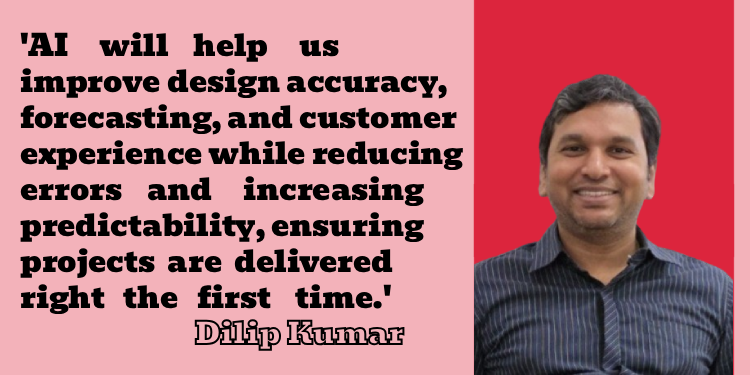
AI will play a role across the value chain, from smarter search marketing and personalised content discovery to internal tools that improve design accuracy, demand forecasting, operational excellence, customer service and quality control.
We’re especially interested in how AI can reduce errors, improve predictability, and help us deliver projects right the first time. Currently, we are piloting AI to summarize lengthy and technical quotations to customers, and using it for assessing credit worthiness amongst builders.
 Q. Why does performance matter more than just design in Indian homes?
Because Indian homes face real stress, heat, dust, heavy rains, noise, and long daily usage. Design may attract attention, but performance determines comfort and peace of mind over decades.
At IndiFrame, we believe good design should quietly disappear into daily life, while performance keeps showing up, year after year. That’s what homeowners truly value in the long run.