A few years ago, an expatriate CMO working in Nepal told me something that I have never forgotten. Every time he asked agencies for quotations, the prices somehow kept going lower. With a smile, he asked, “Does inflation not work in the agency business?” We laughed at the time, but it struck me deeply. Behind the humor lay a serious truth: marketing professionals and agencies are often judged primarily on cost rather than on the value, strategy and ideas we bring to the table. Yet, it is our work that guides brands, shapes consumer behavior and helps companies make their mark in the market.
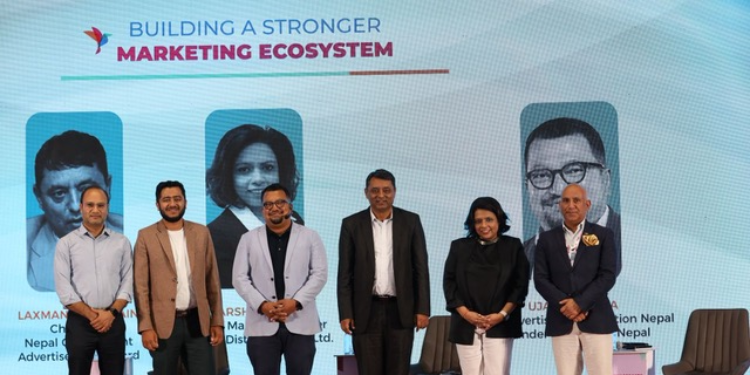
This reflection became the starting point for my role as moderator at Brands & Beyond 2025 in Kathmandu early September 2025. The theme for the discussion, “Building a Stronger Marketing Ecosystem,” could not have been more timely. The discussion brought together three distinguished voices: Mr. Laxman Humagain, Chairman of the Advertising Board of Nepal, Mr. Deepak Joshi, CEO of Nepal Tourism Board and Ms. Varsha Perera, CMO of Nepal Distilleries. I joined as current Vice President of the Advertising Association of Nepal reflecting on 25 years of experience in marketing and advertising. Over 150 brand marketers, agency professionals, media representatives and creatives attended, bringing insightful questions and experiences that enriched this dialogue.
One moment stood out to me: a Nepali origin young woman in the audience, who had been part of an Effie-winning team in New York, shared her story. She had returned to Nepal to start an advertising business but could not sustain it in an environment without transparent pricing and fair structures. Eventually, she left the industry for something else. Her story is not unique and every such loss weakens our ecosystem. Stories like hers represent lost talent and lost potential for our marketing ecosystem. If Nepal wants to go beyond, we must build an environment where such professionals can thrive.
My conversation with Mr. Humagain centered on how regulation can keep pace with innovation. Nepal’s advertising policy, first drafted under his leadership, has provided structure to our industry. But the market has since been transformed by digital platforms and AI-driven creativity. His message was clear: policies must be flexible, adaptive and developed in partnership with practitioners. Ethical standards should remain firm but they must not discourage innovation. If Nepal is to compete globally, our frameworks must evolve as fast as the industry itself.
From the perspective of nation branding, Mr. Joshi reminded us that building “Brand Nepal” is a long-term commitment. It must capture the essence of an entire nation – its culture, heritage, spirituality and natural beauty. His advice to businesses was simple yet profound: stay authentic, tell cultural stories and commit to consistency. Short-term campaigns can never replace the credibility of a sustained identity. To build trust, recognition and loyalty, brands must root themselves in vision, culture and community.
Ms. Perera, with her global experience, offered a candid look at the gaps in our ecosystem. She spoke about the need for clearer agency briefs, transparent pitch processes, structured feedback and professional workflows. Too often in Nepal, agencies receive instructions casually through a WhatsApp message without the clarity or structure that drives better creative outcomes. She also emphasized the importance of investing in talent: through internships, mentorships and exchange programs that can expose young Nepali professionals to regional and global standards. Her words were a reminder that creativity thrives best when supported by structure.
A recurring theme was talent retention. Bright young professionals often leave advertising for more structured industries or opportunities abroad. To reverse this, the industry must offer viable, rewarding and respected career paths. This requires collaboration between regulators, agencies, universities and businesses. Training programs, certifications, mentorship and cross-border exposure can help young talent see advertising not only as a career but as a platform to showcase Nepali creativity to the world.
Perhaps the most pressing issue and the one that circles back to my opening story is the undervaluation of marketing and advertising. Too often, our work is reduced to a price tag. Yet, our ideas shape consumer behavior, drive business growth and even build national identity. The Advertising Board has a crucial role in advocacy, certification and setting industry standards that create transparency and fairness. Businesses, in turn, must view agencies as growth partners rather than mere vendors. Agencies themselves should position their work as solving business challenges not just delivering campaigns.
The conversation underscored one fundamental truth: no single entity can build Nepal’s marketing ecosystem alone. Regulators must create enabling frameworks. Businesses must invest in creativity as a strategic function. Agencies must champion professionalism and ethical transparent practices. Educators must prepare the next generation of talents. And professionals in the middle of their careers must mentor, collaborate and continuously raise the bar.
A stronger ecosystem is not only about better campaigns. It is about creating an envir=onment where Nepali creativity shines globally, talent is nurtured and retained and marketing is respected as the strategic business function. The expatriate CMO’s question still echoes in my mind: “Does inflation not work in the agency business?” The answer should never be about driving costs lower. The answer should be about raising the value we deliver through creativity, media, activations, rural, PR, technology and ideas that grow business, connect with communities and harness local culture and insights.