Balaji 2.0 is the new strategic phase for Balaji Telefilms, focussing on diversified digital content (OTT, mobile-first), IP ownership, pre-sales for sustainability, and a strong film slate, aiming for wider platform reach beyond traditional TV, highlighted by recent initiatives like the Kutingg platform and increased film production for 2026. It signifies a shift from just scale to smarter, profitable content creation across all formats, leveraging tech and data.
The company is shifting from ‘vanity metrics’ (like raw scale) to a solid focus on IP ownership, pre-sales to OTT platforms, and controlled production costs to ensure a high return on capital.
It is strongly focussing on content diversification. This involves moving beyond traditional soap operas into films, long-format fiction, and short-form vertical series.
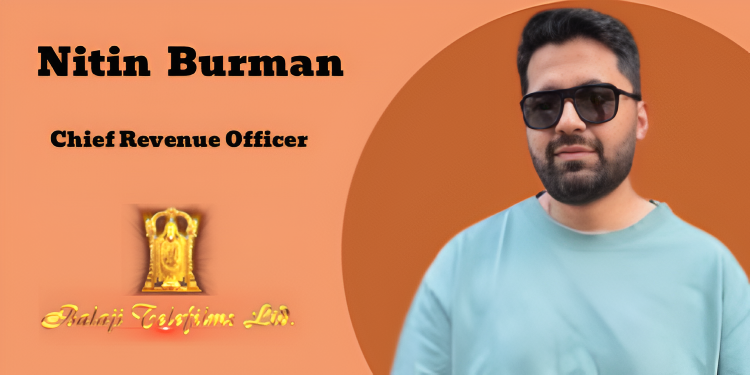
Medianews4u.com caught up with Nitin Burman, Chief Revenue Officer, Balaji Telefilms.
Q. Did a rapidly changing environment necessitate Balaji 2.0?
Yes. In the media and entertainment industry we have seen mergers and acquisitions happening. Two of the biggest companies Disney-Star and Viacom18 joined to create JioStar. So there was a need of change for sure.
At heart we are storytellers, we have to produce content for every form of platform which is there. We were there on TV, we were making films, in digital we have done a tie up with Netflix and other major OTT platforms. Now in recent times we have also become one of the largest producers of micro dramas.
We have started our own YouTube original channel where we are launching YouTube shows as well . Currently we are creating content in every platform where the audience is. Kutingg was one thing that we were planning, we wanted to launch a platform which can have everything together in a single app. That’s how Kutingg came to be.
Q. Could you talk about the various pillars of the strategy from movies to digital for Balaji 2.0?
One core pillar that is there is story. For us stories are the most important thing and I think in the last few years the audience also have very clearly told the producers that stories are the most important thing.
If you give them a good story they will love it, if you don’t give them a good story they will not consider whether you have good actors in it or whoever is there. So at the core of it for us the stories are the most important piece.
Secondly we are running a business so we have to be profitable. In everything we are looking, we are running a very tight ship keeping no loose ends. We want to do pre-sales of most of our content pieces so that the exposure of making losses is minimal. That’s how we are running it.
Q. For 2026 what goals have been set and what is the game plan to get there?
One is to be where the audience is. The game plan is pretty evident because in 2025 we started making that game plan. Now is the time when that gameplan will start rising. We have five movies which are going to come in 2026 starting with ‘Bhoot Bangla’ with Akshay Kumar and Priyadarshan. This is one of the biggest combinations.
Then we have ‘Ragni MMS’. We have one movie which is going to come out in a year. Apart from the movie slate we have launched Kutingg which is going to be again one of our front runners in the digital business. We are doing 4-5 shows with Netflix and other OTT platforms. The shows will start going live this year.
You will start seeing a lot of Balaji shows going live on the OTT platforms. On the micro drama we want to continue being the number one production house in the country. We want to be pioneers in that space as well. We want to continue making 30-40 shows every month.
That’s the kind of strength we have. So that’s what we continue. On YouTube we have our own channel which is now 1.5 million subscribers. We want to grow on that channel. We want to develop some originals in that space as well and continue growing on that.
So that’s how our game plan is to go big on digital. TV remains our core. We are already number one on ‘Kyunki’ and ‘Naagin’. Both are top shows. So TV will remain our core business. But movies and digital are the ones which are going to take us up
Q. Has Balaji 2.0 been in the works since COVID?
Yes. Post COVID we have been trying a lot of new things. One of the things which we have also started now is our own talent management vertical under the name Hoonur.
We have already locked in four artists in an upcoming reality show ‘The 50’ as part of the Hoonur portfolio. That’s something that we want to make it again a big one for us this year.
Q. What was the gap seen that led to Hoonur?
All the big talent management companies manage either the influencers or they manage the big movie stars. TV actors have been left out in that space. We wanted to fill that gap and we wanted to ensure that these actors are managed by us. That is because we have been working with them for the longest time and somewhere they are the biggest influencers if you talk about the real Bharat.
Today TV touches the length and breadth of the country. So that’s how Hoonur came into existence.
Q. From a P&L perspective is reduced budgets from TV channels and OTT platforms commissioning fewer shows the main challenge?
That is one of the challenges of course. Today everybody wants to optimise cost. And when it comes to content everybody wants the best quality in the minimum possible cost.
So producers are the ones who suffer that brunt. That is one of the reasons why we are diversifying ourselves and not keeping ourselves limited to OTT or TV alone. That’s why we have moved into micro dramas. We have moved into our own YouTube originals. We have moved into advertiser led shows as well. That’s how we are diversifying ourselves.
Q. The compliance with the Digital Data Protection Act is November. How is Balaji approaching this area?
Very seriously! Now with our app as well we are going to be following whatever the instructions are. We have our tech team which is very robust.
So we are ensuring that with regards to data privacy and other issues everything is being taken care of with no tolerance for any missteps.
Q. Is The Digital Data Protection Act the need of the hour?
Absolutely data privacy is needed because the consumer is trusting you with their data. So you have to be honest with them.
Q. Balaji remains confident in film despite footfalls falling. Do you see the situation improving this year?
I think it’s already improved with ‘Dhurandar’. It was the highest grosser film in 2025. I will say if you are making good films people will definitely come to watch it. People pay attention to what’s going on.
I watched ‘Taskaree’ on Netflix in one night. So if you make good content and people love it then people will continue to watch it. In today’s time ‘Kyunki Saas Bhi Kabhi Bahu Thi’ is the number one watched show on JioHotstar. Not just on TV. It’s rated No.1 on TV on the Barc rating.
‘Naagin’ and ‘Kyunki’ are the top two shows on JioHotstar. Give good content to people and people would love to watch it. And in terms of attention spans you need to keep them hooked on to your content. So your storytelling is very important.
Q. Is strong storytelling more important than big stars in Balaji’s film strategy?
I think it’s a mix of both. We are going with strong stories. We are launching new actors. All movies do not have big stars. One of the movies is with the biggest superstar of the country.
So it’s a mix of both. But again where we are going with big superstars the story has to be great. Storytelling remains the heart of everything is what we believe at Balaji.
Q. Are you focussing mainly on Hindi cinema or is regional also in the pipeline?
We are making Hindi movies definitely. Regional as of now is still on the lookout. Whether we want to go ahead or not is in discussion because we are strong in Hindi.
So we want to continue delivering to our Hindi audience. But yes we are exploring regional opportunities as well.
Q. Is digital where the most scale is compared to Indian broadcast?
Yes. Now digital has got a lot of scale as compared to Indian broadcast. What is happening is that all your TV sets are also turning into connected TVs and with that change even your TV shows are being watched on apps. So that’s why digital is the biggest scale opportunity going forward.
That is due to the kind of hardware which is there. You are forced to watch on apps. But our aim is to continue giving entertaining content to the audience. Wherever they want to watch they should be able to watch it.
Q. In a competitive OTT landscape what is the USP of Kutingg?
I think one of the USPs is that we are going to be focussing more on storytelling and not on big budget, big stars. Second is that we want to give everyday something new to the audience. And we want to target everyone from a woman from Chhattisgarh to a woman from Bombay. Or a man from the Delhi streets to a man from Bihar, Jharkhand.
They should be able to find some content which is relatable for them. And they should be able to watch it on the app. So it’s a value for money app.
Q. How much R&D has gone into the app?
From the content creation side to the tech side quite a lot. Tech was always there with us. Because of the Alt Balaji days we had the tech with us. So tech was not a problem. It was just that we wanted to convert our app into an app which runs both long form and vertical.
So now our app was ready for that. On the content side one of the advantages that we had was that TV is our core. We have been making shows for other OTT platforms. We had some knowledge about that. In the last three months we have produced over 100 micro dramas.
So we had that learning of creating good micro dramas as well. All that learning put together was put into our app so that people get good wholesome entertainment
Q. You also have five premium shows for Netflix. When you talk to OTT platforms what are they looking for?
I think that everyone is looking for a different story. When you give them a story on a subject which any OTT platform likes their creative people are also gatekeepers of that story.
So you do not have 100% creative independence. There are always suggestions, positive suggestions to make stories for them. But when it comes to YouTube it’s our channel. You can do whatever you want to do. So we are doing both.
We want to make content for OTT. We want to make it for YouTube. So we are there in both the games
Q. You have entered micro dramas. Could you talk about the separate skill set that is required for this format compared to anything else?
The biggest difference in micro dramas is that your storytelling in 1.5 minutes has to be so strong. And you have to leave a hook, a cliffhanger in every two minutes to capture the attention of the audience.
Earlier you could drag a story a little bit to 20 minutes and people would still come to watch your show. Now with micro dramas the attention is much less. It’s like reels. You don’t like it, people skip it. Within three episodes if people don’t like it they’ll skip the show, they’ll move to a new show.
That’s why instead of writing a story and then cutting it into 2-2 minutes we do it in the reverse way. We write a 2 2 minute episode and convert it into a full story so that it’s interesting for them.
Q. On YouTube you are doing long format shows. But that is a platform that has a lot of snacking consumption. Do you think this format will work?
We have done our research. And what we found out was that maximum content that the Indian audience was watching were Turkish and Pakistani dramas. These were 45 minute, 45 episode shows. And when Operation Sindoor happened these channels got banned.
And this audience had nothing to watch. So that is the time when we actually started our YouTube channel giving out 30 and 60 episode dramas. And within six months we went from 0 to 1.5 million subscribers. This is where we have reached.
Our first show ‘Pyaar Ki Raahein’ got more than 300 million views. Our second show has got 30 episodes and has got close to 100 million views. So our average views is happening around 2-3 million per episode. That’s where we are running at. So that’s the game. I would not agree that people do not want to watch 30-60 minute episodes.
The Indian audience always loves habit building. You want to watch something daily. You don’t know what to watch from Monday to Thursday. So when you have a show where you get a new episode daily you know what to watch.
People love that continuity.
Q. Is it fair to say that as the TG gets younger Millennials, Gen Z, Gen Alpha there is less tolerance for mediocrity?
It’s not about the TG getting younger. I think with OTT and digital getting bigger data becoming so cheap in India people got access to content from every country.
10 years ago you could not watch Spanish or Korean content that easily. We used to dub South Indian content and run it in Hindi. Now South Indians make content in multiple languages. It’s just that those lines of language barrier have diminished.
Because of this now I can watch any kind of content from any country. Earlier your competition was one Indian creator competing with another. Today India’s creator is competing at world level. That’s what is making the difference. Hence there is no space for mediocrity.
Q. Are declining attention spans a challenge?
No. Today you have so many options. You have a choice. If I want to watch a particular movie in a theatre I will go and watch it. I don’t want to watch it I will wait for 30-45 days to see it on OTT and at the convenience of my home on a big television. If I don’t want to watch it with my family then I will pick up my phone and watch it alone on my mobile device.
Today a consumer has a choice. Now when he has a choice and he has so many forms of entertainment then you can’t give him a substandard product of entertainment because he knows there is something else which is available. So it is not about the attention span. Time is an investment.
You need to now take that into consideration. And that investment is becoming costlier. So you need to make good content to get the audience’s time and grab their attention for a longer period. That’s the strategy.
Q. Could you shed light on the plans for advertiser funded shows?
Advertisers are turning towards spending on content creation. And the clear reason is that people don’t want to spend money on 30 second ads which people are skipping or avoiding by changing the channels of their television sets.
Today people want to create, be a part of the content which anybody is watching. The brand is fitted inside so that at least there is some remembrance of that brand because you remember the content. Hence even advertisers plans are moving towards planned content creation.
We have worked with Fortune, ACC, India Gate Basmati Rice, Prestige Cookware. So there are multiple clients from consumer durables to FMCG. We are already in talks with the automobile industry, liquor clients as well. We are working with all types of clients.
They are satisfied with what has happened. Fortune has come for the second time on our shows.
Q. What kind of creative boost has been envisioned for Balaji Studios?
Balaji Studios came to existence because till now Balaji Telefilms was making shows which is what Ekta Kapoor used to create. Now to diversify and to become stronger we wanted to work with other creators as well. Hence Balaji Studios came into existence where we thought that now we need to start working with independent creators and start pitching.
From Balaji’s core strength we want to take the opportunity and give a chance to independent creators and pitch stories to other platforms. So that’s what Balaji Studios is all about. We have done two shows in Telugu one for Aha. We are doing one for ETV. And one is being done with a leading OTT platform. This is what we have launched which is part of the Balaji Studios.
Currently we are pitching more shows with other creators to the platforms.
Q. What are the key learnings from abroad that have been incorporated by Balaji Studios?
More than international studios currently our learnings are coming from the rich experience of our promoters. They have been running and ruling the industry for quite some time. And now we also with their blessings are starting a Studio which is working with independent creators.
We want to give a chance. Stories remain the crux of Balaji Studios as well. So we want to be very choosy in terms of what concepts we are picking up. And then we are pitching it to the OTT platforms. But very clearly we don’t want to make and sell. We want to pitch, commission it from a platform and then make it for them rather than just making and selling it.
We don’t want to take any kind of risks. We do a lot of brainstorming with the platform and with the creator. It is a three party dialogue process. We are working in two South Indian languages and Hindi. But the plan is to explore whatever is coming and whatever is making sense business wise.
Q. Could you talk about how AI has been integrated into Balaji 2.0? Is AI transformational?
We have an in-house AI team which is being headed by Chetan Hansraj who is an actor. If you see our current season of ‘Naagin’ we have certain shots that have been developed in AI and have been developed by our in-house team.
We have done one micro drama fully made on AI. And now we are planning to do certain more horizontal shows as well on AI. It is transformative. It’s a technology upgrade. So we need to embrace it, learn it and use it for our benefit rather than complaining about it.
Q. Are you investing a lot in upskilling your employees in AI and tech?
Yes. We are in touch with the Google Gemini team. We have got access to their latest software for trial purposes. Our teams are being trained on a regular basis on the new technology. They are being trained to give better prompts to AI. So all of that is happening
Q. How are businesses like Astro coming along?
It’s doing good. Within the first two months we have had one million downloads which is I think one of the fastest by any Astro app on the launch.
We want to grow big over there as well. Astro was something which was our promoters a dream baby that they wanted to do. So it’s happened, it’s doing pretty well. We are currently in beta phase. It’s just been two months since we launched it.
The first year is going to be critical in terms of how do we take it up and make it better. Currently we are only available in India but we want to be expanding across the globe as well.
It’s like a separate company because there are some businesses that only do Astro, There will be some that only do micro dramas. Key people who are experts in their domain we need to hire to run those businesses.
Q. Is predictive analytics going to play an increasingly more important role in the next two years because you are juggling a lot of things?
Anything that you want to do be it run an app or run a new business has to be backed by data and by research. This applies to anything, any strategy. Anything that we make is backed by data.
We do not launch something for the heck of it. So it’s properly backed by data research and there is a business plan to it. In 2026 we are hoping to grow in most of our businesses and hopefully they will be successful.