AdSocial.ai is an AI-agent driven Visual Personalisation OS for D2C brands.
This year it successfully completed its product validation phase after working with 40+ consumer brands across F&B, lifestyle and leading marketplace sectors. Brands leveraging AdSocial.ai’s visual personalisation capabilities have reported 40–60% improvement across conversion funnels and revenue growth of up to 1.5–2X in several cases.
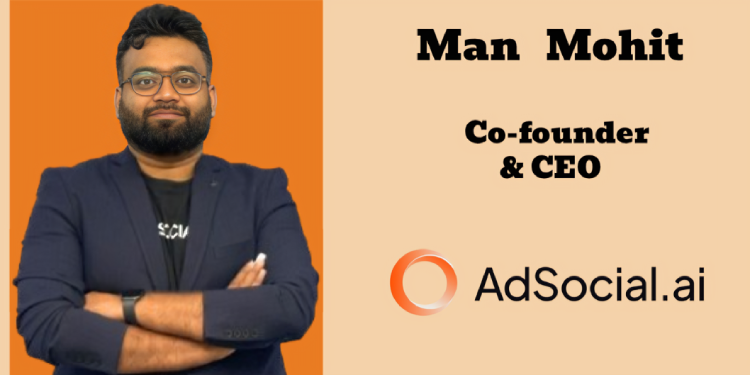
Medianews4u.com caught up with Man Mohit co-founder, CEO AdSocial.ai
Q. Adsocial.ai is building what it calls a new foundational layer for digital businesses. Could you talk about the various levers of the business?
AdSocial.ai is building a foundational personalisation layer for digital businesses, driven by a few core levers: data unification (bringing customer, creative, and behavioral signals together), contextual intelligence (understanding where a user is in their journey, not just who they are), decisioning (choosing what experience or creative to show and why), execution (deploying those decisions across ads, landing pages, and channels), and learning loops (capturing outcomes to continuously improve future decisions).
Together, these levers move personalisation from isolated campaign-level tweaks to a system-level, journey-aware engine that compounds performance over time.
Q. Could you elaborate on the company’s B2B SaaS subscription model, with tiered plans designed for mid-market and enterprise brands?
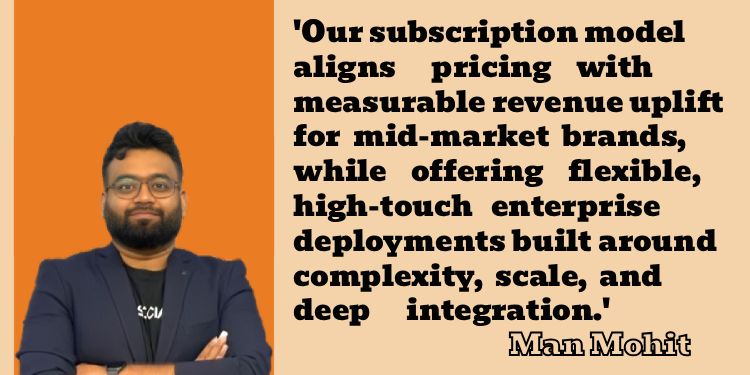
AdSocial.ai follows a B2B SaaS subscription model with tiered plans tailored to mid-market and enterprise brands. For mid-market customers, pricing is outcome-aligned and primarily linked to a percentage of incremental revenue uplift driven by the platform, making the cost directly proportional to realized value.
For enterprise customers, the model shifts to custom pricing, reflecting scale, data complexity, number of channels, and depth of personalisation and integration required.
This structure keeps adoption friction low for growing brands while allowing flexible, high-touch deployments for large organisations.
Q. Who are the investors in Adsocial.ai and what are their expectations?
AdSocial.ai is currently early-stage and founder-driven, with backing from founders and a small set of strategic angels rather than large institutional funds at this point. Their expectations are focused on validating the core thesis, that contextual, journey-level personalisation can outperform campaign-level optimisation, while demonstrating repeatable revenue uplift for mid-market brands, strong enterprise pilots, and a clear path to becoming a system-of-record for personalisation decisions.
Near-term, investors care most about product-market fit, defensibility of the intelligence layer, and signals of scalability ahead of institutional fundraising.
Q. There is talk that India is not developing huge, impactful AI systems. Consumers use AI from abroad like Open AI, Gemini, Meta AI. China is also ahead of India in the AI race. Your views?
There’s some truth to the criticism, India hasn’t built globally dominant consumer AI platforms like OpenAI or Meta, and China is ahead due to heavy state-backed investment and compute access. But this misses where India’s real strength lies: applied, system-level AI embedded into businesses rather than consumer chatbots.
India is well positioned to build impactful AI in areas like decisioning, personalisation, and optimisation, foundational layers that quietly run commerce, fintech, and operations.
Q. Adsocial.ai’s aim is to help brands deliver truly individualised experiences at scale. How crucial will this be in the festive season in growing conversions for clients?
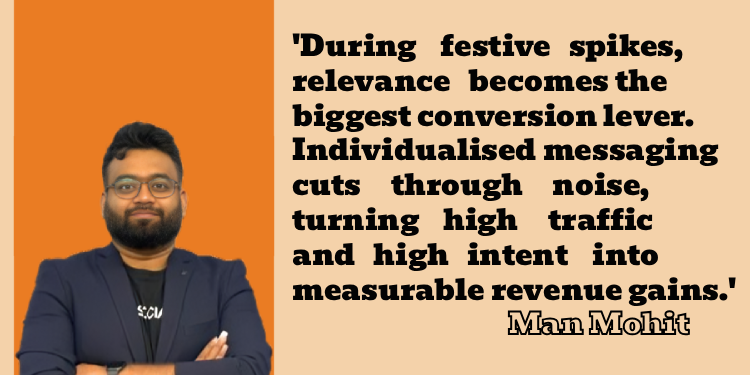
It will be extremely critical, especially during the festive season when traffic spikes but user attention drops. Festive demand brings high intent, high noise, brands that rely on generic offers and static creatives end up competing only on discounts.
Individualised experiences allow brands to adapt messaging, offers, and creatives in real time based on user context, intent, and stage of the journey, turning the surge in traffic into actual conversions.
In festive windows, even small gains in relevance compound fast, making personalisation one of the biggest conversion levers for clients.
Q. Adsocial.ai positions personalisation not as a feature but as a system. Will the importance of personalisation grow across categories like beauty, travel, real estate in 2026?
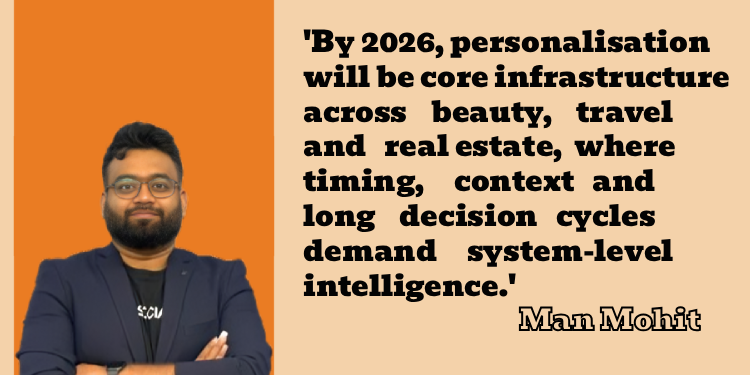
Yes, by 2026, personalisation will shift from being a nice-to-have feature to a core system across categories like beauty, travel, and real estate. As acquisition costs rise and consumer choice explodes, growth will depend less on reach and more on relevance at the right moment.
Beauty needs context-driven discovery and repeat journeys, travel depends on timing, intent, and dynamic preferences, and real estate hinges on long decision cycles and trust. In all three, system-level personalisation, where context flows across touchpoints, will be a key driver of conversions and long-term value.
Q. AdSocial.ai has worked with 40+ consumer brands across F&B, lifestyle and leading marketplace sectors. Could you elaborate on the work being done?
AdSocial.ai has partnered with 40+ consumer brands across F&B, lifestyle, and leading marketplaces to implement personalization at different depths based on scale and maturity. With large enterprises in India, the focus has been on dynamic homepage personalisation, where layouts, content, and messaging adapt for different consumer segments.
For 40+ D2C brands, the work centers on personalising product detail pages, aligning them with the context of incoming ads and WhatsApp-driven, visual-first communication, ensuring continuity from acquisition to conversion.
Q. Brands leveraging AdSocial.ai’s visual personalisation capabilities have reported 40–60% improvement across conversion funnels and revenue growth of up to 1.5–2X in several cases. Is this the result of helping brands make the customer journey less generic and more meaningful, deeply connected?
By aligning visuals, messaging, and page experiences with the user’s entry context (ads, WhatsApp, intent signals), AdSocial.ai removes the disconnect brands typically create between acquisition and conversion.
When users see continuity instead of repetition, relevance instead of noise, they move faster through the funnel, driving higher conversion rates and compounding revenue impact.
Q. How do personalised visual and experience-led assets tailored to individual users across sectors such as online retail, kids’ commerce, fintech and banking result in more immersive experiences for the consumers? Any examples that can be shared?
Personalised visual and experience-led assets work because they reduce cognitive effort and increase emotional relevance, the experience feels designed for the user, not broadcast to them. In online retail, users see creatives and product detail pages aligned to the exact ad or category they clicked, making discovery frictionless.
In kids’ commerce, the needs of an expecting mother are very different from those of a parent with a 2-year-old and a 4-year-old; visuals adapt to age, life stage, occasion, or past purchases, helping parents decide faster and with greater trust. In fintech and banking, the type of insurance or card offered in Mumbai may differ from Mysore, as consumer needs and trigger points vary by geography; identifying the right product and pairing it with the right communication mechanism and visual framing simplifies complexity and enables adoption at scale across diverse user segments.
Q. WhatsApp has been steadily introducing new tools for businesses. How has it grown in importance as a marketing platform for businesses as a result?
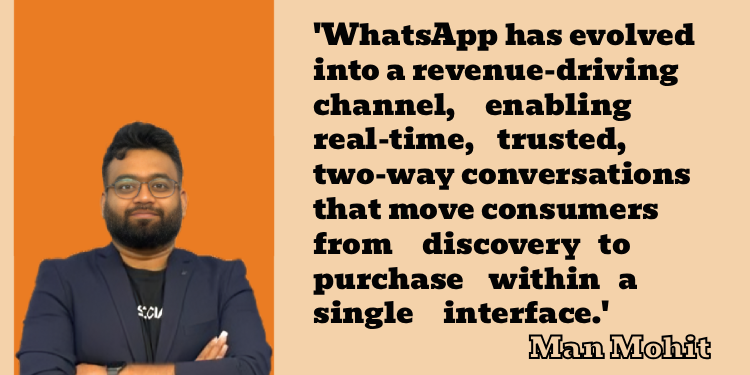
WhatsApp has grown into a critical marketing and conversion channel as it combines reach, immediacy, and trust in a single interface. With richer business tools, catalogs, interactive messages, payment flows, and automation, brands can now move users from discovery to purchase within the same conversation.
Unlike traditional channels, WhatsApp enables high-intent, two-way communication, making it especially powerful for nudges, reminders, and personalised follow-ups. As a result, businesses increasingly use WhatsApp not just for support, but as a core revenue-driving platform across the customer journey.
Q. Does the old fashioned email still play an important role in brand building?
Email on its own isn’t doing the heavy lifting anymore. Attention has shifted to faster, more contextual channels like WhatsApp, in-app experiences, and personalised landing flows where intent is immediate.
Email still exists, but more as a supporting layer, for receipts, summaries, or long-term nurturing, rather than a primary brand-building or conversion engine. The real impact today comes from channels that feel timely, personal, and conversational.
Q. The company follows a founder-led, use-case-first outreach strategy, engaging CX, growth and marketing leaders through consultative discussions and live pilots rather than generic demos. So what kinds of on-ground activities like seminars, workshops will the company be doing in 2026?
In 2026, AdSocial.ai will double down on high-intent, on-ground engagement rather than broad marketing. This includes closed-door CX and growth roundtables, hands-on personalisation workshops where brands bring live data and journeys, and invite-only pilot labs that let teams experience outcomes, not demos.
The focus will be on use-case-led seminars, co-created with industry operators, where real problems are unpacked and solved collaboratively, positioning AdSocial.ai as a thought partner in personalization, not just a software vendor.
Q. Does Zoom play a role in reaching out to prospective clients or does the company prefer face to face meetings?
In-person interactions help build trust, align on nuances, and collaborate more deeply with CX, growth, and marketing leaders.
Zoom is used selectively, mainly for follow-ups or ongoing check-ins, but the core outreach and relationship-building remains in-person and consultative.
Q. Is Linkedin also an important platform to get the message out?
Yes, LinkedIn is an important platform for thought leadership and credibility, but it isn’t the primary acquisition channel. AdSocial.ai mainly grows through referrals and founder-led networks, where trust and context already exist.
LinkedIn supports this by reinforcing the narrative, sharing insights, case learnings, and points of view, so when referrals happen, prospects already understand what the company stands for.
Q. In 2026 does AI need better guardrails, a stronger policy framework? What would you like to see from the Government?
Yes, AI is a double-edged sword. Stronger guardrails are necessary, but they must be designed carefully so innovation can continue in parallel. By 2026, governments should focus on clear accountability, data protection, and transparency in AI-driven decisions, while avoiding heavy-handed rules that slow development.
What’s needed is a balanced, pro-innovation framework that sets boundaries for responsible use but still encourages experimentation, startups, and real-world deployment.