Netcore earlier this year announced the release of Netcore Agentic Predictions 2026, a data-driven thought-leadership on agentic marketing report outlining how autonomous AI agents will fundamentally reshape marketing, commerce, and growth accountability over the next 12–24 months.
The report positions 2026 as the inflection point where marketing moves decisively from generative AI pilots and proofs of concept to agentic execution at scale. Drawing on industry research from Gartner, Forrester, McKinsey, Anthropic, HubSpot, and Netcore’s operating insights across global enterprises, the report concludes that consumer agentic marketing in 2026 will be defined by multi-agent systems, Brand Twins, Agentic Commerce, human attention, outcomes-based pricing, and profitability
Multi-agent systems move from pilots to performance: A core finding of Netcore Agentic Predictions 2026 is the transition from isolated AI assistants to orchestrated multi-agent systems (MAS) that operate across the full marketing lifecycle—content, segmentation, decisioning, optimisation, and insights.
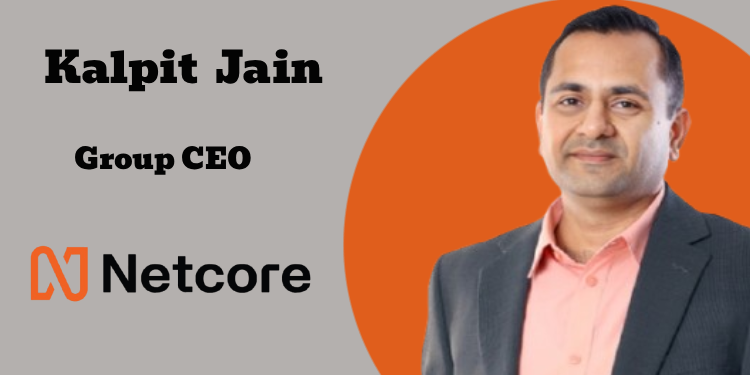
Medianews4u.com caught up with Kalpit Jain Group CEO Netcore Cloud
Q. Why do you believe marketing in 2026 will be run by agents, not campaigns? What breaks in the campaign-led model?
Campaigns were designed for scale, not personalisation. They rely on fixed journeys, segmentation, and A/B tests, applying the same rules/ workflows to scale. As a result, they ignore real-time context, intent, and past outcomes, optimising on averages instead of outcomes. Campaigns often waste marketing spend by treating very different consumers the same, since they are based on traditional segmentation methods.
That’s why campaigns could not evolve; they got replaced instead by agents. Agentic marketing provides autonomous agents that continuously learn from behaviours and outcomes to decide the best messages, channels, timing, frequency, or even when not to send any messages.
The result is true one-to-one hyper-personalisation, where every interaction is optimised for context, in real time, to drive conversion, retention, and long-term consumer value, all at scale.
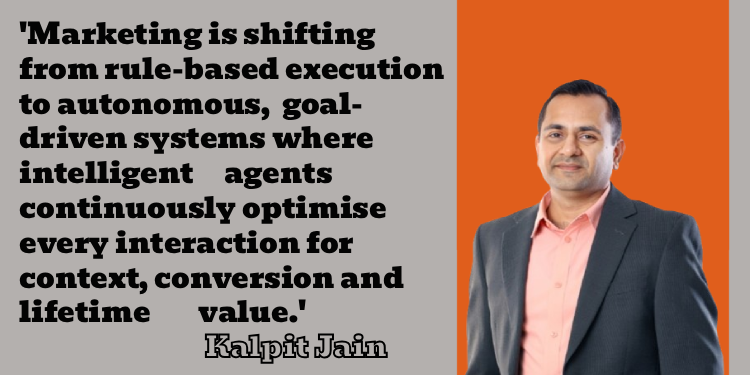
Agentic marketing marks the shift from rule-based execution to autonomous, goal-based decision-making. In 2026, marketing is no longer a series of launches, campaigns and journeys, but an always-on system of intelligent AI agents optimising for outcomes, one consumer at a time. This is the evolution of marketing from managing and manually coordinating marketing workflows to reclaiming time with agentic marketing.
 Q. As a result, how will the job of the CMO evolve?
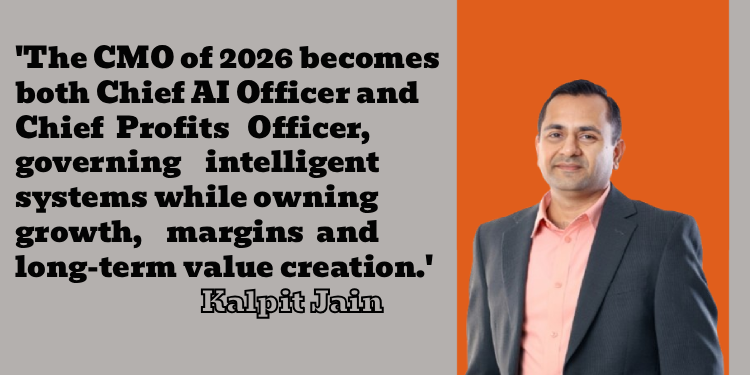
CMOs evolve into two roles at once: Chief AI Officer and Chief Profits Officer. As a Profits officer, the modern CMO focuses on growth strategy and market narrative—while agents handle execution at speed, scale, with real-time decisioning.
As AI officers, the erstwhile CMO governs how AI agents are being deployed, ensuring that the agentic marketing complies with brand, ethics, governance/ guardrails, and business goals. Value shifts upstream from execution to strategy, economics, and decision-making. In the agentic era, the most successful CMOs will be those who embrace this metamorphosis.
Q. The report highlights a surge in interest around multi-agent systems. Why are single-agent or assistant-based models no longer sufficient?
With the rise of multi-agent systems, marketing is shifting from a patchwork of disconnected tools/ systems to tightly orchestrated multi-agentic systems that are designed to drive real business outcomes.
Winning brands today have the need to align various tasks such as creativity, content, audiences, insights and personalisation into a unified system that can deliver measurable business value/ outcomes.
Multiagents provide this unified system where specialised agents for various tasks collaborate seamlessly across the entire consumer journey. Multi-agents operate at far greater speed and efficiency than single agents/ manual execution. Marketing today is no longer powered by isolated agents working in silos. Instead, it is becoming an integrated marketing engine, where multiple agents collaborate in a seamless manner.
That coordination is what makes multi-agent systems fundamentally different. They enable marketing decisions that are autonomous, holistic, adaptive, and enterprise-scale, something single-agent models simply cannot deliver.
 Q. In practical terms, what does a “self-optimising marketing engine” look like for an enterprise brand today?
In practical terms, self-optimising marketing engines are an always-on marketing where AI agents continuously learn and optimise for audiences, offers, channels, and journeys.
Agentic marketing learns from consumer behaviour and preferences to provide real-time outcomes. Use cases include cross-sell/ upsell, consumer lifetime value, churn risk, and profitability, and adjusting actions/ next best actions automatically within pre-defined guardrails.
These agents act as an extended marketing team. Each agent is responsible for a specific task: insights, content, segmentation, audience, scheduling, decisioning to experiment, learn, and optimise, executing thousands of micro-decisions in parallel, with relevance and at a scale no human team can match.
For example, when a consumer shows intent to explore a loan or credit product, one agent evaluates eligibility and risk, another assesses lifetime value and cross-sell potential, while a third determines the best channel, timing and content to engage. The final interaction, whether it’s an in-app nudge, a message, or a personalised offer, is dynamically chosen in real time, without the need for static pre-built campaign workflows.
This is how marketing shifts in 2026 to continuous, outcome-driven, autonomous execution where agents handle relevance, scale and complexity, and marketing teams focus on strategy and governance.
Q. The concept of Brand Twins is central to the report. How are Brand Twins fundamentally different from chatbots or personalisation engines?
Chatbots respond to prompts, and personalisation engines provide personalised product recommendations and experiences to consumers in real-time across digital channels. Brand Twins operate at a very different level; they reason, decide and enable truly personalised marketing at scale.
A Brand Twin is not a chatbot or a simple recommendation tool. It is an always-on AI agent, owned by the brand, that understands each consumer intrinsically their needs, preferences, behaviour, and intent. Instead of mass advertising, brands send relevant messages and offers to the Brand Twin, which works quietly in the background.
Because it has an intrinsic understanding of each consumer, the Brand Twin delivers the right product, offer, or message at the right time. No noise. No overload. Just relevance. That’s also scalable for brands.
Consumers interact with Brand Twins naturally, through natural conversations. Over time, each Brand Twin builds a living, dynamic consumer profile, learning what matters, what doesn’t, and how the consumer’s preferences have changed. This enables true one-to-one personalisation that adapts continuously and feels helpful, not intrusive to consumers.
The brands that win in 2026 will be those that replace marketing noise with relevance and build ongoing, trusted relationships with their consumers through relevant, personalised interactions at scale. Marketing in general will become quieter and more precise this year.
Q. The report predicts the rise of agent-to-agent commerce. How radical is this shift compared to today’s e-commerce experiences?
This is a foundational shift because ecommerce moves from persuasion to delegation. Today, brands compete aggressively for human attention. In an agentic world, brands compete for the attention of both humans and AI agents (acting on behalf of consumers).
Take something as simple as buying a pair of shoes today. A consumer searches online, scrolls through ads, compares brands, reads reviews, checks prices across marketplaces, maybe abandons the cart, and eventually makes a decision influenced by discounts, messaging, and convenience.
This journey is interface-driven and heavily shaped by a persuasive consumer journey.
In an agentic world, this process collapses. A consumer tells their AI agent: “I need running shoes under this budget, delivered by this date, comfortable for daily use.” The agent then evaluates options across brands, marketplaces, reviews, return policies, and past satisfaction scores without browsing interfaces. It may even negotiate price, choose the optimal seller, and complete the transaction autonomously.
This is where agent-to-agent commerce becomes real. Brand agents and consumer agents interact directly, sharing structured signals around price, availability, trust, and outcomes. Ecommerce becomes outcome-driven rather than attention-driven.
What makes this shift even more radical is that LLMs themselves are becoming economic actors. As agent platforms begin charging transaction-level fees for completed actions, AI agents are no longer neutral interfaces; they are decision-makers with cost and value considerations. That fundamentally changes how brands think about discovery, distribution and margins
This marks a revolutionary shift where brand and consumer agents will work together in real time to personalise products, offers, and messaging—while automatically managing pricing, inventory, and promotions. The result will be ecommerce experiences that are dynamic, adaptive, and continuously evolving for each consumer.
 Q. If AI agents become gatekeepers, what signals will matter most for brands trying to earn attention?
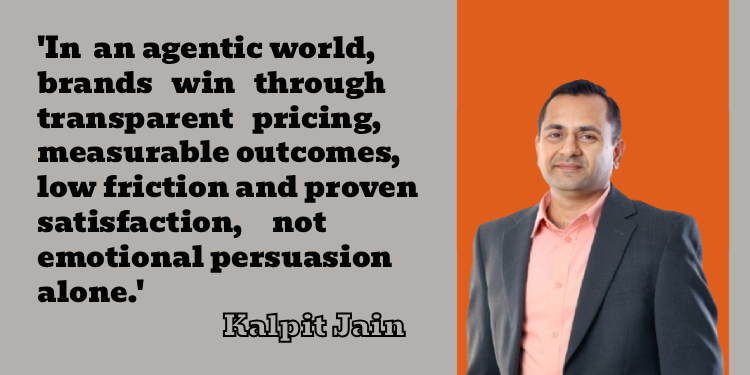
Agentic marketing prioritises brands that clearly help users achieve their goals, backed by proven value for the consumer rather than making emotional promises.
They value transparent and fair pricing, strong relevance to their preferences, low friction, higher likelihood of post-purchase satisfaction and trust signals that reduce risk and effort.
Brands that are easy to evaluate, adapt quickly, and consistently deliver value are far more likely to earn agent attention and get shortlisted. Agents prefer real data-driven outcomes over emotions
A good starting point into the agentic marketing world for brands would be our Insights agent, which has already helped 36+ customers so far by becoming their strategic, trusted advisor, providing insights conversationally to their most pressing business questions, in real-time. The deep-level insights from our Insights agent can help turn your data into decisions that drive your brand’s business.
Once that foundation is in place, brands can then add additional agents for content, audience, segmentation, scheduling, etc.
Q. You predict the CMO will evolve into a Chief AI and Chief Profits Officer. What skills will define successful CMOs in 2026?
By 2026, the CMO’s role will expand beyond marketing execution into profit decision-making. CMOs will increasingly act as Chief AI and Chief Profits Officers responsible not just for growth, but for how AI-driven decisions impact margins, retention, and long-term consumer value.
The defining skills will be agentic thinking, AI fluency, profits accountability, and governance leadership. CMOs won’t need to build AI models themselves, but they must know how to guide AI systems to goals, audit their decisions, bring in ethical thinking and align all this tightly with business outcomes.
CMOs should start by shifting their outlook from execution to outcome ownership, clearly defining what AI must optimise for, which includes retention, consumer lifetime value, or profitability.
Most importantly, CMOs must lead with governance, setting guardrails and accountability so agents scale impact, not noise.
In practical terms, this means shifting focus from approving campaigns to setting goals, guardrails, and success metrics, ensuring AI agents optimise for quality, not vanity metrics. The CMOs who succeed will be those who treat AI as a strategic capability, not just a productivity tool.
Q. What will separate brands that win in 2026 from those that struggle with this transition?
Winning brands will fundamentally redesign their marketing foundations around agents, outcomes, and accountability. They will stop measuring success by vanity artefacts such as messages sent, impressions delivered, and features consumed. Brands will align every decision to measurable business impact, such as customer retention and lifetime value.
Struggling brands often call their old marketing “agentic” without actually changing how it works. They add AI tools like chatbots or content generators, but still make key decisions manually. As a result, they focus on better messages instead of better results, and miss what agents really care about: clear value, proof, and performance. That gap widens and becomes even more visible as martech pricing shifts from consumption-based models to outcome-based models
Outcome-based pricing changes the equation. In this, brands no longer pay for emails, events, or seats; they pay for real business outcomes. This forces both sides to align on shared success metrics, transparent measurement, and long-term value creation. Martech is set to become accountable growth partners, not just software providers.
In 2026, the brands that win will be those willing to rewire decision-making, measurement, and commercial models around real outcomes, not just adopt new agentic AI technology.
Q. What are your expectations for how Agentic AI will impact the festive season?
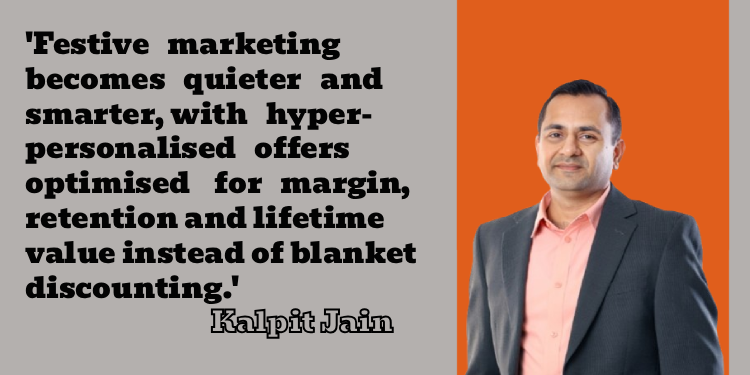
Festive marketing will move away from mass discounting toward precise, hyper-personalised offers and pricing. Instead of one-size-fits-all offers, agentic marketing systems dynamically optimise timing, value, channel, and inventory at an individual level, protecting margins while improving conversion quality.
We’re already seeing early versions of this in practice. For example, leading brands in ecommerce, retail and BFSI are using coordinated agents where one helps discovery, another monitors intent signals, another manages offer economics, and a third controls channel timing. The outcome is fewer blanket offers and discounts, and more targeted offers and discounts that actually convert
In early agentic implementations, the metrics that we see consistently improve are conversion quality, repeat purchase rates, and cost efficiency. Brands see lower incentive burn, higher response rates from smaller audiences, and measurable lifts in downstream metrics like retention and lifetime value, not just festive spikes.
The real shift this festive season won’t be louder marketing. It will be smarter, relevant marketing, executed at a scale humans simply can’t manage.
 Q. Finally, what excites you most and concerns you most about the agentic future of marketing?
What excites me is marketing becoming truly accountable to business impact. What concerns me is brands adopting agents tactically without rethinking strategy, governance, and long-term trust.