This World Music Day 21 June, The Indian Performing Right Society Ltd. (IPRS) is amplifying the conversation around creator rights, fair pay, and music as a viable profession—not a side hustle.
IPRS is India’s only Copyright Society registered under the Copyright Act, 1957, and counts more than 9000 of Indian authors, composers, and music publishers as its members. IPRS is authorized under the Copyright Act, 1957 to carry on the business of granting and issuing licenses in respect of musical works and literary works associated with musical works assigned to it by its members as well as collect and distribute the royalties to its members including the authors’ statutory royalties, for the exploitation of these works either by way of live performances and/or recorded music through any medium except when exhibited as a part of a cinematograph film shown in a cinema hall.
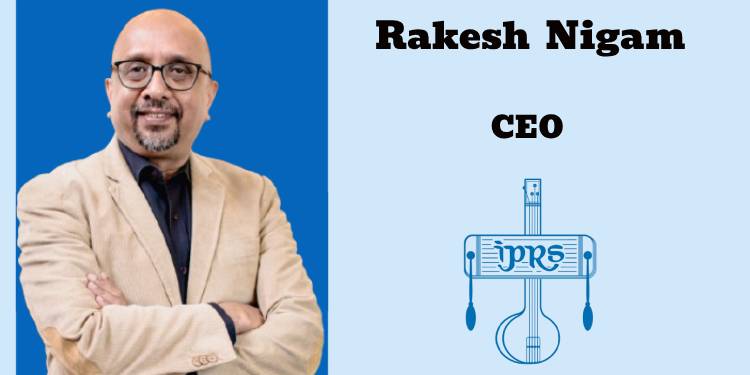
Medianews4u.com caught up with IPRS CEO Rakesh Nigam to find out more.
Q. IPRS is the fourth largest music copyright society in terms of revenue in the Asia-Pacific region. Could you talk about the strategy of implementing proactive licensing strategies, maximising revenue generation from music usage platforms that has led to this growth?
IPRS’s growth into one of the top four music copyright societies in the Asia-Pacific region is the result of a focused, forward-looking strategy. At the heart of this is our commitment to proactive licensing and robust licensing deals — ensuring that music is licensed wherever it is used, across traditional, digital, and emerging platforms.
We’ve strengthened partnerships with digital platforms, broadcasters, and OTT services, while also expanding our footprint on ground, leading to a boost in public performance licensing. A key driver has been our investment in technology and data systems that ensure accurate tracking and fair royalty distribution, which builds trust with both users and our members.
Our approach goes beyond collection—it’s about building a culture of compliance and awareness, and reinforcing the value of music as intellectual property, leading to a surge in revenue collection. IPRS has been quick to adapt to the evolving landscape, with digital platforms now contributing nearly 80% of total collections—reflecting both a shift in consumption and the effective licensing strategies.
At IPRS, we believe sustained growth comes from respecting creators’ rights and ensuring they are fairly compensated in every corner where music is played.
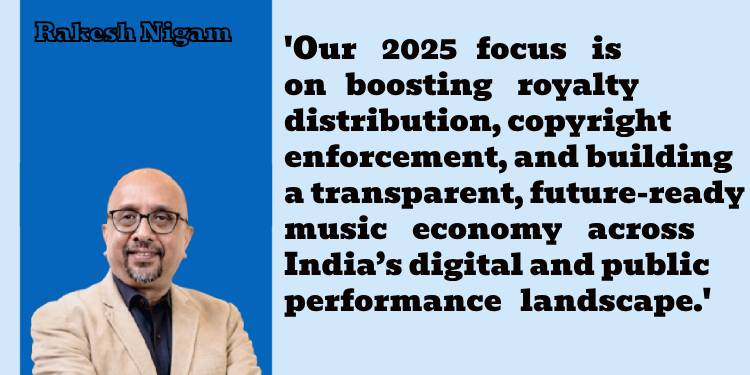
Q. What targets has IPRS set for 2025 in terms of royalty income distribution, copyright enforcement, and other key areas?
Our focus for 2025 is firmly on strengthening the foundation of a fair, transparent, and future-ready music economy. On the royalty front, we aim to significantly increase distributions by expanding our licensed footprint—especially across digital, OTT, and public performance segments—while ensuring faster, more accurate payments to our members. Licensing and royalty collection from major television networks and radio stations remains a significant challenge, and we hope to see positive developments in this area in the near future.
We’re also prioritising copyright protection through enhanced monitoring, data-driven tracking, and due enforcement to protect our members’ rights in an increasingly complex digital ecosystem.
Beyond revenue and enforcement, we’re committed to capacity-building—scaling up creator education, expanding regional outreach, and upgrading our tech systems to ensure seamless documentation and royalty administration.
Our ultimate goal is clear: to make IPRS a stronger, more inclusive engine of value for every music creator, across every corner of India.
Q. What kind of membership growth is being observed, and is it expanding across the country?
Over the past few years, IPRS has witnessed strong and steady membership growth—not just in numbers, but in diversity. We’re seeing increasing representation from creators across regions, languages, and genres, reflecting the vibrant and decentralized nature of India’s music ecosystem.
Our membership base is no longer concentrated in metro cities alone. Through targetted outreach, workshops, and regional programs, we’ve expanded into tier two and tier three cities, onboarding songwriters and composers from across the country—including voices that were previously underrepresented.
This growth isn’t just about scale; it’s about building an inclusive and equitable community where every creator, regardless of geography, has access to rights, royalties, and opportunities.
Q. With World Music Day on June 21st, how will IPRS spotlight the voices behind the music—the authors, composers, and publishers?
Our focus remains on shining the spotlight on the creators and those behind the scenes—who form the backbone of every song we celebrate.
Through dedicated campaigns, storytelling, and member-driven initiatives, we’re amplifying their voices, highlighting their journeys, and reminding the world that music begins long before it’s performed or streamed.
Our aim is to not just celebrate music, but to foster a deeper respect for the creative process—and ensure that those who write and compose are not just heard, but valued and fairly compensated.
Q. Digital content creators and influencers often raise concerns about high licensing fees for music use in online videos. What is IPRS’s stance on this?
At IPRS, we believe in striking a fair balance between supporting creativity and enabling access. We understand the evolving needs, and are actively working to create licensing solutions that are transparent, scalable, and affordable—especially for independent and small-scale creators.
Our goal is not to restrict creativity, but to ensure that those behind the music—songwriters, composers, and publishers—are fairly compensated when their work is used. As the digital landscape evolves, so must our models. We’re open to dialogue and innovation to make music licensing more accessible, without compromising on the rights of music creators.
Q. Is there a cultural perception issue around music IP, with many treating music as free? What’s being done to shift this mindset?
Yes, there is a long-standing cultural perception that music is freely available—a part of public experience rather than protected intellectual property. This mindset, while shaped by years of informal access and sharing, undermines the value of the creators behind the music.
At IPRS, we’re actively working to shift this narrative. Through awareness campaigns, creator education, and partnerships with platforms, we’re reinforcing that music is not just art—it’s also livelihood. Copyright is not a barrier; it’s a recognition of effort and ownership.
Changing mindsets takes time, but every informed listener, licensed platform, and empowered creator moves us closer to a culture that respects and rewards creativity fairly.
Q. To make music a viable full-time profession, what structural and policy changes are needed—particularly around copyright enforcement?
For music to become a viable full-time profession, we need a stronger structural and policy ecosystem that protects creators and empowers them to grow. Robust copyright enforcement is essential—ensuring that music is licensed wherever it is used and that royalties reach the rightful owners efficiently and fairly.
Immense challenges still remain in licensing for television and radio, with major networks and many radio stations yet to come on board and comply with fair licensing practices. This continues to result in significant revenue loss for music creators and publishers.
Equally important are clearer licensing frameworks, faster dispute resolution, and sustained collaboration between government, platforms, and societies like IPRS. But beyond enforcement, the focus must also be on creator education—building awareness around rights management, royalties, and the role of copyright in securing long-term value.
We must also invest in creating opportunities for artists from all regions and backgrounds to showcase their work, collaborate across genres, and expand their creative and commercial reach. Helping creators stay informed on upcoming trends in the evolving music landscape is just as critical.
When creators are protected, informed, and given platforms to grow, music becomes more than just a passion—it becomes a sustainable profession.
Q. Will the 2023 campaign ‘My Music My Rights’ be extended or built upon in 2025?
Absolutely. ‘My Music My Rights’ was never intended as a one-time campaign—it marked the beginning of a larger movement to educate, empower, and elevate music creators across the country. In 2025, we’re not only extending its reach but building upon it with regional outreach programs, education and upskilling initiatives, and stronger partnerships with regional stakeholders, local authorities and creative institutions.
Our goal is to embed a culture of rights awareness from the ground up—so every creator, from emerging to established, understands the value of their work and knows how to protect and monetise it. The future of music depends on informed creators, and ‘My Music My Rights’ will continue to be a powerful tool in making that future a reality.
Q. Is it a challenge to convince spaces like malls—where music is used for ambiance—to pay fair licensing fees?
Yes, it is a challenge—but it’s also an opportunity for awareness. Many spaces like malls, restaurants, and salons use music to enhance ambiance and customer experience, often without realizing that this usage carries commercial value and legal obligations.
Our role at IPRS is to bridge that gap—not just through enforcement, but through education and dialogue. We’re working to help businesses understand that music is not free—it’s the product of creative labour, and Licensing ensures that music is used legally and that those who create it are fairly compensated.
When businesses respect creators’ rights, they don’t just comply with the law—they contribute to a healthier creative economy that benefits everyone.
Q. How are regional music and digital innovation reshaping the current music landscape?
Regional music and digital innovation are redefining the Indian music landscape in powerful ways. The rise of local languages, genres, and grassroots talent—amplified by digital platforms—has broken the traditional dominance of a few metros and opened doors for creators across the country.
At IPRS, we’re witnessing this shift first-hand. More creators from tier two and three cities are joining our community, their music finding audiences far beyond regional boundaries. Meanwhile, advancements in technology and innovations in content distribution and data management are helping us track usage better and ensure fair royalties, even for niche or emerging genres.
Together, regional diversity and digital access are creating a more democratic, inclusive, and dynamic music ecosystem—one where every voice has a chance to be heard, and valued.