Roombr, an AI-powered Digital Classroom platform transforming learning outcomes in Tier-two and Tier-three India earlier this year appointed Fayyaz Hussain as Chief Growth Officer (CGO) to accelerate expansion and lead global growth and fundraising initiatives.
The hire comes as Roombr scales rapidly, having deployed 3,000 AI-enabled smart classrooms across 1,000 schools, impacting 150,000 students across emerging India in just two years as one of the fastest EdTech hardware-SaaS deployments in the country.
Hussain, a two-time entrepreneur with more than 20 years of experience in scaling technology ventures, has previously held leadership roles at Paytm, iBibo Group, U2opia Mobile, and Times Internet.
He has led early-stage GTM build-outs, rapid geographic expansion programmes, and high-growth digital businesses, bringing deep expertise across strategy, partnerships, and fundraise execution.
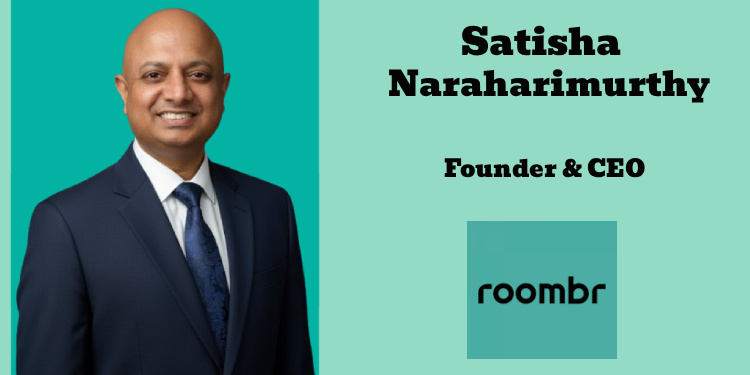
Medianews4u.com caught up with Roombr founder, CEO Satisha Naraharimurthy
Q. The edtech sector has gone through a boom–bust cycle, with major players shutting down. What are the key learnings?
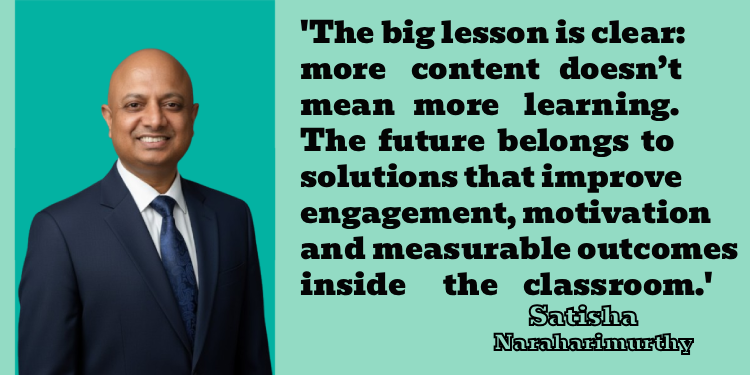
The biggest lesson is that edtech companies scaled sales faster than they improved learning. Many assumed that distributing more content — videos, worksheets, and tutoring would automatically solve educational gaps. It didn’t.
India doesn’t lack content, it lacks engagement, motivation, and measurable learning outcomes.
Another key learning is that families and schools are no longer willing to pay for lofty promises. They now demand proof of impact and transparency.
At Roombr, our focus is on strengthening what actually happens inside the classroom enhancing collaboration, communication, student participation, and teacher effectiveness. We believe that education transforms only when the learning experience itself transforms.
Q. What trends will define education in the next five years with AI?
AI will fundamentally change the operating system of schools. We see three clear shifts shaping the next phase of education:
1. Hyper-personalised learning:
Every child will have a tailored learning path with adaptive lesson plans, personalised quizzes, and real-time feedback. AI will act as a learning companion for each student.
2. Teacher augmentation, not replacement:
AI will take over repetitive administrative and academic tasks such as question generation, worksheet creation, feedback reports, attendance, and class summaries — giving teachers more time to teach and connect.
3. Real-time analytics replacing outdated evaluation:
Schools will move from end-of-term marksheets to real-time dashboards that track comprehension, participation, creativity, and collaboration.
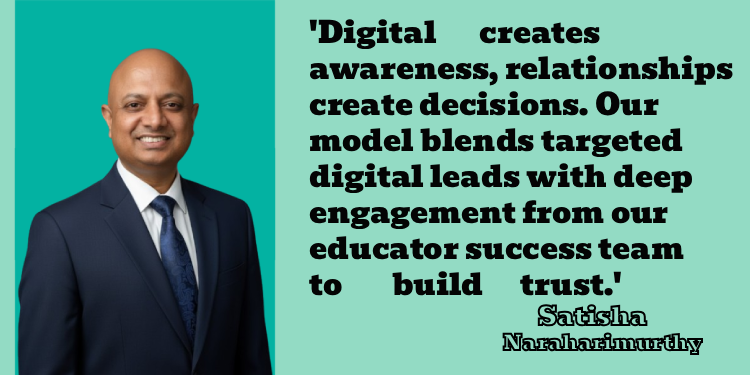
Education will shift from teaching to the syllabus, to teaching to the individual.
Q. What market gap led to the creation of Roombr, and what are your growth goals?
Most classrooms still function the way they did decades ago — teacher-centred, lecture-driven, and largely passive. However, today’s world demands skills like problem-solving, teamwork, creativity, and communication. This mismatch is the gap that led to the creation of Roombr.
Roombr introduces a hardware + AI-powered software platform that transforms classrooms into collaborative, interactive learning spaces. Students don’t just consume content — they create, present, analyse, and actively participate.
So far, we have deployed Roombr in over 3,000 classrooms. Our goal is to scale this to 25,000 classrooms by 2026, driven by a hardware sales model supported with annual software subscriptions.
Q. What challenges do you anticipate while transforming learning in Tier-2 and Tier-3 India?
Transforming classrooms in Tier-2 and Tier-3 India presents unique challenges around infrastructure, teacher adoption, and mindset change. Technology succeeds only when teachers feel confident and supported in using it — something many past “install and forget” projects ignored.
Roombr approaches this differently by ensuring continuous engagement and empowerment. We conduct dedicated on-ground training cycles, offer handheld curriculum support, and provide real-time insights for both teachers and principals.
The interface is designed to be intuitive and user-friendly, ensuring a “no manual needed” experience. Our approach ensures that technology becomes a teaching ally, not a burden. At Roombr, our philosophy is simple yet powerful — if teachers win, students win.
Q. Roombr is bootstrapped. Will the company raise funds?
Yes. Roombr was deliberately bootstrapped to maintain a laser focus on product–market fit rather than chasing growth through aggressive marketing. This approach allowed the team to perfect the classroom experience and validate real impact before scaling.
With strong adoption across thousands of classrooms and increasing international interest, the company is now evaluating a Series A raise. The goal is to partner with strategic investors who understand the intersection of education, hardware ecosystems, and AI-driven learning models.
For Roombr, fundraising is not just about capital — it’s about collaboration with partners who share the vision of transforming classroom education through innovation and measurable learning outcomes.
Q. What marketing innovations are planned?
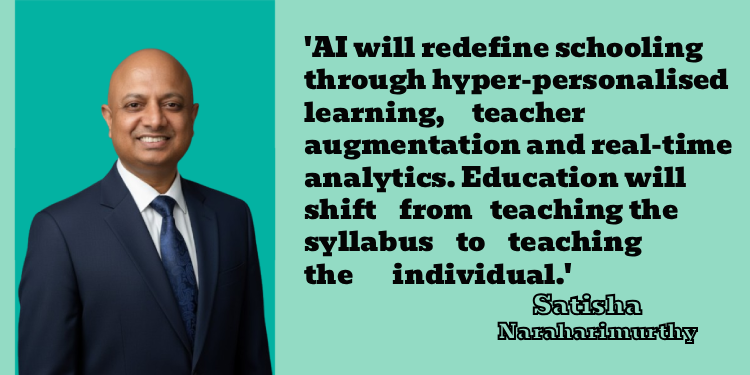
At Roombr, we believe the classroom itself is our most powerful marketing channel. When students collaborate, share ideas, and engage meaningfully with lessons, that authentic impact becomes our strongest story. Our marketing approach focuses on real outcomes — not promises — through compelling classroom impact videos, inspiring teachers teacher success stories, and student project showcases.
We also plan to host regional community events and lead conversations around AI in education, positioning Roombr as a thought leader in this space. Rather than relying on glossy campaigns, we believe in letting our work speak for itself. For us, impact storytelling always outweighs advertising because genuine transformation builds credibility and trust faster than any commercial ever could.
Q. Will the media mix lean heavily towards digital?
Yes, digital will be a cornerstone of our marketing and communication strategy. Today, school leaders, educators, and decision-makers actively engage on digital platforms such as LinkedIn, YouTube, Instagram, and education forums.
Roombr’s digital mix will include targetted campaigns, case-study videos, and webinars featuring real educators who have experienced tangible results. We will also build regional micro-communities for teachers to encourage peer learning and collaboration.
However, while digital channels offer scale and efficiency, on-ground activations will continue to play a crucial role in building credibility. Our philosophy is clear — digital provides reach, but trust is earned through personal interaction and demonstrable outcomes.
Q. What values do Roombr and Rahul Dravid share?
Rahul Dravid represents everything Roombr stands for — trust, discipline, humility, and the pursuit of consistent improvement. In a world that often prioritises noise and flash, he embodies stability, integrity, and purpose. These qualities perfectly align with Roombr’s mission of meaningful transformation in education rather than chasing short-term hype.
Both Dravid and Roombr believe that lasting impact comes from doing the fundamentals right — whether it’s building character in sports or cultivating curiosity and collaboration in classrooms. This shared philosophy makes his association with the brand both authentic and deeply symbolic of the values we want to champion in the learning ecosystem.
Q. What keeps Rahul Dravid relevant even after retirement?
Rahul Dravid’s relevance endures because it is rooted in credibility, not popularity. Even after retirement, he continues to influence Indian cricket through mentorship, leadership, and integrity. His grounded, purpose-driven approach has made him a timeless figure in sports and beyond.
Similarly, Roombr’s work is about nurturing the next generation of thinkers, creators, and collaborators — with a focus on authenticity and consistency rather than flash and hype. Dravid’s ability to evolve with time while staying true to his values mirrors Roombr’s mission to transform education sustainably. His continued relevance is a reminder that authenticity never goes out of style.
Q. How will Roombr ensure Rahul Dravid’s presence doesn’t overshadow the product?
At Roombr, the true hero is always the student’s learning outcome. Rahul Dravid serves as an amplifier of our mission, not the centrepiece. Our creative strategy ensures that his presence enhances the story rather than dominates it.
Campaigns will spotlight real classrooms — students collaborating, presenting, and creating — while teachers guide them through a more interactive learning experience. We measure success not in impressions or celebrity appeal, but in tangible outcomes such as improved participation, deeper engagement, and enhanced conceptual understanding.
The ambassador supports the narrative, but the product — and its impact in classrooms — remains the driving force of the brand.
Q. Edtech has a history of exaggerated claims. What should the playbook be going forward?
The edtech sector must move away from overpromising and refocus on authenticity and measurable results. Parents and schools today demand honesty, evidence, and transparency. The new playbook is clear: replace promises with proof, celebrity-led ads with outcome-driven stories, and pressure-selling with open communication.
Marketing should be grounded in real classroom transformation, not aspirational slogans. At Roombr, we believe that the next phase of edtech success will be built on trust — the most valuable currency in education. When impact speaks for itself, credibility follows naturally.
Q. Will word-of-mouth play a big role in your growth?
Absolutely. In education, word-of-mouth remains the most powerful form of marketing because trust is peer-driven. Teachers rely on the experiences of other educators, not advertisements.
Every time Roombr is deployed in a school, it naturally attracts the curiosity of neighbouring institutions that come to observe the impact firsthand. Principals want to witness outcomes, not just presentations.
This organic, referral-based growth has become our strongest acquisition engine, proving that authentic impact spreads faster than paid campaigns. When classrooms transform, the story tells itself — and that’s our most sustainable path to scale.
Q. What role will lead generation on Meta and other platforms play?
Digital lead generation on platforms like Meta helps Roombr reach school owners, principals, and education communities efficiently.
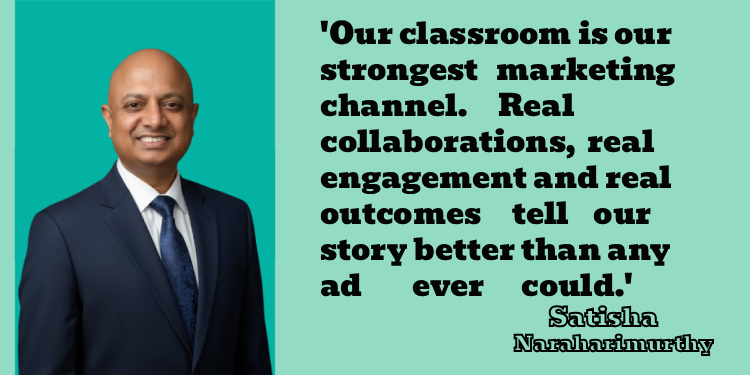
However, while digital channels are valuable for awareness and outreach, decisions in education are built on trust and relationships. Our strategy combines both: using digital platforms to create initial awareness and curiosity, followed by engagement through our educator success team who build long-term relationships.
This approach ensures that every lead is nurtured meaningfully, not just converted. In essence, digital marketing begins the conversation, but genuine relationships close it — and sustain it.
Q. How important is personalisation in the future of education?
Personalisation will define the next decade of learning. Every student learns differently — in pace, comprehension, and style — and AI now makes it possible to tailor education to each individual’s needs.
Roombr enables personalised dashboards that track concept mastery, adaptive assignments, and real-time feedback loops to identify learning gaps instantly. This ensures that no learner is left behind and no learner is held back.
By combining technology with teacher insight, Roombr creates classrooms where every child’s potential is recognised and nurtured. Personalisation is no longer a luxury — it’s the foundation of modern education.