2025 marked a clear inflection point for Indian businesses. Across categories, the narrative shifted from rapid catch-up to confident leadership—where scale, sophistication, and consumer intent converged. Whether it was homes becoming smarter, food becoming more functional, insurance becoming more inclusive, or luxury becoming more experiential, the year reflected a deeper alignment between what Indian consumers want and how companies are choosing to grow.
Furniture Moves from Aspiration to Identity
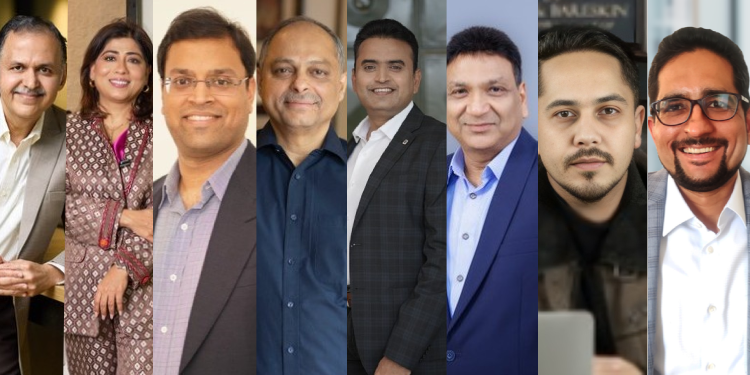
For Royaloak Furniture, 2025 underlined the coming-of-age of India’s furniture sector. Chairman & Co-Founder Vijai Subramaniam points to an industry that is no longer imitative but influential. With the market nearing USD 30 billion and set for sustained growth, furniture has evolved into an expression of lifestyle rather than a one-time utility purchase.
The year saw Indian consumers decisively move away from fast furniture toward durable, certified materials and design-led products that balance modern minimalism with Indian sensibilities. South India remained the anchor market, while East India emerged as a high-growth frontier. Looking to 2026, Royaloak sees smart living, sustainability, and Tier 2–3 city demand as the pillars that will define not just domestic expansion but also the global ambitions of Indian furniture brands.
Dairy’s Shift from Single Product to Daily Portfolio
In dairy, 2025 was about habit formation. Godrej Jersey, under the marketing leadership of Shantanu Raj, highlighted how value-added dairy—especially flavoured milk—has moved into everyday consumption. Once considered indulgent, these products are now positioned as routine, “good-for-me” refreshments.
This behavioural shift reflects a larger transformation of dairy into a full-basket category spanning nutrition, convenience, and functionality. The momentum is being driven by health awareness, label scrutiny, and the search for accessible protein sources. As India looks ahead, value-added, protein-rich dairy is set to be one of the most resilient and scalable FMCG growth engines.
Insurance Finds Its Voice with Bharat
For the general insurance sector, 2025 was about relevance and reach. At HDFC ERGO General Insurance, Somesh Surana describes a year aligned closely with IRDAI’s 3A framework—Awareness, Accessibility, and Affordability.
The industry’s first collaborative campaign, “Acha Kiya Insurance Liya,” marked a milestone in collective storytelling, while HDFC ERGO’s own initiatives—from metro branding to state-level awareness drives—deepened category recall. Digitally, performance marketing, insurtech partnerships, and the growth of the HERE app to 10 million installs reflected a move from transactional selling to mindshare building. Entering 2026, the sector’s focus is firmly on inclusion, especially addressing India’s “missing middle.”
Dairy & FMCG: Nutrition Takes Centre Stage
At Parag Milk Foods, Executive Director Kshali Shah describes 2025 as paradigm-shifting. Clean labels, high-protein formats, and functional nutrition moved from niche to mainstream, driven by preventive health thinking.
The rollout of GST 2.0 further reshaped the category by improving affordability of essentials like UHT milk, cheese, and ghee—benefits that Parag passed directly to consumers. As 2026 approaches, the company sees protein-led innovation, stronger supply chains, and trust-driven branding as the defining forces for dairy and FMCG growth.
Jewellery: Trust Over Transactions
For the jewellery sector, volatility became a filter. Divine Solitaires Founder Jignesh Mehta notes that rising gold prices in 2025 sharpened consumer selectivity. While traditional jewellery faced pressure, trust-driven categories like solitaires held firm.
The year pushed consumers toward purposeful buying—choices rooted in emotion, legacy, and long-term value. Heading into 2026, Divine Solitaires is doubling down on traceability, experiential retail, and digital education, positioning solitaires as symbols of enduring worth rather than commodity-linked purchases.
Appliances & HVAC: Scale Meets Self-Reliance
At Voltas Ltd., Managing Director Mukundan Menon frames 2025 as a year of mixed signals. Early monsoons led to temporary industry de-growth, but policy tailwinds—such as GST reduction on ACs and upcoming BEE rating revisions—revived momentum.
With AC penetration still under 8%, infrastructure expansion and Tier 2–3 city demand continue to fuel long-term optimism. Backed by Atmanirbhar Bharat and PLI schemes, Voltas sees India not just as a consumption market but as a future global manufacturing hub for HVAC and appliances.
New-Age Beverages Go Science-Led
For Evocus, 2025 was a breakout year. Founder Aakash Vaghela highlights expansion into RTD hydration, the launch of Black Soda for HoReCa, and cultural partnerships as milestones that validated its science-first positioning.
The road to 2026 is about scale—wider retail and HoReCa presence, deeper storytelling, and innovation-led launches aimed at making Evocus a global name in functional hydration.
Luxury Hospitality Grows Up
Luxury travel in India matured rapidly in 2025, according to Evolve Back Resorts. Executive Director Marketing Jose Ramapuram points to strong occupancies and rates, but more importantly, a qualitative shift in guest expectations.
Travellers now seek immersion, sustainability, and a sense of place over conventional luxury markers. Technology has become invisible yet essential, while environmental stewardship is no longer optional. As 2026 unfolds, the opportunity lies in blending growth with authenticity and cultural depth.
Beauty, Footwear & the Rise of Homegrown Premium
In skincare, Fixderma marked 15 years with renewed purpose. Co-founder Shaily Mehrotra reflects on 2025 as a year of trust-building—through education-led initiatives, campus outreach, and science-backed formulations. The focus for 2026 is sharper targeting, wider reach, and continued transparency.
Similarly, in footwear, Brune & Bareskin completed a decade by strengthening its craftsmanship-led positioning. Founder Tabby Bhatia notes growing demand in Tier 1 and Tier 2 cities for premium, long-lasting products over fast fashion—an opportunity the brand plans to scale responsibly into India and select global markets.
Jewellery Retail: Steady Confidence, Planned Growth
At PP Jewellers by Pawan Gupta, Director Piyush Gupta describes 2025 as a year of consistent consumer confidence despite price volatility. Transparency, certified purity, and planned purchases defined buyer behaviour.
The roadmap for 2026 centres on enhancing in-store experiences, expanding digital touchpoints, and balancing contemporary design with legacy craftsmanship—reinforcing jewellery as both emotional milestone and long-term investment.
The Big Picture
Taken together, these perspectives reveal a unifying theme: Indian industries in 2025 chose depth over speed. Consumers became more discerning, regulation more enabling, and brands more accountable. As 2026 approaches, growth is expected to continue—but it will belong to those who combine scale with trust, innovation with responsibility, and ambition with relevance across Bharat.