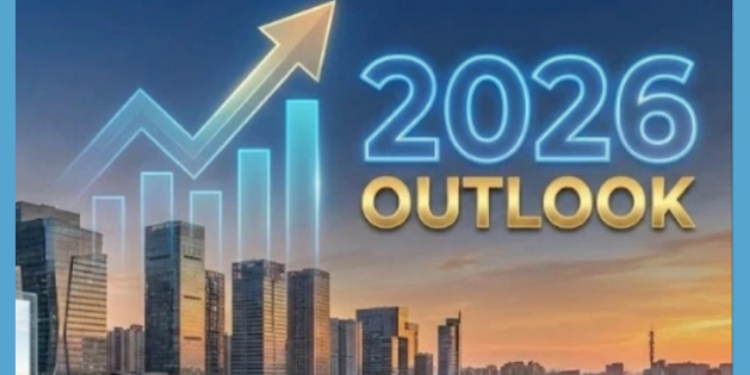
With 2026 now underway, India’s real estate sector is entering the new year with unusual clarity and confidence. The conversations of 2025 were not about chasing momentum, but about strengthening fundamentals. As industry leaders look ahead, there is broad alignment that the next phase of growth will be institutional, performance-led, and deeply rooted in long-term value creation.
From Transactions to Intelligence-Led Growth
Real estate decision-making is decisively moving away from intuition-driven launches to insight-led execution. Navin Dhanuka, Director, ArisUnitern, observes that 2025 reinforced how value is increasingly created through discipline and transparency rather than deal velocity.
“Real value in real estate comes from disciplined planning, sound capital management, and transparent governance, not just from launches or transactions.”
As 2026 begins, developers and investors are leaning far more heavily on analytics, micro-market intelligence, and structured consulting. The industry is clearly transitioning into what Dhanuka calls a “more institutional and performance-led phase,” where advisory, development management, and financial modelling will be central to managing risk and unlocking value.
End-User Demand Sets the Tone for Stability
The new year opens with residential markets firmly anchored by end-user demand. Dhaval Hemani, Co-Founder, Sarvam Properties, notes that 2025 marked a decisive shift away from speculative buying in Mumbai and the MMR.
“End-user demand drove the market more than speculative buying, with a clear shift toward larger, amenity-rich homes and micro-markets supported by infrastructure.”
This sentiment is echoed across markets. Ramji Subramaniam, Managing Director, Sowparnika Projects, highlights that first-time buyers and young families continue to dominate demand in Bengaluru’s growth corridors.
“The mid-segment remains the backbone of residential demand, driven by infrastructure, employment hubs, healthy rental yields, and improved mobility.”
As 2026 unfolds, this end-user-led foundation is expected to keep absorption healthy and volatility in check.
Infrastructure as the Primary Growth Engine
Infrastructure has emerged as the most powerful determinant of real estate value entering 2026. Aakash Patel, Managing Director, Atul Projects, points to connectivity as the key driver of buyer confidence.
“Metro lines, coastal road linkages, and improved arterial networks are directly translating into higher buyer confidence and long-term value creation across micro-markets.”
Similarly, Dhaval Hemani expects infrastructure-led appreciation to define Mumbai’s next growth cycle.
“With the Trans Harbour Link, metro expansion, and new road corridors becoming operational, emerging hubs are poised for accelerated appreciation.”
In 2026, infrastructure is no longer a tailwind—it is the engine reshaping residential and commercial geography.
Premium Housing Without Speculative Excess
The start of 2026 finds premium and luxury housing firmly embedded in the mainstream market. Bhavesh Kothari, Founder & CEO, Property First, believes this shift is driven by more financially aware buyers.
“Homebuyers today are far more investment-conscious. They’re prioritising financially solid developers, strong project fundamentals, and long-term asset value.”
This maturity is reinforced by Madhusudhan G, CMD, Sumadhura Group, who notes that premium housing is increasingly driven by lifestyle aspirations rather than status alone.
“Rising ticket sizes reflect a mindset that values durability, credibility, and long-term value over short-term gains.”
As 2026 begins, premiumisation is expected to deepen—without tipping into excess.
Commercial Real Estate: Flexible, Green, and Performance-Driven
India’s commercial real estate sector enters 2026 with strong momentum. Sijo Jose, Co-Founder, SpazeOne, highlights how flexible and managed office formats are now mainstream.
“Even traditional enterprises are adopting plug-and-play formats to support hybrid work strategies.”
At the same time, sustainability has become non-negotiable. Idris Rajkotwala, Executive Director, Unitile, underscores how ESG priorities are reshaping office demand.
“Green-certified assets now account for the majority of new office leasing, reflecting a fundamental shift toward performance-led, sustainability-driven development.”
In 2026, occupiers and investors alike are expected to favour assets that combine flexibility, environmental performance, and long-term operational efficiency.
Housing Evolves Into a Services-Led Proposition
A deeper transformation is underway as real estate moves beyond being purely product-led. Adarsh Narahari, Managing Director, Primus Senior Living, captures this shift succinctly.
“Homes will no longer be defined only by location and construction quality, but by the services, care, and outcomes they enable.”
As 2026 begins, technology-enabled living, wellness infrastructure, and care-led housing models—especially in senior living—are redefining how value is measured in residential real estate.
Smarter Capital and Institutional Discipline
The new year also opens with capital becoming more structured and selective. Amit Goenka, Chairman & Managing Director, Nisus Finance, points to the rapid rise of alternative capital.
“Alternative capital is increasingly shaping India’s real estate and structured credit ecosystem, with a strong focus on governance and risk control.”
This is reinforced by Mahesh Mudda, MD & CEO, NCCCL, who notes that optimism among developers is supported by clearer demand visibility and financing conditions.
“As 2026 approaches, project activity is expected to widen further, supported by a strong pipeline and sustained investor confidence.”
Precision, Accountability, and Operational Excellence
Beyond capital and construction, 2026 will reward operational discipline. Sunil Maddala, CEO, and Saransh Narula, CFO, FuelBuddy, highlight how even small inefficiencies can scale into major risks.
“The next stage of growth will favour precision, discipline, and control, not scale alone.”
This emphasis on accountability reflects a broader industry shift toward technology adoption, real-time visibility, and tighter execution controls.
2026: A Year of Intentional Growth
As the industry steps into 2026, the collective voice of real estate leaders points to a common direction. Indian real estate is not chasing a cyclical high—it is entering a phase defined by informed choices, institutional capital, sustainability, and long-term vision.
The coming year will belong to those who treat real estate as a managed, performance-driven asset class rather than a transactional business. In doing so, the sector is positioning itself as a resilient, credible, and future-ready pillar of India’s growth story.




![Beyond Ello, you can expect [x]cubeLABS to lead the transition from generic “chatbots” to Vertical AI Agents: Sridhar Muppidi](https://www.medianews4u.com/wp-content/uploads/2026/03/Sridhar-Muppidi-Ello-350x250.png)