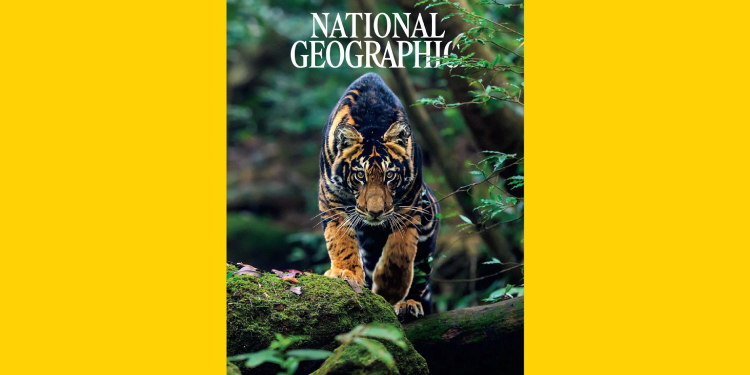
Mumbai : In a landmark moment for India’s wildlife and visual storytelling community, a stunning photograph of the elusive Black Tiger—captured by Indian photographer and National Geographic Explorer Prasenjeet Yadav—has been featured on the cover of National Geographic Magazine’s October 2025 global edition.
The image, taken in Odisha’s Similipal National Park, marks a significant milestone for Indian photography on the global stage. It positions Yadav among a rare cadre of Indian photographers whose work has graced the cover of one of the world’s most iconic magazines—renowned for over 135 years of authentic and impactful storytelling.
The Black Tiger, or pseudo-melanistic tiger, is among the rarest big cats globally, found exclusively in Similipal. This unique genetic mutation, which results in their deep black stripes blending into the orange coat, has made them a subject of fascination and rarity. Similipal is home to approximately 30 tigers, nearly half of which display this rare trait.
Prasenjeet Yadav, who spent over three months tracking and documenting the elusive animal, shared, “Being out in the forests of Similipal as a National Geographic photographer and Explorer has been a true privilege. I saw firsthand the Odisha Forest Department’s dedicated, on-ground management and the commitment of its officers to safeguarding the future of these majestic tigers. Photographing T12 was intense and humbling, with days and months of patience distilled into a single moment. Now to see that story on a National Geographic Magazine’s international cover is an honour and a reminder of why we document India’s extraordinary wild heart.”
The feature is more than a visual triumph—it amplifies India’s leadership in conservation at a time when biodiversity preservation is increasingly becoming part of global climate and sustainability conversations.
“The subject of this month’s cover feature, from photographer, writer, and National Geographic Explorer, Prasenjeet Yadav, is a surprising corollary to that success story: the tale of a great male tiger with a rare genetic mutation, which has highlighted what happens when an animal population rebounds but remains sequestered in a reserve, without access to a diverse gene pool,” said Nathan Lump, Editor in Chief, National Geographic Media. “It’s a powerful reminder that saving animals is only the first step, and we must find ways to help them thrive. That’s exactly what a team in India has set out to do.”
The cover also aligns with National Geographic’s broader mission of showcasing powerful, untold narratives from around the world—stories that stir awareness, action, and change. This particular image is expected to spark conversations across not only environmental platforms but also public policy, business sustainability, and international conservation partnerships.
Alok Jain, JioStar (who also oversees the National Geographic channel in India), added, “For over a century, National Geographic has stood at the forefront of visual storytelling, showcasing iconic images that shape how we see the world. We are proud to feature a rare and extraordinary photograph of a black tiger in India—an elusive and almost mythical sight—captured by Prasenjeet Yadav, a Nat Geo Explorer. This image not only reflects the power of nature’s mysteries but also continues the brand’s legacy of showcasing groundbreaking moments through the lens of exceptional talent.”
For National Geographic, this edition serves as a strategic moment of brand storytelling, reinforcing its position as a global leader in environmental journalism while underlining its relevance in India—a country at the center of wildlife conservation and biodiversity research.
The cover photograph pays tribute to the dedication of India’s forest departments, scientists, and conservationists, and serves as a poignant reminder of the urgent need to preserve India’s natural heritage. As India’s global profile continues to rise across sectors, this recognition of its ecological treasures through mainstream global media adds a significant dimension to its soft power and global narrative.