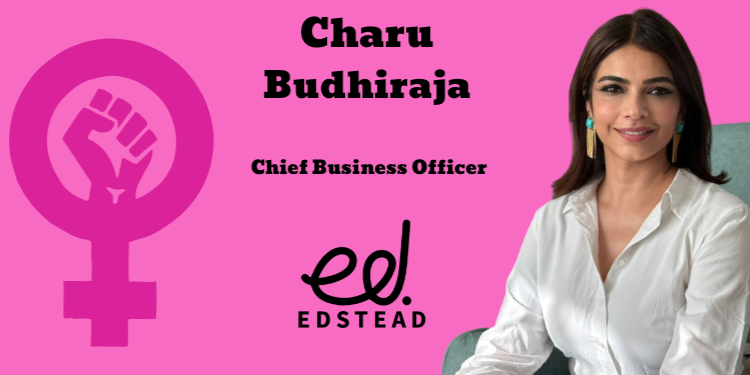
On the occasion of International Women’s Day Medianews4u.com caught up with Charu Budhiraja, Chief Business Officer Edstead and a media leader with over 20 years of experience in branded content and strategic storytelling.
From leading high-impact brand integrations at Warner Bros. Discovery to now driving purpose-led documentary partnerships at Edstead, Charu has consistently worked at the intersection of creativity and business. She brings a sharp perspective on women in leadership, the evolution of branded content, and building meaningful, scalable content ecosystems.
Budhiraja is a seasoned media and branded content leader with over 20 years of experience at the intersection of storytelling, strategy, and business growth. Currently, as Chief Business Officer at Edstead, she leads strategic partnerships and revenue initiatives for the documentary studio, specialising in purpose-led branded content that blends research-driven narratives with meaningful brand integration.
Previously, as Creative Head – Branded Content at Warner Bros. Discovery, she spearheaded high-impact brand collaborations and content partnerships across genres, building scalable content properties that delivered both audience engagement and measurable brand value. Over the course of her career, Charu has also worked with Endemol, Ogilvy and Mather. Also, produced various ad films for leading brands across categories including Unilever, PepsiCo, Lux, KFC, Philips, Nivea, Himalaya, Marico, Cello, and more, bringing together strong creative vision with strategic brand objectives.
With two decades across leading media networks and creative agencies, Charu exemplifies women leadership in media; shaping the evolution of branded storytelling in India through innovation, credibility, and strategic vision.
Q. Do women bring more empathy to leadership roles?
Leadership today is less about gender and more about effectiveness. Empathy, which is often discussed in this context, should not be seen as a gender-bound quality but as an important leadership trait. In the current business environment, empathy is not a soft skill, it is a strategic capability that helps build trust and create stronger teams.
Leaders who can drive outcomes are often those who demonstrate empathy and understanding within their teams.
 Q. Do the media and entertainment, advertising industries need better mentorship programmes for women to help them advance in their careers?
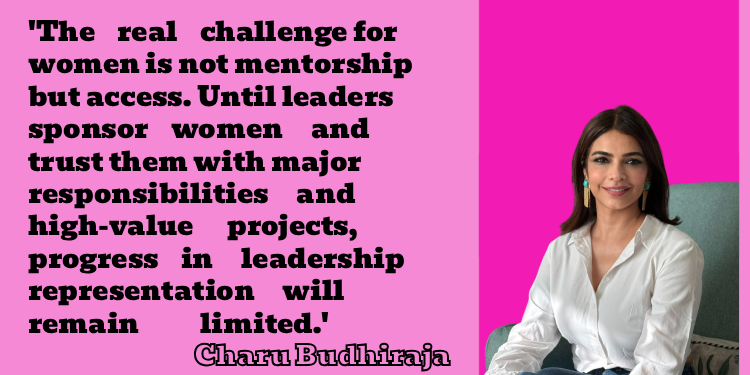
Mentorship alone may not address the real issue. Women are not necessarily lacking guidance; the larger challenge is the lack of access to opportunities and decision-making roles.
Until more leaders actively sponsor women and trust them with significant responsibilities such as major accounts and high-value projects, mentorship programmes by themselves will not be enough to drive meaningful change.
Q. As a media leader with over 20 years of experience in branded content and strategic storytelling, how important have women mentors been in your journey?
My deepest mentorship has always started at home. I come from a household where women are incredibly strong, and at the heart of that is my mother, an extraordinarily headstrong woman who raised three daughters in a joint family and always gave us the freedom to carve our own paths, regardless of outside interference.
She is, without question, my first and most defining mentor. That said, my professional journey has also been shaped by some remarkable leaders. Many of them were men who have encouraged me, believed in my voice, and helped me grow as a media professional.
But I think what my mother instilled in me that quiet, unshakeable confidence is what allowed me to truly absorb and act on everything those professional mentors offered. So while I may not have had many women mentors in the boardroom, I had the most powerful one at the dinner table.
Q. Is skepticism something that you and women in leadership roles have to sometimes face?
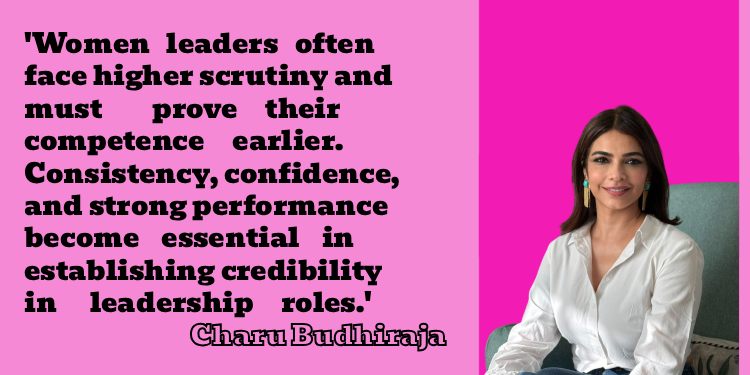
Yes, absolutely. Women in leadership often face a higher level of scrutiny right from the start. There tends to be an extra layer of assessment, and we are often expected to prove our capability before being fully accepted or trusted in a role.
It’s something many of us encounter regularly, and it means that demonstrating competence, confidence, and consistency becomes even more important early on.
 Q. The PR and communications industry has a lot of women in leadership roles. Why is that not the case in the media and entertainment, advertising industries? Do you see things changing in the coming three years?
I don’t think it’s a talent issue. We’re in communications, and let’s be real, the leadership pathways in media and entertainment were built a while back, they’re still shaped by legacy.
But I do believe this imbalance is shifting. In the next few years, we’ll see more women moving into core decision-making and revenue roles. It’s already happening.
Q. What role are women playing in driving purpose-led documentary partnerships at Edstead?
When it comes to Edstead’s leadership, more than 50% of our women are in key roles. They’re the decision-makers, the ones who bring clarity to complexity.
I think this reflects our founder Shekhar’s attitude and approach. Including me as Chief Business Officer, our Brand Partnership lead, Design lead, Development head, and Client Servicing Lead are all women. The hiring process was never focused on gender, it was always about skill and fit. And that’s exactly how it should be.
Q. What do brands that target women across categories continue to get wrong in terms of the marketing message?
One of the biggest mistakes that brands continue to make is that they often speak to women rather than truly engaging with them. The narrative is always built on assumptions or stereotypes instead of genuine insights making them less emotionally connected to women.
Modern women are not a single, homogenous audience. They are decision-makers navigating different realities and aspirations. Another fundamental miss is that women are still treated as a ‘segment’ rather than central consumers who are the one driving the decision. In reality, women influence or drive a significant share of purchasing decisions across categories.
The brands that get this right understand the complexity. They invest in understanding women’s lived experiences. When brand campaigns reflect that nuance and authenticity, it resonates with women far more meaningfully.
Q. What role does purpose-led branded content play in hooking the attention of women in a fragmented media environment?
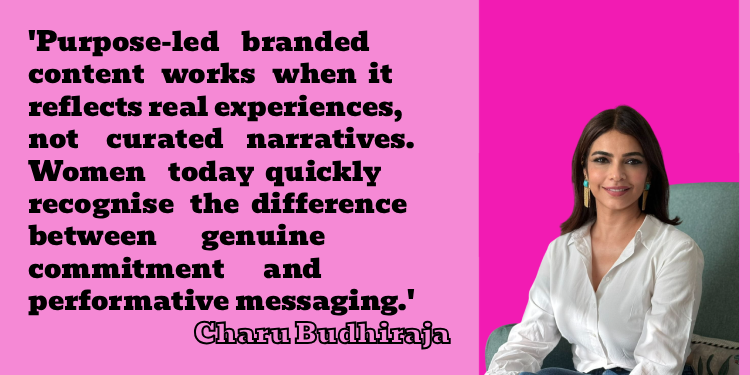
In a fragmented media environment, women aren’t just consuming content. They have a very sharp radar for what’s authentic and what’s performative. Purpose-led branded content works when it mirrors lived reality not an aspirational, curated version of it, but the everyday, unglamorous, real version.
That’s what earns attention, and more importantly, that’s what earns trust. But here’s the critical distinction, purpose without proof is just positioning. Women today are savvy enough to tell the difference between a brand that stands for something and a brand that’s simply borrowing a cause to hit its quarterly numbers. Today, the audience is smart and is not limited to women or for that matter to metros.
 Q. Work life balance is a challenge for women in the corporate world. How does Edstead help in this area through its HR policies?
I think work-life balance isn’t a women-specific issue, it’s a culture issue. At Edstead, we focus on results, not hours logged.
Flexibility is built-in, and people aren’t expected to choose between work and personal life. It’s about trust, and when that’s there, performance follows naturally.