In a bold step toward redefining its positioning in India’s rapidly evolving OTT landscape, ZEE5 has unveiled a refreshed brand identity—one that places the viewer at the centre of everything. As part of this transformation, the platform has introduced seven region-specific language packs, including Tamil and Malayalam, aimed at making premium content more accessible, affordable, and deeply relevant. With language packs priced at just ₹120/month, ZEE5 is sharpening its focus on hyperlocal storytelling while driving deeper penetration across Tier 2 and Tier 3 markets.
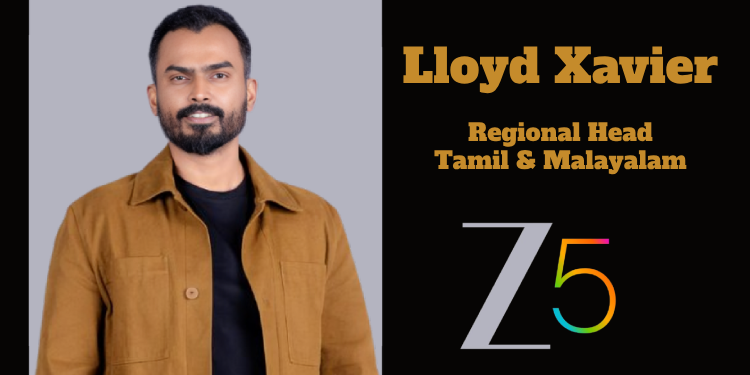
At the forefront of this regional push is Lloyd Xavier, who recently assumed the role of Business Head for the Tamil and Malayalam markets at ZEE5. Under his leadership, the platform is doubling down on its regional content strategy—balancing rooted, culturally rich narratives with global storytelling appeal.
In this conversation with MediaNews4U, Lloyd Xavier shares exclusive insights into the vision behind ZEE5’s newly launched regional language packs and what they mean for deeper audience connection and value creation in the South. He also discusses the platform’s content roadmap and commissioning approach in Tamil and Malayalam, revealing how the focus is shifting toward community-driven, emotionally resonant storytelling. Xavier reflects on the growth trajectory and key learnings from these markets, while offering a candid look at emerging consumption trends, behavioural shifts, and improvements in digital access. Finally, he shares what the larger brand refresh means for regional audiences, and what viewers can look forward to from ZEE5 in 2025 and beyond.
With ZEE5’s refreshed brand identity focused on being “India’s most viewer-centric entertainment platform,” what does this shift mean for regional audiences?
Lloyd Xavier: One of the foundational pillars of our renewed brand identity is a deeper commitment to language-based storytelling. At ZEE5, we don’t look at it as simply catering to “regional” markets — instead, we approach it through the lens of language. This philosophy has led us to launch seven dedicated, language-specific apps under our ‘Apna Bharat’ initiative — in Hindi, Marathi, Telugu, Tamil, Malayalam, Kannada, and Bangla.
The intent here is clear: to deepen our engagement across Tier 2 and Tier 3 markets with a focused, hyper-local content strategy. We’re moving towards a more nuanced, culturally rooted approach where storytelling is crafted for and resonates deeply with each linguistic audience.
Particularly for Tamil and Malayalam, we’ve adopted a laser-sharp focus on narratives that reflect local emotions, ethos, and aspirations. Our recent campaigns, such as Nam Ooru, Nam Kadegal, emphasize this direction — celebrating the idea that every household has a story and every viewer deserves content that speaks their language, both literally and culturally.
In essence, our new identity is not just a rebranding — it’s a strategic shift that puts our language audiences at the centre of everything we do.
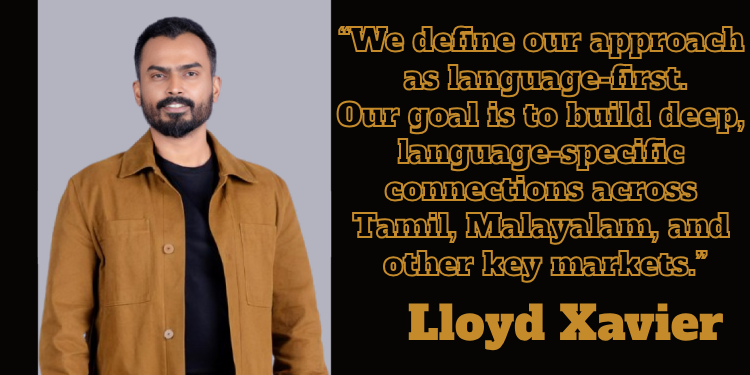
What’s your vision for expanding the Tamil and Malayalam offerings on ZEE5, and how do you plan to stay ahead in an increasingly competitive OTT space?
Lloyd Xavier: In a rapidly evolving OTT landscape, our strategy to stay ahead is rooted in a multi-layered approach built on three key pillars — pricing, content, and technology.
Firstly, our refreshed brand identity is not just a repositioning exercise; it is backed by strong, actionable frameworks. One such pillar is our affordable pricing strategy, designed to drive greater accessibility and sampling across the board. We’ve introduced a highly competitive entry price of ₹120 — a deliberate move to ensure that consumers, from Nagercoil to Chennai, or across towns in Kerala, feel encouraged to explore our platform without hesitation.
The second pillar is content, which continues to be our biggest differentiator. Over the last four years, ZEE5 has built a robust content pipeline that reflects strong local narratives and quality storytelling. Tamil, in particular, has been at the forefront — with acclaimed originals such as Vilangu, Veerappan, Ayali and Aindham Vedham (The Fifth Veda) earning national and international recognition. Malayalam is now undergoing a similar phase of content scale-up with equal focus on compelling, culturally rooted storytelling.
Our third pillar is technology enablement. With dedicated, language-first interfaces, we ensure a clean, intuitive UI/UX experience for every user, tailored to the cultural and consumption preferences of Tamil and Malayalam-speaking audiences. This tech-first approach enhances discoverability, personalization, and overall engagement.
Together, these three pillars — value-driven pricing, content excellence, and tech innovation — form the backbone of our vision to expand and lead in the Tamil and Malayalam markets, not just within India but also among our global diaspora audience.
With the launch of affordable region-specific language packs like the ₹120 Tamil and Malayalam subscriptions, how do you see this pricing innovation impacting user acquisition, retention, and the broader monetization strategy in the South?
Lloyd Xavier: The introduction of distinct Tamil and Malayalam packs at ₹120 is a strategic move designed to remove friction in the user journey — particularly around price sensitivity — while enabling culturally resonant content consumption. Our aim was to empower viewers to pay for what they truly want to watch, in a format that aligns with their cultural and cinematic preferences.
This decision was driven by deep consumer insight. We undertook extensive research across tiers 1 to 3 to better understand the behavioural barriers to content consumption. One of the key learnings was that consumers were not just seeking affordability — they were looking for a cinematic experience that reflected their tastes and language sensibilities.
That’s where the ₹120 pricing came in — it hit the sweet spot in terms of value, accessibility, and intent to subscribe. The early results have been very encouraging. Within just a couple of months of launching these packs, we’re witnessing strong traction particularly from tier 2 and tier 3 towns, while continuing to build on our strongholds in tier 1 cities like Chennai, Coimbatore, Trivandrum, and Kochi.
From a monetization standpoint, this initiative is helping us unlock new audience segments and improve conversion rates. But more importantly, it reinforces our commitment to going deeper — expanding reach and relevance by meeting audiences where they are, both geographically and culturally.
When you compare with the other players in the market, where do you stand in terms of the pricing? Do you think it is an advantage for you?
Lloyd Xavier: Absolutely. Our research clearly indicated that we hold a strong competitive edge — not just on pricing, but across the spectrum of content delivery. The ₹120 pack is not merely an affordable offering; it’s a value-rich proposition that brings together a wide array of content experiences tailored for our audiences.
For instance, we provide access to live TV shows, which have high viewership among Tier 2 and Tier 3 audiences — an area where we are seeing strong traction. In addition, our library includes originals, as well as theatrically released films that are later acquired for exclusive streaming on our platform. This mix ensures that subscribers are getting high-quality, diverse content — from fresh narratives to blockbuster cinema — all under one subscription.
When benchmarked against other platforms, the breadth and depth of our content offering, delivered at an accessible price point, provides us with a significant competitive edge. It’s this combination of affordability and content richness that makes the ₹120 pack a compelling choice for consumers across Tamil Nadu, Kerala, and beyond.
4) What are the biggest learnings from building a loyal viewership in the South, and how has audience feedback shaped platform decisions?
Lloyd Xavier: One of the most important pillars of our content strategy has been to listen closely to the audience before taking any major creative or programming decisions. Every story we bring to life is preceded by in-depth consumer research. For instance, while developing projects like Veerappan or Ayali, we conducted extensive groundwork to understand what the audience truly seeks — what they want to watch, and more importantly, what resonates with their cultural and emotional landscape.
We’ve learned that audience-centric storytelling begins with listening. We regularly engage with viewers across different cities and tiers to assess what has worked, what hasn’t, and what content formats they engage with most. This feedback loop has become core to how we shape our content roadmap.
One of our strongest takeaways has been the value of one-on-one engagement. Having direct conversations with our consumers allows us to understand viewing behaviours, evolving preferences, and latent needs. This insight-driven approach ensures that our content is not just created for the audience but is co-shaped by them.
Ultimately, this direct consumer connect has helped us build loyalty and stay agile in our programming decisions — ensuring that what we produce reflects the pulse of the Tamil and Malayalam audiences we serve.
Are you noticing any major shifts in user behavior—such as mobile-first consumption, binge-watching patterns, or genre preferences—specifically in Tamil Nadu and Kerala?
Lloyd Xavier: We’ve been observing some clear and significant shifts in user behavior, especially in Tamil Nadu and Kerala. One of the most notable changes is the rise in Connected TV (CTV) consumption. While the platform initially saw mobile-first usage, we’re now witnessing a sharp surge in CTV viewership, especially in metro and Tier-2 cities. In fact, during the primetime window of 5 p.m. to 11 p.m., we see that nearly 50% of our platform’s total engagement comes from this time slot, with CTV accounting for a substantial share of this growth. Post 7 p.m., the shift from mobile to CTV becomes even more pronounced — signaling a transformation in how audiences prefer to consume content.
Another emerging trend is the demand for high-definition and 4K content. Consumers who once watched content in standard or HD formats are now embracing 4K as their preferred viewing experience. This demonstrates a growing appetite for premium, cinematic-quality storytelling.
In terms of binge-watching behaviour, the pattern remains strong and consistent. Originals continue to drive deep engagement. A prime example is Ayali, where we observed users completing 7-episode series within 2 days, with only a 10–12% drop-off from the first to the final episode. Similarly, our recent release Aindham Vedham saw just a 15% episode-to-episode drop, indicating exceptional stickiness and sustained viewer interest.
Overall, the evolving trends — CTV adoption, demand for high-quality formats like 4K, and strong binge-watching patterns — affirm the growing sophistication and loyalty of our audiences in the South.
How do genre preferences vary between Tamil Nadu and Kerala, given the distinct cultural sensibilities of both states?
Lloyd Xavier: Indeed, both markets are unique in their preferences, and our approach reflects that distinction. In Malayalam, we are at the cusp of launching our first slate of ZEE5 Originals. While we haven’t made a formal announcement yet, I’m happy to share that our first-ever Malayalam original is being lined up for release this month. It marks a significant milestone in our content strategy for Kerala, and we are excited about the journey ahead.
In contrast, Tamil Nadu has been an established market for us when it comes to original content. Tamil audiences, we’ve found, have a deep affinity for stories that are real, rustic, and rooted — narratives that reflect their lived experiences and cultural memory. If you look at our top-performing Tamil titles, you’ll notice a consistent pattern: they often tell stories that people feel they’ve heard, seen, or lived in their own communities.
This authenticity has worked exceptionally well for us. We focus on drawing out the inherent flavour of such stories — stories that feel local, familiar, and emotionally resonant — and presenting them with high cinematic quality. This strategy has not only driven engagement but also deepened the emotional connection our audience feels with the platform.
How do you approach content commissioning differently for Tamil and Malayalam audiences, given their distinct cultural and cinematic preferences?
Lloyd Xavier: We have already commissioned seven original Malayalam series, scheduled for release between June this year and March next year. Alongside these series, we’re also bringing seven top Malayalam films to our viewers, as part of our broader strategy to scale engagement in the region.
One of our early success stories in this initiative is Prince and Family, starring Dileep, which became a blockbuster on ZEE5 — crossing 100 million streaming minutes. This kind of traction validates our content philosophy, which is rooted in telling stories that reflect the audience’s lived experiences — narratives that are local, familiar, and emotionally resonant. We look for stories that feel like they’ve happened in the viewer’s neighbourhood, stories that mirror their lives and community dynamics.
That said, our content choices are never made at the cost of commercial value. Every piece of content we commission is designed to have global appeal, particularly because we recognize that the Malayalee audience is truly global — with strong presence in MENA, APAC, North America, and other regions. This global outlook is a critical factor in our selection process.
We follow a “mass-niche” strategy. “Mass” in the sense that we aim to attract the broader Malayalee community, and “niche” in the way we deep-dive into understanding what uniquely excites them. Whether we’re commissioning originals or acquiring films, our focus remains on curating content that is both deeply relatable and widely appealing, ensuring it resonates not just in Kerala, but with Malayalee audiences worldwide.
How is ZEE5 working to deepen digital access and improve user experience for first-time or semi-urban OTT users in these regions?
Lloyd Xavier: A key pillar of our strategy to expand digital access in semi-urban and Tier 3 regions is our language-first approach. We’ve built the ZEE5 app to be inherently inclusive and intuitive for users across geographies by offering a personalized language experience right from the start. Whether a viewer is in Tuticorin in Tamil Nadu or Calicut in Kerala, the app prompts them to select their preferred language — and from that point on, the entire UI, UX, and content discovery journey is tailored to their linguistic comfort.
This localization goes beyond just translation — it’s about creating an environment where the user feels at home navigating the platform, discovering stories, and making content choices without barriers. We’re currently supporting seven dedicated Indian languages, and this depth of regional focus is helping us tap into new audience segments with confidence.
Coupled with this, we’re offering high-quality content at accessible price points, ensuring that the platform remains relevant and affordable to a wide base of consumers. Our goal is to make ZEE5 a platform where digital-first and first-time users alike feel empowered, understood, and entertained — regardless of geography or digital literacy.
What was the core insight or consumer need that led to the launch of region-specific language packs, and how do you envision this move transforming the way South Indian audiences engage with ZEE5 in the long term?
Lloyd Xavier: The decision to launch region-specific language packs was strongly rooted in consumer insight and viewing behavior. A key turning point for us came through the performance of our recent Tamil titles like Kudumbasthaan, Demonte Colony, and Raghu Tata. These titles revealed a fascinating trend — while Tier 1 cities like Chennai and Coimbatore remained important, the highest subscription traction was coming from Tier 2 and Tier 3 towns such as Tirunelveli, Tiruchi, Salem, Tuticorin, and Nagapattinam.
This shift signaled a deeper engagement with our content in markets that are often underserved or under-prioritized by mainstream OTT strategies. The strong resonance of culturally rooted narratives like Aindham Vedham further reinforced our belief that audiences in these regions are not only watching — they are subscribing, engaging, and becoming loyal viewers.
It became clear that the future of growth lies beyond metros — in going deeper, hyper-local, and truly language-first. This insight directly influenced our strategy to introduce affordable, region-specific packs that cater to distinct linguistic and cultural sensibilities. In the long term, we see this move not just expanding access, but also transforming how South Indian audiences perceive and engage with ZEE5 — as a platform that reflects their stories, in their language, at a price point that feels accessible and inclusive.
There’s been industry speculation that streaming platforms have become more cautious with film acquisitions. How is ZEE5 approaching movie acquisition in Tamil and Malayalam? Are there plans to invest meaningfully in this space during the current or upcoming financial year?
Lloyd Xavier: Absolutely — contrary to the perception of tightened budgets, we at ZEE5 continue to maintain a robust and well-defined strategy for movie acquisitions across languages, including Tamil and Malayalam. As with every year, we have firm investment plans in place for both the current and upcoming financial years.
Our approach gives equal weight to both originals and movie acquisitions. Originals are instrumental in creating platform stickiness, developing user habits, and building brand affinity. On the other hand, movies deliver scale and immediate engagement, driving consumption spikes and enhancing the entertainment value of the platform. Both are essential to our growth playbook.
That said, our content acquisition process is deeply ROI-driven. As an organization, we are highly structured in our decision-making — we prioritize projects that are profitable, scalable, and aligned with audience expectations. If a film or series presents strong entertainment potential and clear financial viability, it moves forward. If not, we exercise discretion and refrain from acquisition.
This dual lens — balancing creative impact with commercial sensibility — ensures that our content pipeline remains strong, sustainable, and relevant. And yes, Tamil and Malayalam markets are an integral part of this strategy. We are committed to continuing our investments in these regions, both in terms of original storytelling and strategic movie acquisitions.
What is your approach to commissioning content? Do you primarily collaborate with established production houses, or are you open to working with new talent and compelling storytelling concepts?
Lloyd Xavier: Our commissioning strategy is rooted in a writer-first philosophy. While we do collaborate with established production houses, our primary focus is on identifying and nurturing exceptional writing talent. We believe that the foundation of any successful content lies in its storytelling — if the script is compelling, everything else follows.
Some of our most successful projects like Vilangu, Aindham Vedham, and Koose Munusamy Veerappan have all been driven by strong writing. So, the process begins with the script — not the production house. Once we are confident in the narrative, we then bring in the right talent across the board, including production partners, directors, and cast.
We are also actively building a strategy to develop and mentor writers across languages, which you’ll hear more about in the near future. The goal is to work hand-in-hand with writers from various regions to craft content that resonates deeply with our audiences.
In essence, whether it’s an established banner or emerging talent, our decision always comes down to the strength of the story. That’s the principle guiding our content ecosystem at ZEE5.
Regional content is increasingly being dubbed into other Indian languages. Have you observed any noteworthy consumption patterns when a Tamil or Malayalam original is dubbed into Hindi or other languages?
Lloyd Xavier: Absolutely — and the data is quite compelling. One of the strongest case studies we have is Aindham Vedham, a Tamil original directed by Naga sir and starring Syed Akshara. It was a mythology-infused thriller centered on the concept of the “Fifth Veda.” Within just 30 days of its Tamil launch, the show recorded a remarkable completion rate of 78–80%, making it one of the highest-consumed Tamil web series on ZEE5.
The traction was so strong that our leadership team decided to dub the show into Hindi and retitle it The 5th Veda. What followed was a phenomenal pan-India response. We saw unprecedented consumption in Hindi-speaking markets, especially from cities like Delhi, Mumbai, Pune, Nagpur, and Madhya Pradesh. In just three weeks, the dubbed version garnered over 70% completion rate, categorizing it internally as a Category A success.
This experience clearly demonstrated that when a regional story is rooted in a universally resonant theme — in this case, mythology and human drama — and when it’s told well, it can transcend language and geography. It reaffirmed our belief that dubbed regional content, when chosen and executed carefully, can travel far and wide, unlocking entirely new audiences across the country.
ZEE5 originals often include brand integrations. How are brands responding to these initiatives, and could you share examples or categories that are actively engaging with your content?
Lloyd Xavier: Brand integration is becoming an increasingly vital part of our content ecosystem at ZEE5, and we’re seeing strong traction from partners across sectors. While I can’t disclose specific brand names at this stage, I can share that all seven originals slated for this calendar year have already seen active collaboration interest from our brand solutions and sales teams.
Our approach to integration is strategic and non-intrusive. The objective is to ensure that brand messaging is seamlessly woven into the storyline, enhancing recall without disrupting the viewer experience. This form of subtle and organic placement ensures that the audience remains engaged, while the brand receives the visibility and impact it seeks.
In terms of category trends, across Tamil Nadu and Kerala, we’ve seen strong participation from FMCG brands, followed by jewellery and apparel, and more recently, players from the automobile sector. These brands are recognizing the deep regional resonance of our content and are leveraging it to build local relevance and emotional connect.
With over 22 titles between originals and movies planned for Kerala and a similar volume for Tamil Nadu, 2025 is shaping up to be a high-opportunity year for brand partnerships. We’re excited about the scope this presents — not just for storytelling, but for building meaningful collaborations that benefit all stakeholders.