As India steps into the festive season, the role of media in celebrating and preserving cultural heritage takes on even greater significance. Festivals are no longer just occasions for rituals and traditions — they are evolving into immersive cultural experiences that bring together communities, bridge generations, and create platforms for shared storytelling. At the heart of this transformation is Red FM, a brand that has consistently championed local culture, music, and art while innovating to stay relevant in a rapidly changing media landscape.
One of its flagship initiatives, the Dugga Dugga Festival, after three successful seasons in Kolkata, made its Delhi debut this year. The festival celebrates the rich cultural fabric of Bengal, blending music, art, storytelling, and traditional craftsmanship with inclusive formats that invite participation from diverse audiences.
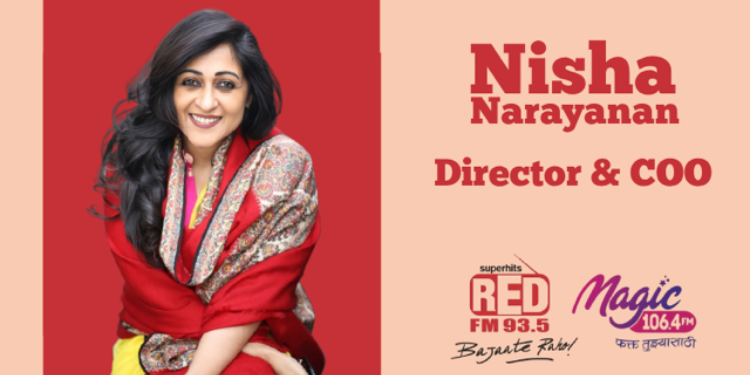
In this conversation with Nisha Narayanan, Director & COO, Red FM & Magic FM, MediaNews4U explores how radio continues to serve as a cultural amplifier, the growing opportunities for brand partnerships in festive initiatives, and the next phase of growth for FM radio in India.
1) In your view, what role does storytelling play in helping younger generations connect with festivals that may not be native to them?
Storytelling is a powerful bridge, helping younger generations emotionally connect with festivals that may not be native to them. At Red FM, we craft authentic narratives rooted in the cultural essence of these celebrations, presenting them through contemporary formats that resonate with youth.
The debut of our Dugga Dugga festival in Delhi brought over 3,000 people together about 80% Bengalis and 20% non-Bengalis. It created a true home-away-from-home atmosphere, allowing everyone to soak in the Pujo spirit, even far from their roots. Through music, art, food, and fashion, we craft immersive, multisensory experiences that foster belonging, making every attendee feel part of the celebration.
It’s remarkable how storytelling and immersive events spark curiosity, build connections, and turn festivals into living, dynamic experiences rather than mere performances. The enthusiastic participation of young audiences highlights how effectively Red FM engages them, transforming festivals into vibrant community celebrations. When culture comes alive, everyone can join in, experience a true sense of belonging and celebrate together, that’s the magic.
2) Festive initiatives like ‘Dugga Dugga’ have deep-rooted traditions. How do you strike a balance between preserving their cultural essence and making them engaging for a pan-Indian audience?
Festive initiatives like Dugga Dugga are deeply rooted in tradition and preserving their cultural essence is at the heart of everything we do. At Red FM, we ensure that the festival stays true to its heritage through traditional music, dance, crafts, and rituals, while also introducing contemporary and cross-genre collaborations that make it relatable to a wider, pan-Indian audience.
We approach Dugga Dugga as a multi-dimensional cultural movement, celebrating the spirit of the festival through universal themes of community, joy, and togetherness. By thoughtfully curating experiences across music, art, food, fashion and other cultural expressions, we maintain authenticity while creating immersive and engaging experiences that resonate with diverse audiences, especially younger generations.
This careful balance of tradition and innovation allows us to honor the festival’s roots, while making it inclusive, dynamic and relevant for audiences across India.
3) Radio continues to remain relevant in the age of digital-first platforms. How is Red FM leveraging its reach to keep cultural narratives alive in urban India?
Radio’s unique intimacy and hyperlocal reach allow Red FM to bring regional cultural expressions to the forefront across 73 cities, weaving local stories into broader cultural narratives. We see ourselves not just as broadcasters, but as cultural evangelists creating immersive, community-centred experiences that connect urban listeners with both traditional and contemporary culture.
By blending our radio programming with on-ground initiatives like Dugga Dugga Festival and South Side Story, as well as digital expansions through podcasts and social media storytelling, we ensure that these narratives remain relevant and engaging. This multidimensional approach keeps cultural traditions vibrant in urban India, providing platforms for dialogue, celebration and learning, while bridging generations and communities through shared experiences.
4) How important is it to involve local artists, storytellers, and performers in festivals, and what impact does this have on audience engagement?
Involving local artists, storytellers, and performers is central to creating authentic cultural celebrations. They are the lifeblood of festivals, anchoring experiences in genuine community identity and bringing traditions to life in vibrant, relatable ways.
By featuring both traditional and emerging talent, we create richer narratives and diverse cultural representation that deeply resonates with audiences. Their participation fosters personal connections with festival themes, enhancing engagement and making the experience immersive and memorable. It also supports the local creative economy and nurtures cultural pride, ensuring festivals remain living, evolving traditions rather than static spectacles.
The recently concluded Dugga Dugga Festival in Delhi beautifully exemplified this approach, featuring renowned Bengali artists such as Dona Ganguly with classical Odissi, The Anupam Roy Band’s contemporary tunes, Anjan Dutta’s electrifying performances and soulful singing by Iman Chakraborty. The participation of these artists brought the Pujo spirit alive for audiences, both Bengali and non-Bengali, creating authentic connections and a true sense of community.
Local artists act as cultural ambassadors, bridging traditions with contemporary audiences, especially youth and strengthening community bonds making festivals like Dugga Dugga immersive and unforgettable celebrations of culture.
5) Beyond entertainment, festivals contribute to the cultural economy. How do you see initiatives like Dugga Dugga opening new avenues for brand partnerships rooted in heritage and community values?
Festivals like Dugga Dugga have evolved into cultural IPs that go far beyond entertainment, offering brands opportunities for emotionally rich and culturally authentic engagement rather than transactional advertising. The recently concluded Dugga Dugga Festival demonstrated how such partnerships can provide scale, deep audience connection and multi-platform visibility on-air, on-ground, and digital, delivering meaningful ROI for brands.
These collaborations allow brands to align with heritage values, community spirit, and festive joy, creating authentic narratives rooted in shared cultural experiences. By blending tradition with contemporary storytelling, they open new avenues for brand engagement that resonate with diverse audiences.
During the festival, we celebrated Bengali culture not only through music and art but also through authentic culinary experiences. Food partners like 6-Ballygunge and Raju Chaat Corner from CR Park brought the rich flavors of Bengal to the event, allowing attendees to savor iconic dishes and deepen their cultural immersion. By combining music, crafts, performances and gastronomy, Dugga Dugga created a holistic, vibrant festival experience where brands could meaningfully participate in celebrating heritage and community.
6) With media and technology evolving rapidly, how do you see the future of cultural festivals shaping up in India?
With media and technology evolving rapidly, cultural festivals in India are entering an exciting new era that fuses tradition with innovation. Festivals will no longer simply preserve heritage, they will reimagine it. By blending age-old arts with technologies like augmented reality, immersive soundscapes and mixed-reality installations, we can make traditions vivid, visceral and relevant for younger, tech-savvy audiences. The recently concluded Dugga Dugga Festival in Delhi showed this perfectly, with overwhelming audience enthusiasm highlighting the power of immersive, multi-sensory experiences.
Audiences today expect more than performances, they want to step into stories. From digital storytelling and interactive workshops to food, theatre and tactile installations, festivals are becoming full-bodied experiences. Personalized journeys using AI and analytics can curate shows, food stalls and art workshops for each visitor, making experiences inclusive across age, language and interests.
Media brands and radio are evolving into cultural ecosystems. At Red FM, we combine on-air programming with on-ground festivals, podcasts and social media to engage audiences across multiple touchpoints. Regional arts, folk traditions and independent music are moving from the margins to center stage, and festivals like Dugga Dugga and South Side Story are building emotional connections with both local and non-local attendees.
Looking ahead, hybrid models, smaller curated editions and expansion into Tier-2 and Tier-3 cities will drive growth. Audiences are seeking authenticity, community and immersive experiences, and festivals will also be judged on sustainability, inclusivity and ethical technology use. The success of Dugga Dugga in Delhi shows that audiences are ready for this evolution where tradition meets innovation to create truly inclusive and unforgettable celebrations.
7) Looking ahead, what innovative formats or brand partnerships is Red FM exploring to maximize festive season impact across radio, digital, and on-ground activations?
At Red FM, we are reimagining festive engagement by blending radio storytelling with on-ground experiences, digital content and community-led cultural properties to create fully integrated 360° campaigns. Our flagship festivals, such as Dugga Dugga, are expanding into new cities like Delhi, while collaborations spanning music, art, literature and culinary traditions make these celebrations immersive and culturally rich.
We are leveraging data and AI to personalize festival journeys, making brand partnerships more interactive, targeted, and outcome-driven. Innovative sponsorship models go beyond visibility, fostering lasting emotional connections, while our focus on vernacular content and independent artists ensures authentic regional stories reach national and diaspora audiences. Non-traditional formats like influencer content, digital IPs and experiential activations complement radio’s reach and create multi-dimensional engagement.
Younger audiences are central to our strategy, with short-form, shareable, digital-native formats such as podcasts and social media activations driving discovery and authenticity. At the same time, Tier-2 and Tier-3 cities remain key growth frontiers, where hyperlocal activations deepen audience connections. By aligning with policy and regulatory developments, we are building a future-ready ecosystem that delivers scalable, meaningful experiences for both brands and audiences.
8) The FM radio industry has been evolving steadily, but what do you see as the next big phase of growth for FM in India? Where will this growth come from?
The FM radio industry in India is poised for a transformative phase, driven by evolving audience preferences and technological advancements. The next big phase of growth will be shaped significantly by digital transformation. While the government has announced the rollout of digital radio, the industry needs to move from readiness to real implementation, as digital radio represents the medium of the future.
Alongside this, growth will increasingly come from non-metro regions. Initiatives like Red FM’s regional engagement programs showcase the potential of smaller towns and cities, tapping into local cultures and music to build deeper connections with audiences.
Regulatory reforms will also play a critical role in supporting private FM broadcasters, enabling smoother operations and facilitating digital adoption. Additionally, diversification of content and revenue streams, including podcasts and indie music platforms, will help FM radio expand its reach and financial sustainability.
Finally, a sharper focus on authentic cultural narratives allows radio to resonate more deeply with listeners while celebrating India’s rich diversity. Collectively, elements like digital adoption, regional expansion, regulatory support, diversified content, and cultural storytelling will drive the next phase of growth for FM radio in India.
9) Phase III of FM radio policy has opened up 730 new channels across 234 cities. What challenges and opportunities do you foresee for private FM players in this expanded landscape?
Phase III of the FM radio policy, which has opened up 730 new channels across 234 cities, is a landmark development for the industry and presents a mix of exciting opportunities and notable challenges for private FM broadcasters.
On the opportunity side, the expanded landscape allows radio players to reach previously underserved markets, fostering deeper connections with regional audiences and celebrating local cultures, as initiatives like Red FM’s regional programs have shown. The increased frequencies also provide space to diversify content, create niche programming, and strengthen brand visibility, positioning broadcasters as key media players in a rapidly evolving ecosystem.
However, there are challenges that cannot be overlooked. Regulatory constraints, such as limitations on news and current affairs broadcasting, restrict content flexibility, while the high operational costs and license fees can be a significant financial burden, particularly for new entrants.
At the same time, the industry must navigate the transition to digital platforms, balancing technological investments with maintaining high-quality traditional broadcasts. Ultimately, while Phase III offers tremendous growth potential, realizing this promise will require careful navigation of regulatory, financial, and technological challenges.