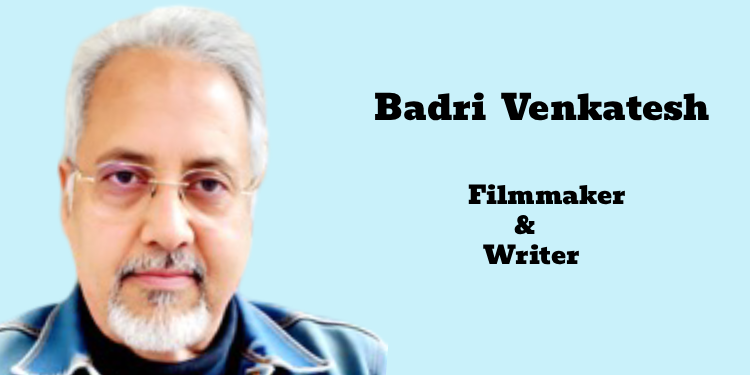
Acclaimed filmmaker and writer Badri Venkatesh has carved a unique space for himself across cinema, television, and digital platforms. Known for films like Baana Kaathadi and Semma Botha Aagathey, and now actively shaping stories for OTT, he shares his journey, his take on the rapidly evolving media landscape, and why platforms like Kuku TV are redefining the way India consumes content.
Q: Did you always want to be a writer?
Badri Venkatesh: No, I never thought I would become a writer. Writing wasn’t in my plan. I was more interested in visual storytelling. But opportunities kept coming my way, and slowly I realized that writing was a natural extension of my creative expression.
Q: How did your journey in cinema begin?
Badri Venkatesh: I started out by assisting, observing, and understanding how stories are built for screen. It was never about chasing cinema as a dream but about learning and experimenting. Over time, cinema became the medium that allowed me to combine my interest in visuals, narratives, and connecting with people.
Q: Which projects stand out as turning points in your career?
Badri Venkatesh: Each project is a learning curve. Baana Kaathadi was important for me because it introduced me as a director and gave me an identity. Later, Semma Botha Aagathey allowed me to explore a more contemporary, urban narrative. Recently, my OTT work has given me a chance to connect with new-age audiences. Every project comes with its own challenges and lessons.
Q: You’ve worked across different formats — cinema, television, and now OTT. How do you see the evolution of storytelling?
Badri Venkatesh: Earlier, films had a longer life. People celebrated them for weeks and months. Now, the consumption cycle is very short. Audiences watch, discuss, and quickly move on to the next. OTT has created a huge shift — it has made content accessible and given space for diverse stories. But it also puts pressure on creators to be sharper and more relevant.
Q: What opportunities and challenges do you see with OTT?
Badri Venkatesh: OTT is both liberating and demanding. On the one hand, it allows regional stories and unique voices to find global audiences. On the other, you cannot afford to be lazy. Viewers have endless options. You need to grab their attention in the first few minutes, or they’ll move on.
Platforms like Kuku TV are fascinating examples of this change. They’ve built a massive audience base by focusing on regional and vernacular storytelling. Their short-format, snackable stories in local languages have proved that content doesn’t have to be big-budget to succeed. What matters is relevance, relatability, and speed of consumption. For me, it’s a signal that the future will not be defined only by traditional cinema or even mainstream OTT giants, but also by agile, regional-first platforms that understand their audiences deeply.
Q: What’s your advice for young people aspiring to enter this industry?
Badri Venkatesh: Don’t come here for glamour or shortcuts. Be patient and persistent. Learn your craft — whether it’s writing, directing, or any other discipline. Observe people, observe life. Authenticity is key; if you’re honest in your storytelling, audiences will connect.
Q: Looking ahead, what excites you most about the future of entertainment?
Badri Venkatesh: I see a convergence happening between cinema, OTT, and digital platforms. The boundaries are blurring. What excites me is the possibility of experimenting with formats and telling stories that are both entertaining and meaningful. The future belongs to creators who can adapt and still hold on to the soul of storytelling.
Q: Beyond films and OTT, are you open to exploring new avenues like corporate assignments or brand storytelling?
Badri Venkatesh: Absolutely. I believe creativity isn’t limited to cinema or OTT alone. Today, corporates and brands also need powerful narratives to connect with their audiences. Whether it’s through films, OTT content, campaigns, or digital storytelling, I’d love to collaborate as a creative consultant. It gives me the chance to bring cinematic and digital thinking into brand communication, and I’m excited to take on such assignments
Conclusion
From mainstream cinema to OTT, Badri Venkatesh has witnessed first hand how audience expectations and storytelling formats have transformed. His insights into platforms like Kuku TV reflect the growing importance of regional, vernacular-first content. As he looks ahead, his belief in authentic storytelling and adaptability stands as a guiding principle for the next generation of creators.
Quotes