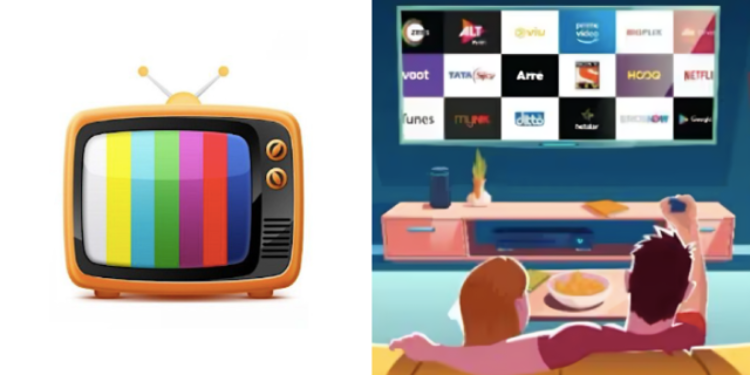
Mumbai: India’s television ecosystem is heading toward a structural reset. With the Telecom Regulatory Authority of India (TRAI) initiating consultations on regulating Application-based Linear Television Distribution (ALTD) and Free Ad-Supported Streaming Television (FAST) services, the country may be on the cusp of its most significant media policy shift since digitisation.
At stake is not just regulation—but the future balance of power between traditional television, OTT platforms, and FAST services, a rapidly emerging hybrid that combines the familiarity of linear TV with the flexibility of streaming.
From Platform Wars to Format Wars
For years, the industry’s competitive lines were clearly drawn—cable and DTH versus OTT. TRAI’s latest move signals that those boundaries are dissolving.
FAST, which delivers scheduled, linear channels over internet apps for free, has effectively blurred the distinction. It replicates television’s passive, “lean-back” viewing experience while leveraging digital infrastructure and targeted advertising.
The result: competition is no longer about distribution pipes, but about content formats and monetisation models.
A Lifeline for Traditional TV—or Just a Delay?
Broadcasters have long argued that OTT platforms operate under lighter regulatory oversight. TRAI’s consultation—triggered by a reference from the Ministry of Information and Broadcasting—aims to address precisely that imbalance by ensuring parity, content accountability, and consumer protection.
If FAST and ALTD platforms are brought under regulatory frameworks similar to broadcast TV, it could level the playing field on issues such as compliance and content standards.
But parity alone may not solve television’s deeper structural challenges.
Advertising spends continue to migrate toward digital, younger audiences are firmly entrenched in on-demand ecosystems, and connected TV adoption is accelerating. FAST, in particular, poses a direct threat by offering a free, TV-like experience without subscription or hardware barriers.
In effect, it competes not just with pay TV—but with the very idea of paying for television.
OTT’s Next Phase: From Disruptor to Regulated Ecosystem
For OTT platforms, the implications are twofold.
On one hand, regulation could erode their long-standing advantage of operating with minimal oversight. FAST services—now integral to many OTT strategies—may soon be subject to obligations around content, transparency, and possibly advertising norms.
On the other hand, regulatory clarity could legitimise and accelerate FAST adoption, unlocking larger advertising budgets and bringing structure to a currently fragmented space.
OTT platforms are already evolving into hybrid ecosystems, blending subscription (SVOD), ad-supported (AVOD), and linear FAST channels. In many ways, they are beginning to resemble digital-era cable operators—aggregators of content rather than pure disruptors.
FAST Emerges as the Real Disruptor
If there is one clear winner in the current transition, it is FAST.
Its appeal lies in simplicity: free access, familiar channel formats, and seamless availability across smart TVs and connected devices. For advertisers, it offers a rare combination—television-scale storytelling with digital targeting and measurement.
This dual advantage positions FAST as a serious contender for premium video ad budgets, historically dominated by television.
For broadcasters, it represents both an opportunity and a threat. For OTT platforms, it is both a growth engine and a competitive pressure point.
The Hidden Battleground: Smart TV Interfaces
Beyond content and regulation, control is quietly shifting to the interface layer—smart TVs.
FAST services are often pre-installed or prominently featured on device home screens, giving manufacturers and operating systems disproportionate influence over content discovery. In effect, they are emerging as gatekeepers of viewership, akin to multi-system operators in the cable era.
TRAI’s consultation hints at potential scrutiny of this layer, particularly around fair placement and access. Any regulatory intervention here could significantly alter platform economics and bargaining power across the ecosystem.
Advertising: Where the Real Fight Lies
Ultimately, the battle between TV, OTT, and FAST will be decided by one factor: advertising revenue.
As ad dollars steadily shift from linear television to digital video, FAST stands out as the most compelling bridge between the two worlds. It offers the scale of TV without its inefficiencies, and the precision of digital without sacrificing storytelling.
However, regulation—especially around ad loads and transparency—could standardise the ecosystem, making it more attractive to large advertisers while limiting some of FAST’s current flexibility.
Convergence, Not Collapse
Despite the competitive tensions, the future is unlikely to be a zero-sum game.
Instead, the industry is moving toward a converged model, where:
- Traditional TV retains its dominance in mass reach and live events
- OTT platforms lead in premium, on-demand content
- FAST captures the middle ground—free, scalable, and ad-driven
TRAI’s intervention is less about choosing winners and more about structuring this convergence.
The Big Picture
By formally recognising and moving to regulate ALTD and FAST services, TRAI is acknowledging a fundamental truth: television is no longer defined by the device or distribution network, but by the experience it delivers.
The real contest now is for consumer attention, interface control, and advertising share.
And at that intersection, FAST is no longer an experiment—it is the new battleground.