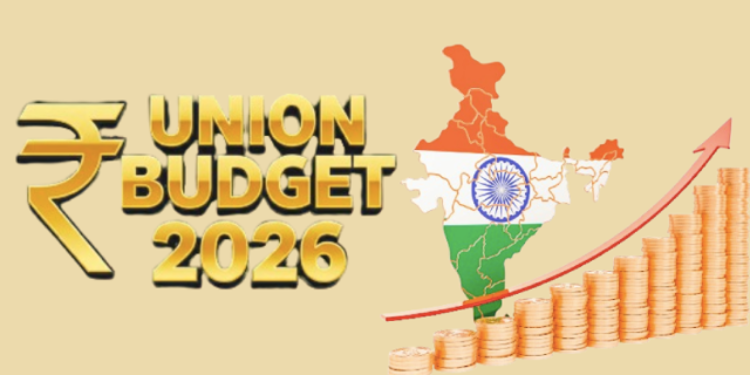
Mumbai: The Union Budget 2026–27 signals a decisive transition in India’s economic strategy—from short-term stimulus to long-horizon structural strengthening. Across sectors, industry leaders interpret the Budget not as a collection of giveaways, but as a coordinated attempt to deepen resilience, expand formalisation, and align growth with long-term national priorities under the Viksit Bharat vision.
Growth Anchored in Assets, Not Consumption Alone
A consistent theme emerging from Indian Inc. is the Budget’s emphasis on capital expenditure as the primary growth engine. Continued investment in infrastructure—roads, logistics parks, ports, renewable energy, urban renewal, freight corridors and high-speed rail—has been widely welcomed for expanding the country’s productive and insurable asset base. For sectors such as insurance, banking, manufacturing and logistics, this creates a virtuous cycle: asset creation leads to credit expansion, which in turn embeds risk protection, financing, and formal economic participation.
Industry leaders note that insurance, finance and credit penetration rise most sustainably when economic growth is broad-based. By focusing on infrastructure, MSMEs, and formal employment rather than direct consumption stimulus, the Budget is seen as laying the groundwork for durable demand rather than transient spending spikes.
MSMEs Move to the Centre of the Growth Story
Indian Inc. sees the MSME push as one of the Budget’s most consequential interventions. The ₹10,000-crore SME Growth Fund, expansion of credit guarantees, strengthening of TReDS, and improved invoice discounting mechanisms are expected to ease both capital expenditure constraints and working capital stress.
For sectors spanning beauty and personal care, food processing, retail, apparel, education and manufacturing, easier access to credit and equity support is expected to accelerate formalisation, scale-up ambitions, and job creation. Executives emphasise that MSMEs are no longer being treated as peripheral beneficiaries, but as core engines of employment, exports and domestic consumption.
Manufacturing, Climate and Competitiveness
Manufacturing leaders highlight a clear shift towards scale, sustainability and global competitiveness. Initiatives such as the revival of legacy industrial clusters, mega textile parks, container manufacturing investments, chemical parks and electronics component schemes are expected to modernise production ecosystems.
Equally significant is the Budget’s recognition of climate responsibility as an industrial issue. The proposed multi-year outlay for carbon capture, utilisation and storage (CCUS) in carbon-intensive sectors such as steel signals an intent to align industrial growth with India’s net-zero ambitions. Industry voices see this as critical for future export competitiveness as global markets tighten carbon standards.
Technology, Trust and Talent as Economic Infrastructure
Technology leaders interpret Budget 2026 as a statement of intent: India wants to be a producer of digital value, not just a consumer. The focus on digital public infrastructure, AI adoption, semiconductor manufacturing, data centres and cloud services reflects a bid to build global-scale digital capacity anchored in India.
A predictable tax and compliance environment for IT services, combined with incentives for cloud and data infrastructure, is expected to boost capital confidence and global scalability. At the same time, the emphasis on cybersecurity, people-risk management and trusted digital systems acknowledges that rapid digitisation must be accompanied by safeguards.
Talent creation emerges as a parallel priority. From education-to-employment frameworks and modular professional courses to skilling initiatives across manufacturing, hospitality and services, the Budget positions human capital as core infrastructure for sustained growth.
Tourism, Mobility and Services-Led Expansion
Tourism, aviation and mobility leaders view the Budget as a shift from volume-driven growth to experience-led and geographically distributed development. Investments in heritage, spiritual circuits, medical tourism and Tier-2 and Tier-3 connectivity are expected to generate high-frequency, purpose-driven travel while spreading economic benefits beyond metros.
In mobility, the push for electric buses, charging infrastructure and last-mile electrification signals continuity and policy stability—key factors for long-term investment decisions in clean transport.
Finance, Inclusion and Institutional Confidence
From banks and NBFCs to insurers, financial sector leaders highlight the Budget’s balanced approach—maintaining fiscal discipline while supporting growth through capital expenditure and institutional reform. Measures to deepen credit delivery, strengthen financial markets and simplify compliance are seen as reinforcing confidence at a time when asset quality and profitability are improving.
Importantly, inclusion features prominently. Initiatives supporting women entrepreneurs, self-help groups, dairy and allied agriculture, and rural skilling suggest that growth is being designed to be participative rather than concentrated.
A Budget That Lets Growth Pull Penetration
The dominant takeaway from Indian Inc. is that Budget 2026 resists headline-driven populism in favour of quieter structural change. Rather than mandating outcomes—whether insurance coverage, digital adoption or employment—it seeks to create the economic conditions where these outcomes become inevitable.
By aligning infrastructure, credit, technology, climate action and skills into a single growth framework, the Budget positions India for a phase where penetration—of finance, insurance, formal employment and digital services—rises organically alongside economic expansion. For industry, this marks a shift from managing volatility to planning with confidence.