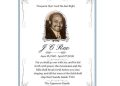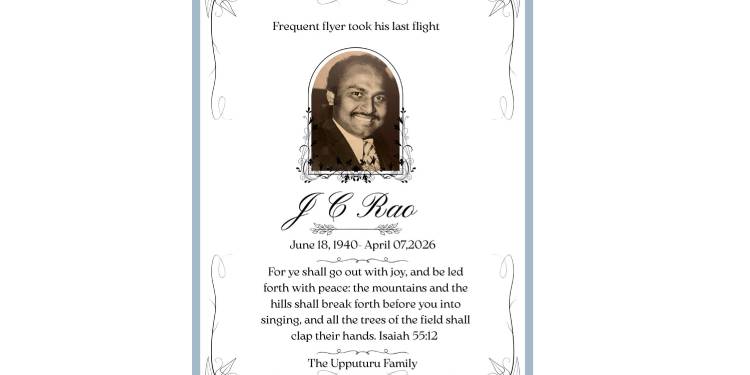
New Delhi, 8 April 2026 — The Indian advertising fraternity bids farewell to a gentle force whose influence far exceeded the titles he held. Upputuru Jayachandra Rao—fondly known across agencies and corridors as JC Rao—has passed away, leaving behind not just a professional legacy, but a deeply human one that shaped people, ideas, and an entire generation of advertising minds.
Often described as the father of the “first family of advertising,” Rao’s legacy lives on through his five children—Usha, Emmanuel, Titus, Daniel, and Joshua—each of whom carved a distinct and successful path in the industry. But to reduce JC Rao’s life to lineage alone would be to miss the essence of a man who quietly held together the scaffolding on which creativity could soar.
A graduate in Zoology Honours, Rao’s journey into advertising was anything but conventional. Yet, once there, he found his calling—not in the spotlight, but in the indispensable, often unsung roles that keep agencies alive. Over decades, he served as a commercial manager with some of the most respected names in the business, including Ogilvy (then Ogilvy, Benson & Mather), Clarion, Mega Corp, and Alfred Allan Advertising.
His domain was numbers, systems, and people—finance, administration, and human resources—but his heart was always with ideas. At Clarion, he became a familiar figure across Delhi, Kolkata, and Hyderabad, tirelessly moving between offices, ensuring stability while nurturing an environment where creativity could thrive. It was not uncommon for copywriters and art directors to walk into his office, not with budgets, but with half-formed ideas. Rao listened, questioned, and often brainstormed alongside them.
“JC Rao, Paisa Lao!”—a phrase uttered with equal parts affection and urgency—became something of a legend in agency culture. It captured the paradox he embodied: the man who guarded the purse strings, yet never stifled imagination.
Among the many campaigns he oversaw, one remained especially close to his heart—the launch of Nescafé Gold. But it was a striking print advertisement that he often recalled with particular pride. Spread across two consecutive pages, it posed a haunting question: “What is the dirtiest word in English Literature?” The answer, revealed on the next page, was disarmingly and shockingly simple—“Water.” The campaign went on to highlight the critical importance of water hygiene, exemplifying the kind of thought-provoking work Rao championed.
At the height of his career, in a move that surprised many, JC Rao stepped away from the corporate world. He chose instead a path of spiritual service, dedicating himself to the church. In the years that followed, he traveled across continents, preaching and teaching from the Bible with the same quiet conviction that had defined his professional life.
It was in this final chapter that he remained most true to himself—a man of discipline, humility, and faith. On the evening of April 7, as he prepared for a sermon, he passed away—leaving behind a life that had come full circle, from nurturing brands to nurturing belief.
JC Rao’s story is not one of loud accolades or headline-grabbing campaigns. It is the story of a man who stood at the intersection of structure and creativity, of commerce and compassion. In an industry often defined by visibility, he chose instead to be indispensable.
He is survived by his five children, whose collective success continues to echo his values and vision. Together, Usha Hephzibah, Emmanuel Upputuru, Titus Upputuru, Daniel Upputuru and Joshua Upputuru remain a testament to the man many called the backbone of their beginnings.
In remembering JC Rao, the industry does not just mourn a veteran—it honors a mentor, a steward, and a believer in both ideas and people.