Vasanth & Co, founded in 1978 by the late H. Vasanthakumar, has grown into one of South India’s most trusted retail chains for consumer electronics and home appliances, with a strong presence across Tamil Nadu, Puducherry, and Bengaluru. Over the years, the brand has become synonymous with accessibility, affordability, and reliability in the retail segment, while also expanding its footprint into media through Vasanth TV.
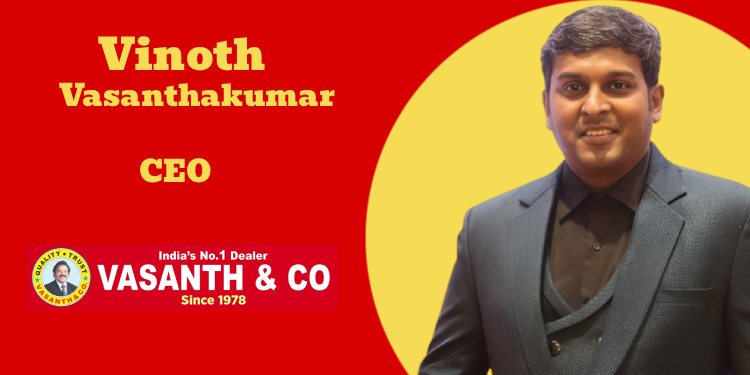
At the helm of this legacy today is Vinoth Vasanthakumar (Vinoth Vasanth), the CEO of Vasanth & Co. An alumnus of London South Bank University, Vinoth brings global exposure and a modern outlook to the family-run enterprise. Steering the brand in a rapidly evolving retail landscape, he has been instrumental in driving new showroom expansions, strengthening digital presence, and leading innovations to keep pace with changing consumer expectations.
In this First Part of the two part exclusive interaction with MediaNews4U, Vinoth Vasanth shares insights on the company’s growth journey, his vision for the future of retail, and how Vasanth & Co continues to stay relevant in an increasingly competitive marketplace.
Part 1: Media Investments, Audience Engagement, and Growth Segments
1) You have been focusing primarily on television. How much has this focus helped you in positioning Vasanth & Co as India’s No.1 dealer in the home appliances retail space?
Vinoth Vasanthakumar: Television has been one of the primary mediums driving our growth right from inception. It continues to play a critical role in sustaining our brand, strengthening recall, and serving as the core platform for announcing our promotions, offers, and seasonal campaigns. Particularly during the festive season, when we roll out offers and gifts, television ensures instant visibility and measurable outcomes. We consistently increase our investment in television during these high-impact periods. Television remains the cornerstone of our advertising strategy, accounting for nearly 50% of our overall advertising spend. The remaining 50% is allocated across other traditional mediums such as newspapers, FM radio, and cinema. While each medium has its role, television has always been our primary vehicle to reach our audience, especially through large-scale sponsorships and marquee properties. Our long-standing association with reality shows and fiction programs has significantly contributed to our growth journey.
A key reason for our focus on television is its strong influence on women audiences, who continue to be the primary decision-makers when it comes to purchasing home appliances and household products. While men also play a supporting role in the buying process, our belief is that women remain at the center of decision-making, and television is the most effective medium to engage with them. As a brand, Vasanth & Co has consistently invested in big-ticket sponsorships, including high-impact properties such as Bigg Boss and several other leading shows.
 2) What is the strategy behind investing so heavily in big-ticket sponsorships, given that earlier regional or local retail brands were often hesitant to spend on television at this scale?
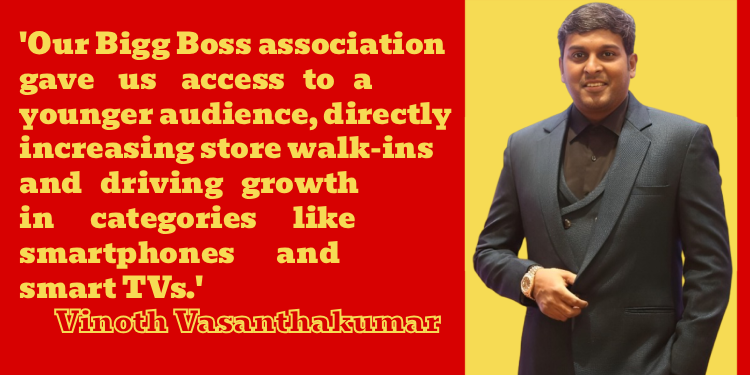
Vinoth Vasanthakumar: Our decision to invest significantly in big-ticket sponsorships and high-value television properties stems from a transformative approach to connect with our future audience. We realized early on that younger consumers—Gen Z, teens, and first-time earners—were increasingly drawn to emerging non-fiction formats such as Bigg Boss, Super Singer, and other reality shows. Many of them tuned into television for the first time because of these programs, and we wanted to be present where this new wave of audiences was engaging. As a retail brand, it was important for us to build a strong emotional connection with these viewers at a young age so that they would develop long-term loyalty towards Vasanth & Co. While we were fully aware that the costs of associating with such properties were high, we also understood that premium content of this nature requires substantial investment from broadcasters, and naturally, sponsorship costs reflect that. We were prepared for this, and it has proven to be a worthwhile strategy.
Our investments in marquee shows like Bigg Boss delivered tangible results. For instance, we strategically highlighted categories such as gadgets, smart TVs, and LED/LCD panels, which align with the interests and purchasing behavior of younger consumers. This not only boosted sales in these segments but also helped us capture a new-age audience base sampling our stores. It has been a win-win outcome.
3) What is your strategy when it comes to investing in top fiction properties on television? How do you approach these decisions?
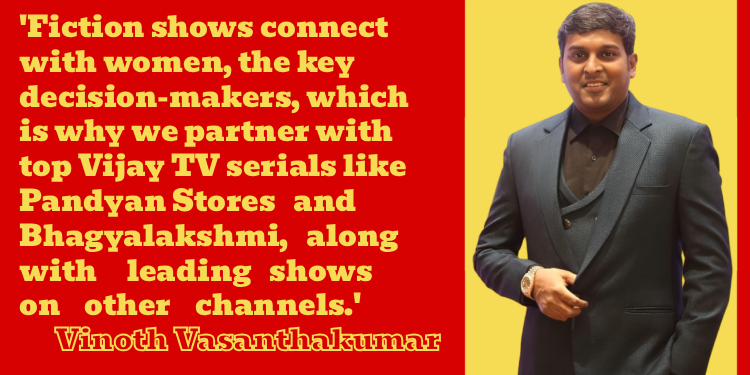
Vinoth Vasanthakumar: Our investments in fiction properties are guided by ratings, time slots, and audience engagement. While prime-time preferences have shifted over the years, fiction remains a strong driver of household purchases. We have partnered with leading broadcasters, including Vijay TV’s Pandian Stores and Bhagyalakshmi, as well as top shows on Sun TV and Zee Tamil. Fiction connects best with family audiences, especially women, who are key decision-makers in appliances like refrigerators and washing machines. Earlier, we invested in movies, live events, and award shows, but we now prioritize fiction, non-fiction shows, and on-ground activations like food festivals and expos. These not only boost visibility but also drive store footfalls, which are critical for conversions.
4) Can you tell us about the overall media investment strategy of Vasanth & Co? Apart from television, what other mediums do you focus on, and how is digital transformation shaping your approach?
Vinoth Vasanthakumar: Beyond television, we allocate the remaining share across traditional platforms such as Print, FM Radio, and Cinema. FM radio, in particular, continues to deliver reliable returns, while cinema advertising has become a very important part of our strategy. By focusing on cinema, we are able to reach family audiences and decision-makers in a highly captive environment.
In recent years, we have also begun strengthening our presence in digital. Initially, our focus was on platforms like YouTube and digital entertainment portals. Over time, we expanded into Meta and Google, and most recently, we partnered with GroupM to leverage programmatic advertising on these platforms. This shift is part of our long-term strategy to connect with younger, digitally active audiences, while continuing to invest in our core traditional mediums. Although digital currently contributes only a small portion of our overall business—with e-commerce sales accounting roughly for about ₹25 lakhs monthly against total in-store sales of ₹250–260 crores — we view it as a crucial future growth driver. We have also built an in-house digital team that works closely with our agency partners to design interactive campaigns, influencer-led initiatives, and community-driven activities on hyperlocal apps. These campaigns are not only about reach but also about engagement—offering contests, coupons, or gifts that drive customers into our stores. For example, we recently collaborated with ‘Coolie’ movie for free ticket distribution and continue to partner with multiple platforms on such co-branded campaigns. Additionally, on-ground activations remain a strong pillar of our strategy. We regularly participate in and host shopping expos and exhibitions, such as those held at Chennai Trade Centre and Coimbatore’s Codissia, with more planned in the near future. These initiatives help us strengthen direct engagement with our customers and reinforce brand trust.
5) Can you share some scenarios where your media investments delivered immediate impact or tangible outcomes across different platforms?
Vinoth Vasanthakumar: One of the most notable examples was our very first association with Bigg Boss. During that year, we observed a sharp increase in store walk-ins and consumer queries directly linked to our presence on the show. Many customers specifically referenced the advertisements they had seen during Bigg Boss, which gave us confidence that the investment was driving recall and footfalls. That period also coincided with our strategic push into IT and gadget categories — smartphones, laptops, and smart TVs—and the sponsorship significantly accelerated our sales in these segments. Cinema advertising is another medium that has consistently delivered strong recall. We have had numerous instances where customers mentioned seeing our ads in theatres, which reinforced our belief that cinema provides a unique touchpoint to reach family audiences and decision-makers in a highly engaging environment.
6) Can you share the category-wise split of your overall business volume and which product category dominate your sales?
Vinoth Vasanthakumar: Our monthly overall billing stands at around ₹250 crores. Among categories, smart television panels continue to be the highest-selling segment across our retail stores, followed closely by air conditioners. ACs have emerged as one of the fastest-growing categories, moving from being a seasonal purchase to a year-round necessity, driven by lifestyle changes and climatic conditions. Another key growth driver is the gadgets and IT products segment, which we introduced post-2020. This includes smartphones, laptops, and related gadgets, displayed through dedicated gadget zones across all our outlets. Since launch, this category has been witnessing 30–35% year-on-year growth, making it one of the most dynamic contributors to our business. In terms of volume, traditional categories like televisions, refrigerators, washing machines, and air conditioners still lead. However, when it comes to growth momentum, gadgets and IT products are clearly at the forefront.
Building on our discussion about the power of fiction television in connecting with audiences, our conversation now shifts from the screen to the street. While high-impact TV partnerships drive brand visibility and familiarity, the ultimate goal is to translate that awareness into action. In our forthcoming Part 2, we will explore the celebrity endorsements vs the real Face of the Brand, critical role of on-ground activations—from food festivals to expos—and how these physical experiences are not just supplementing media campaigns but are becoming the essential final step in the customer journey, directly driving store footfalls and conversions.
The second part of the interaction with Vinoth Vasanth will be published on Wednesday, 1st October 2025.