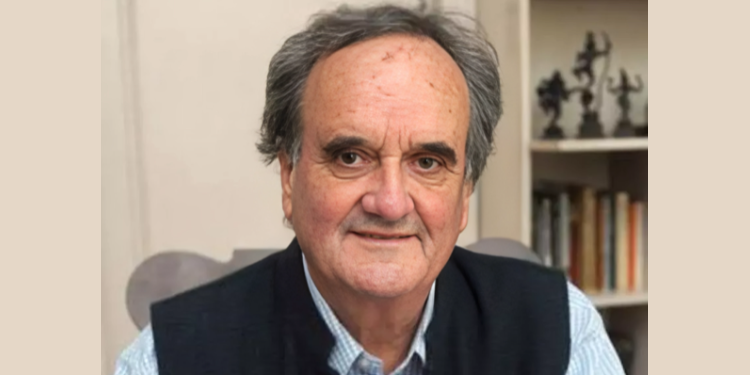
New Delhi: Mark Tully, one of the most influential foreign correspondents to document India’s political, social and economic evolution, passed away on Sunday at a private hospital in New Delhi. He was 90.
Tully died at Max Hospital Saket, where he had been undergoing treatment for age-related ailments for the past week. Hospital sources said he was admitted on January 21 under the nephrology department.
Confirming the news, veteran journalist and longtime associate Satish Jacob said Tully passed away on Sunday afternoon.
Born in Calcutta (now Kolkata) on October 24, 1935, Tully went on to become a defining voice on India for global audiences. He served as the New Delhi Bureau Chief for the BBC for over two decades, a period during which he reported on landmark moments ranging from political transitions and economic reforms to conflicts and social change.
Beyond television and radio journalism, Tully built a distinguished career as an author, offering nuanced, ground-level perspectives on India’s contradictions and continuities. His notable works include No Full Stops in India, India in Slow Motion and The Heart of India, books that remain widely referenced in discussions on India’s post-Independence trajectory.
He was also the long-time presenter of the BBC Radio 4 programme Something Understood and contributed to several acclaimed documentaries exploring themes such as the British Raj, Indian Railways and the country’s evolving identity.
In recognition of his contribution to journalism and public understanding of India, Tully was knighted by the British government in 2002. He was later awarded the Padma Bhushan in 2005 by the Government of India.
With his passing, India and the global media fraternity lose a rare chronicler who combined rigorous reporting with deep cultural empathy—qualities that shaped how India was understood beyond its borders for generations.