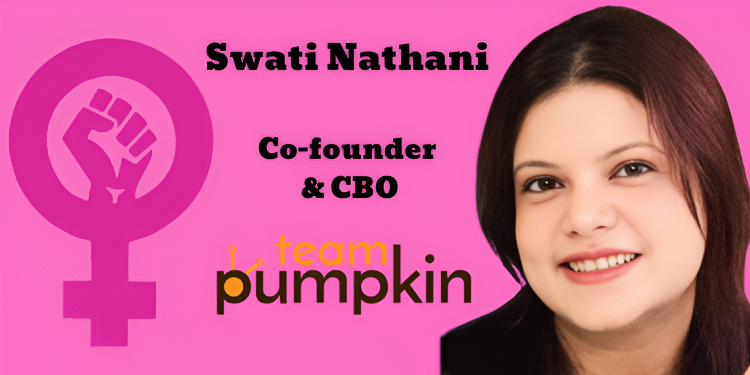
Swati Nathani has been serving as Co-founder and Chief Business Officer at Team Pumpkin.
With close to 20 years of experience across digital marketing, branding, analytics, operations, and entrepreneurship, she has co-built Team Pumpkin into one of India’s leading integrated marketing agencies, partnering with brands such as Swiggy, Tata Steel, Mamaearth, ITC Foods, and Prega News.
With close to 20 years of industry experience across digital marketing, branding, retail marketing, analytics, operations, and entrepreneurship, Swati brings a powerful combination of strategic vision and hands-on execution.
As a co-founder, she has played a pivotal role in building Team Pumpkin into one of India’s leading integrated marketing agencies, partnering with marquee brands such as Swiggy, Tata Steel, Mamaearth, ITC Foods, Prega News, and several high-growth startups.
Her key areas of expertise include:
• Building and scaling digital-first brands in India’s competitive consumer landscape
• Leveraging creativity, analytics, and storytelling to drive measurable marketing impact
• Leadership, talent development, and fostering inclusive, growth-oriented workplace cultures
• Entrepreneurship and the journey of growing an agency from the ground up
Under her leadership, Team Pumpkin has executed over 1000 successful campaigns and earned 100+ national and international awards, continuing to deliver impactful results for both established brands and emerging startups.
Swati’s personal journey—from a small-town upbringing in Patna to co-leading one of India’s most awarded digital agencies—strongly resonates with the spirit of Women’s Day. She can contribute through a bylined article, opinion piece, expert quote, interview, or industry commentary on themes such as women in leadership, entrepreneurship, building resilient businesses, and the evolving role of women in India’s digital and startup ecosystem.
On the occasion of International Women’s Day Medianews4u.com caught up with Swati Nathani, Co-founder, Chief Business Officer Team Pumpkin.
Q. Why do Women’s Day campaigns need to move beyond tokenism to long-term brand positioning?
Women’s Day cannot be a one-day emotional spike in an otherwise inconsistent brand narrative. Audiences are perceptive. If a brand speaks about empowerment in March and then defaults to stereotypes in April, credibility drops immediately.
For it to work, Women’s Day has to reflect an existing brand belief. That belief must show up in product design, hiring, partnerships, and everyday communication. Otherwise it becomes seasonal signaling, not positioning.
The most effective Women’s Day campaigns are not created for applause. They are created from conviction.
Q. What is the business case for inclusive marketing and gender-intelligent brand strategy?
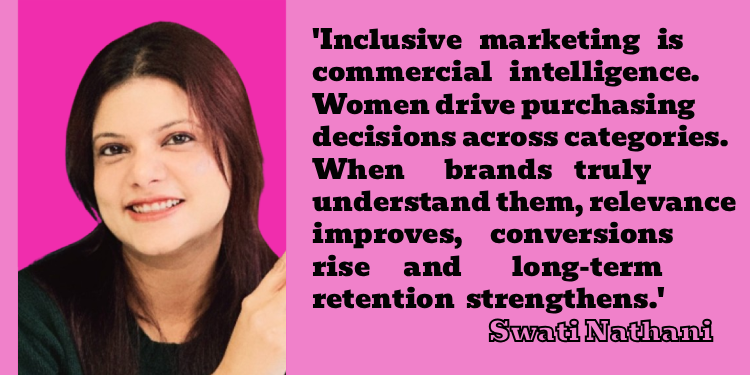
Inclusive marketing is commercial intelligence. Women influence a significant share of purchasing decisions across categories, including those that are still marketed as male-dominated.
When brands misunderstand women, they waste media budgets. When they understand them deeply, they increase relevance, which improves conversion and long-term retention.
Q. How are data and consumer insights reshaping communication targeted at women audiences?
We are moving beyond demographic targetting. Women are not a monolith defined by age or marital status. Their decisions are shaped by mindset, financial responsibility, time pressure, and aspirations.
Data now helps map micro-behaviours – when they browse, what builds trust, what leads to drop-offs. Insights also show that women are increasingly skeptical of exaggerated empowerment messaging. They respond better to clarity, practicality, and brands that respect their intelligence. The gap between what brands think women want and what data actually shows is shrinking.
Q. Is AI playing an effective role in balancing purpose-driven storytelling with performance marketing metrics?
AI has become useful in testing and refining storytelling at scale. It helps identify which narratives genuinely resonate and which only sound impressive internally.
However, AI reflects the strategy guiding it. If purpose is vague, AI will optimise noise. When the brand’s intent is clear, AI becomes a strong tool to connect purpose with performance and reduce guesswork in decision-making.
Q. In terms of the evolving role of women consumers in driving India’s digital and D2C growth, what trends are expected in 2026?
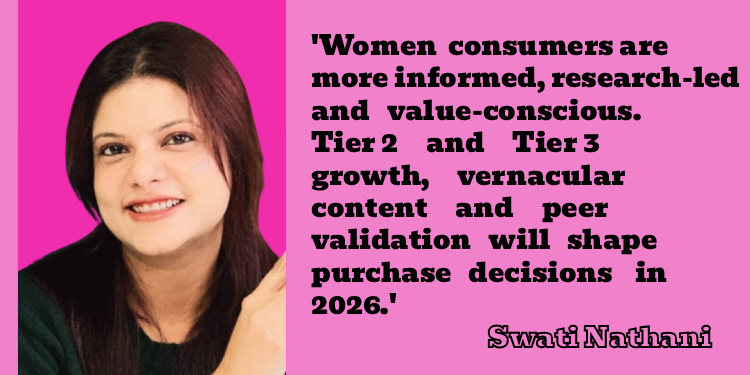
Women consumers are becoming more informed and less impulsive. They research more, compare more, and expect transparency. Loyalty is no longer automatic.
Tier 2 and Tier 3 markets will continue accelerating, especially through vernacular content and community-led discovery. Peer validation and creator credibility will influence purchase decisions more than traditional brand-heavy messaging.
At the same time, we will see selective premiumization. Women are willing to invest in quality, but they expect consistency and proof.
Q. What role do diverse leadership teams play in creating more culturally relevant and high-impact campaigns?
Diverse leadership improves perspective. It reduces blind spots and prevents campaigns from being tone-deaf.
When multiple lived experiences are present in decision-making rooms, nuance improves naturally. It also strengthens risk assessment. Assumptions are questioned earlier, which saves brands from expensive mistakes later.
Better rooms almost always lead to better work.
Q. What role have women played in building Team Pumpkin into an integrated marketing agency?
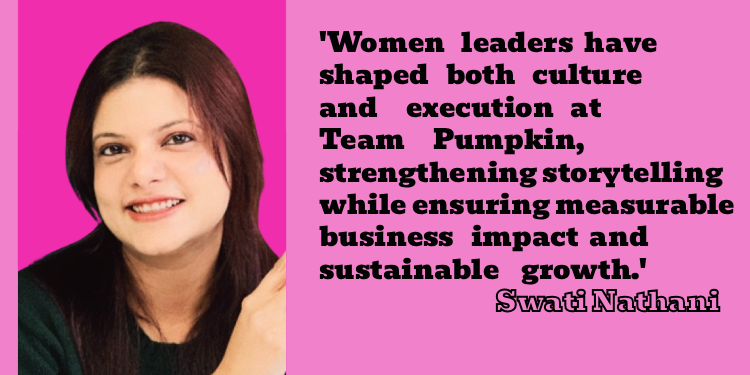
Women have played a central role in building both the culture and execution discipline at Team Pumpkin. From strategy to client servicing to creative thinking, women leaders have helped shape long-term client relationships and integrated thinking.
They have contributed significantly to connecting storytelling with measurable business outcomes, which has been critical to scaling sustainably.
Q. In terms of the journey of growing an agency from the ground up, what have been the key challenges?
The biggest challenges have been operational. Managing cash flow cycles. Hiring at the right moment without overextending. Retaining strong talent in a competitive industry. Building processes without slowing agility.
Scaling across geographies adds another layer of complexity. Systems must evolve continuously without losing entrepreneurial drive.
Q. Was skepticism a challenge early on?
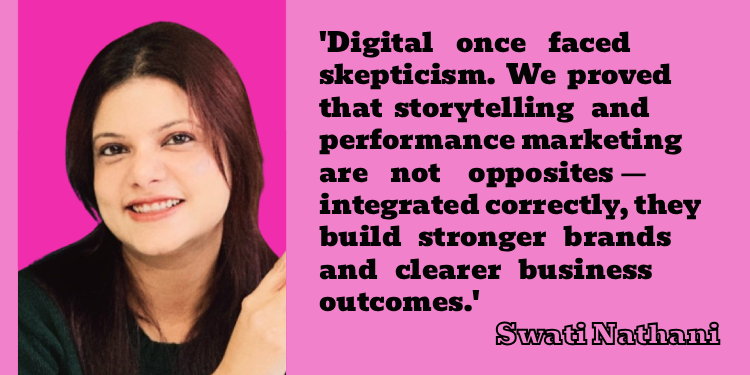
Yes. Digital was not always taken seriously. Budgets were smaller and expectations were often unrealistic.
We had to consistently demonstrate that performance marketing and storytelling are not opposing forces. When integrated properly, they create stronger brands and clearer business outcomes.
Q. What do women bring to the table in leadership roles at agencies?
Women leaders often bring a balance of empathy and accountability. Agencies are relationship-heavy and performance-driven environments, so that combination is valuable.
There is also a strong ability to manage multiple stakeholders simultaneously — clients, teams, partners, and metrics — without losing sight of detail.
Leadership in agencies is not about dominance. It is about steadiness and clarity under pressure.