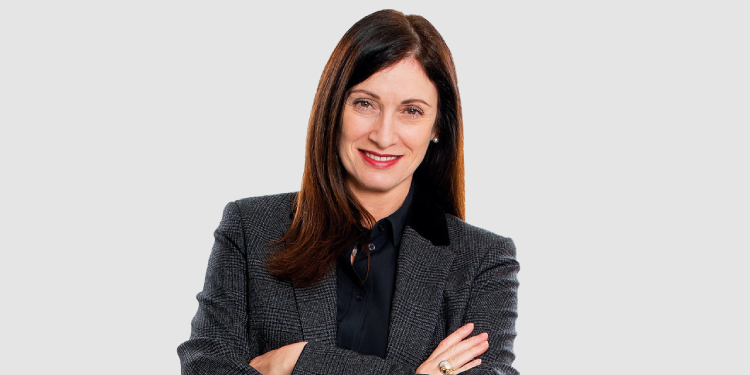
London: WPP chief executive Cindy Rose has outlined a sweeping three-year restructuring that will reposition the advertising giant from a traditional holding group into what she described as a unified, AI-native operating company. Speaking to journalists ahead of WPP’s investor presentation on Thursday, Rose said the plan — dubbed Elevate28 — is intended to simplify the network, accelerate growth, and end years of internal complexity that she suggested diluted culture and collaboration.
The overhaul comes after WPP reported its weakest annual performance since the pandemic, with 2025 revenue less pass-through costs down 5.4% year-on-year to $13.6 billion (£10.1 billion). Shares fell nearly 10% at market open following the results.
From holding structure to integrated model
Rose said WPP would reorganise around four global units — WPP Media, WPP Creative, WPP Production and WPP Enterprise Solutions — all built on the group’s AI platform WPP Open. The shift reflects a deliberate move away from the classic multi-agency holding structure.
“We don’t want to be a holding company any more,” she told reporters. “We’re a single operating company, and our mission is changing — to be a trusted growth partner for our clients in the era of AI.”
She argued the old structure created fragmentation rather than shared identity. “I don’t think as a holding company WPP had a culture,” Rose said, adding that the new model is designed to align teams around client outcomes rather than agency silos.
$676 million savings to fund AI and talent
The strategy targets $676 million (£500 million) in annual cost savings by 2028 through removing duplicate roles and centralising functions such as finance, HR and real estate. Rose declined to detail how the cuts would translate into job losses, but confirmed WPP would streamline overlapping positions.
Headcount has already fallen 8.7% over the past year to 98,655 employees. Rose acknowledged ongoing “transformation fatigue” across the workforce, saying the company aims to complete the bulk of restructuring within 18 months to provide clarity.
Despite uncertainty, she said employee feedback showed “excitement for the future,” noting most savings would be reinvested in high-growth capabilities and specialist talent rather than retained as margin.
Creative unit unifies brands without mergers
A central pillar of the reset is WPP Creative, a new division led by VML global CEO Jon Cook that brings together Ogilvy, VML, AKQA and other creative, PR and design agencies under a common operating model. Rose emphasised the change is organisational rather than structural.
“We are not merging agency brands. We’re not consolidating agency brands. We’re not sunsetting agency brands,” she said, drawing a contrast with the brand consolidations executed under former CEO Mark Read. Instead, agencies will retain identities while operating within a shared system that enables clients to access integrated capabilities.
Rose pointed to WPP’s recent $1.3 billion global media-and-creative win from Kenvue as evidence that collaborative delivery across agencies is resonating with marketers. “We were very intentional about choosing the right resource for the right client at the right time,” she said. “We brought it together, collaborated to solve the client’s problems, and we won it.”
Growth path tied to AI platform
At the centre of Elevate28 is WPP Open, the group’s AI layer intended to connect data, production and creative workflows across all four divisions. Rose said the platform will allow WPP to scale personalisation and automation while preserving human-led creativity — a balance she framed as essential to regaining growth momentum.
She said the simplified structure and AI backbone would enable faster deployment of integrated teams, reduce internal competition and improve margin discipline. “I can see a path back to growth,” Rose said, adding that the transformation would reposition WPP against both consulting firms and scaled digital platforms.
The CEO stressed the plan marks the culmination rather than the start of restructuring. “This is designed to get to the end of the job,” she said, signalling that the company aims to move beyond years of incremental reorganisation toward a stable, unified operating model by 2028.