Wednesday, July 1, 2026
MediaNews4U
  • Exclusive
  • Advertising
  • Media
    • Radio
    • Cable & DTH
    • Print
    • Digital Frontier
    • Gaming Nexus
  • Television
  • OTT
  • Ad-Tech
  • Marketing
  • Campaigns
  • Analysis
  • Opinion
    • Opinion
    • Think Through
    • Prescience 2023
    • Prescience 2024
  • People
  • Events
    • Leader Speak
    • STRAIGHT TALK
    • Gamechangers
    • Print & TV Summit
MediaNews4U
  • Exclusive
  • Advertising
  • Media
    • Radio
    • Cable & DTH
    • Print
    • Digital Frontier
    • Gaming Nexus
  • Television
  • OTT
  • Ad-Tech
  • Marketing
  • Campaigns
  • Analysis
  • Opinion
    • Opinion
    • Think Through
    • Prescience 2023
    • Prescience 2024
  • People
  • Events
    • Leader Speak
    • STRAIGHT TALK
    • Gamechangers
    • Print & TV Summit
MediaNews4U.com
Home Authors Corner

Say goodbye to greenwashing – Welcoming the rise of radical transparency in sustainability marketing

In this article, Shashwat Vatsa, AVP-Brand, Olyv emphasizes that radical transparency—not vague green claims—is now essential in sustainability marketing, urging brands to provide verifiable proof, traceability, and authentic storytelling to build trust.

by Guest Column
June 5, 2025
in Authors Corner
Reading Time: 4 mins read
A A
Shashwat Vatsa
Share Share ShareShare

Greenwashing, the disreputable practice of making unsubstantiated or misleading environmental claims to appear more sustainable than reality warrants, has eroded consumer trust for decades. With environmental concerns intensifying at the turn of the 21st century, consumers have grown increasingly weary of flashy marketing campaigns that scream “ecofriendly” products with little evidence to support such claims. In response to this mounting skepticism, a new paradigm has emerged: radical transparency. This novel approach marks a fundamental shift in how brands communicate their sustainability efforts as they move beyond vague promises and commit themselves to extending verifiable proof and comprehensive disclosure of environmental and social impacts.

Consumer demand for proof

Today’s consumers are more informed, connected, and environmentally conscious than ever before. According to a 2024 Global Consumer Insights Survey, 78% of consumers actively research sustainability claims before making purchases, up from 53% just five years ago. The same study revealed that 67% of respondents had abandoned previously favored brands after discovering misleading environmental claims.

The era of taking corporate sustainability claims at face value is over. Consumers now approach green marketing with healthy skepticism and demand evidence before committing their dollars. This shift has been accelerated by social media, where misleading claims can be publicly challenged and debunked within hours, potentially causing lasting reputational damage to brands caught overstating their environmental credentials.

The role of traceability

Supply chain traceability has emerged as a cornerstone of authentic sustainability communication. Brands pioneering this approach provide customers with unprecedented visibility into how, where, and by whom their products are made, from raw material extraction to final delivery.

Patagonia stands as an early adopter of radical supply chain transparency with its “Footprint Chronicles,” allowing customers to track the journey of their garments across the globe. Similarly, food producer Belcampo revolutionized meat traceability by implementing QR codes that reveal the complete history of their products, from the animal’s diet and living conditions to processing methods and carbon footprint data.

The fashion industry, long criticized for opaque supply chains, has seen remarkable innovation in traceability. Reformation now provides a “RefScale” for each garment, quantifying exact water savings, carbon dioxide emissions, and waste reduction compared to industry standards. These practices transform abstract sustainability commitments into concrete, verifiable information that consumers can use to make informed choices.

Blockchain technology in sustainability

Blockchain technology has revolutionized the verification of sustainability claims by creating immutable, transparent records throughout supply chains. This technology provides irrefutable proof that products meet the environmental standards companies claim.

Coffee giant Starbucks has implemented blockchain in its “Bean to Cup” initiative, allowing customers to trace their coffee’s journey from farm to store. Each transaction in the supply chain is recorded as a block, creating a permanent, unalterable record that confirms fair trade practices and sustainable growing methods. Similarly, diamond company De Beers uses blockchain platform Tracr to verify the ethical sourcing of diamonds, ensuring they are conflict free and mined under humane conditions.

IBM’s Food Trust has partnered with major retailers like Walmart to improve food traceability, substantially reducing investigation time for foodborne illness outbreaks from days to seconds while simultaneously verifying sustainability claims about organic production and reduced chemical use.

Ethical storytelling

While data and verification are crucial, effective sustainability communication also requires authentic storytelling that resonates emotionally with consumers. Ethical storytelling moves beyond polished marketing to honest narratives about sustainability journeys, including challenges, setbacks, and future goals.

Outdoor apparel company Cotopaxi exemplifies this approach by sharing the personal stories of workers who craft their products, highlighting fair labor practices while acknowledging areas for improvement. Their transparent impact reports detail both achievements and shortcomings in meeting sustainability targets.

Cosmetics brand Lush has mastered ethical storytelling by focusing on the people behind their ingredients, from the women’s cooperatives harvesting shea butter in Ghana to regenerative farming communities providing essential oils. These narratives transform abstract sustainability concepts into relatable human experiences that forge emotional connections with consumers.

Building brand loyalty through transparency

Radical transparency builds trust that translates directly into brand loyalty and market advantage. Research from NYU Stern’s Center for Sustainable Business found that products with legitimate sustainability claims grew 5.6 times faster than those without. Moreover, brands committing to transparent practices reported 43% higher customer retention rates than industry averages.

Tony’s Chocolonely transformed the chocolate industry with its mission to eliminate slavery from cocoa supply chains, publicly documenting both progress and persistent challenges. This radical honesty has helped the brand capture significant market share despite premium pricing.

Clothing manufacturer Everlane disrupted retail with its “Radical Transparency” approach, revealing the true costs behind their products, from materials and labor to transportation and markup. By allowing customers to understand exactly what they’re paying for, Everlane created a loyal customer base willing to support fair pricing for sustainable practices.

Conclusion

Though, the death of greenwashing signals the end of deceptive marketing; it also indicates the rise of a more authentic relationship between brands and consumers. Radical transparency, powered by traceability, blockchain verification, and ethical storytelling, has transformed sustainability from a mere marketing buzzword to a fundamental business value that requires continuous practical demonstration.

Forward thinking companies recognize that transparency is the new gold standard for sustainability marketing. As consumers continue to demand proof over promises, brands that embrace radical transparency will find themselves rewarded with trust, loyalty, and sustainable growth in an increasingly conscious marketplace. For businesses still relying on vague claims and glossy sustainability reports, the message is clear; either adapt to the age of radical transparency or risk being left behind.

(Views are personal) 

Tags: greenwashingOlyvShashwat Vatsa

RECENT POSTS

The Third Eye View on Micro-Dramas: Format Right, Business Model Still Burning
Authors Corner

The Third Eye View on Micro-Dramas: Format Right, Business Model Still Burning

June 30, 2026
0

Three months ago, I asked whether India’s micro-drama boom was a structural shift or a context driven spike. The market...

Read moreDetails
Why Brand Memory Matters More Than Market Share
Authors Corner

Why Brand Memory Matters More Than Market Share

June 29, 2026
0

Every marketer tracks market share. Every boardroom celebrates it. Every quarterly review revolves around it. Yet, some of the world's...

Read moreDetails
The Subscription Price War Is Over. Regional OTT Won By Being Closer, Not Cheaper
Authors Corner

The Subscription Price War Is Over. Regional OTT Won By Being Closer, Not Cheaper

June 26, 2026
0

The battlefield has shifted, and most of the industry has not quite caught up to what that actually means. New...

Read moreDetails
The Rise of the AI Recommendation Economy & What It Means for Advertisers
Authors Corner

The Rise of the AI Recommendation Economy & What It Means for Advertisers

June 25, 2026
0

For decades, advertisers have competed for one thing: attention. Every major media platform, from television and print to Facebook, Instagram,...

Read moreDetails
The Glocalisation Playbook for Building a Global Brand with a Strong Local Pulse in India
Authors Corner

The Glocalisation Playbook for Building a Global Brand with a Strong Local Pulse in India

June 24, 2026
0

When people talk about building a global brand in India, the conversation often starts with localisation. How should messaging be...

Read moreDetails
Why Fintech Marketing Needs to Evolve Along with India’s Digital Economy
Authors Corner

Why Fintech Marketing Needs to Evolve Along with India’s Digital Economy

June 23, 2026
0

There is an interesting shift underway in Indian fintech. For years, the industry has focused on building infrastructure, earning regulatory...

Read moreDetails

LATEST NEWS

TV9 Bangla

TV9 Bangla Unveils India’s Biggest Education Expo and Celebrates Academic Excellence Through Uttaran Academic Excellence Honour

June 30, 2026
Louis Philippe

Louis Philippe bets on cultural credibility over celebrity influence in new digital campaign

June 30, 2026

ANALYSIS

Linear TV retains celebrity advertising edge during IPL 19 with 61% share: TAM Sports
Analysis

Linear TV retains celebrity advertising edge during IPL 19 with 61% share: TAM Sports

June 29, 2026
0

Mumbai: India’s IPL advertising landscape continues to evolve as Connected TV (CTV) emerges with distinct celebrity and category preferences, even...

PEOPLE

Securonix appoints Toby Weiss as CEO
People

Securonix appoints Toby Weiss as CEO

June 30, 2026
0

Mumbai: Securonix, Inc., a six-time Leader in the Gartner® Magic Quadrant™ for SIEM, has announced the appointment of Toby Weiss...

MARKETING

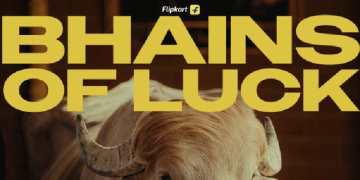
Flipkart turns viral buffalo ‘Don’ into face of new GOAT Sale Campaign
Marketing

Flipkart turns viral buffalo ‘Don’ into face of new GOAT Sale Campaign

June 30, 2026
0

Mumbai: Flipkart has launched a new campaign for its GOAT Sale, introducing an unconventional ambassador to drive attention around its...

Subscribe to Newsletters

ADVERTISING

IAA India to unveil midline study on gender representation in advertising at Voice of Change Roundtable
Advertising

IAA India to unveil midline study on gender representation in advertising at Voice of Change Roundtable

June 30, 2026
0

Mumbai: The India Chapter of the International Advertising Association (IAA), in partnership with knowledge partner UNICEF, will host the IAA...

PRINT

Mathrubhumi
Print

Mathrubhumi marks Reading Day with integrated campaign celebrating reading culture across media platforms

June 19, 2026
0

Kochi: Mathrubhumi has launched an integrated, multi-platform campaign to celebrate Reading Day and Reading Week, reinforcing its longstanding commitment to...

AUTHOR'S CORNER

The Third Eye View on Micro-Dramas: Format Right, Business Model Still Burning
Authors Corner

The Third Eye View on Micro-Dramas: Format Right, Business Model Still Burning

June 30, 2026
0

Three months ago, I asked whether India’s micro-drama boom was a structural shift or a context driven spike. The market...

UPLIFT MEDIANEWS4U DIGITAL PVT LTD
No. 194B , Aram Nagar 2, JP Road,
Versova, Andheri West
Mumbai - 400061

For editorial queries:
[email protected]
[email protected]

For business queries:
Smitha Sapaliga - +91-98337-15455
[email protected]

Recent News

Gandharv Sachdeva to Conclude His Journey with Hybrid AdTech India

Gandharv Sachdeva to Conclude His Journey with Hybrid AdTech India

June 30, 2026
TV9 Bangla

TV9 Bangla Unveils India’s Biggest Education Expo and Celebrates Academic Excellence Through Uttaran Academic Excellence Honour

June 30, 2026
Louis Philippe

Louis Philippe bets on cultural credibility over celebrity influence in new digital campaign

June 30, 2026

Newsletter

Subscribe to Newsletters

Medianews4u.com © 2019 - 2025 All rights reserved.

  • The South Side Story 2023 Download Report
  • Goafest 2023: Day 3
  • Goafest 2023: Day 2
  • Goafest 2023: Day 1
  • Straight Talk Gallery 2022
  • The South Side Story 2022 Download Report
  • Focus 2022
  • Futurescope Conclave Gallery 2022
  • The South Side Story 2021 Download Report
  • FOCUS 2021
  • Exclusive
  • Exclusive
  • Advertising
  • Media
    • Radio
    • Cable & DTH
    • Print
    • Digital Frontier
    • Gaming Nexus
  • Television
  • OTT
  • Ad-Tech
  • Marketing
  • Campaigns
  • Analysis
  • Opinion
    • Opinion
    • Think Through
    • Prescience 2023
    • Prescience 2024
  • People
  • Events
    • Leader Speak
    • STRAIGHT TALK
    • Gamechangers
    • Print & TV Summit

Medianews4u.com © 2019 - 2025 All rights reserved.