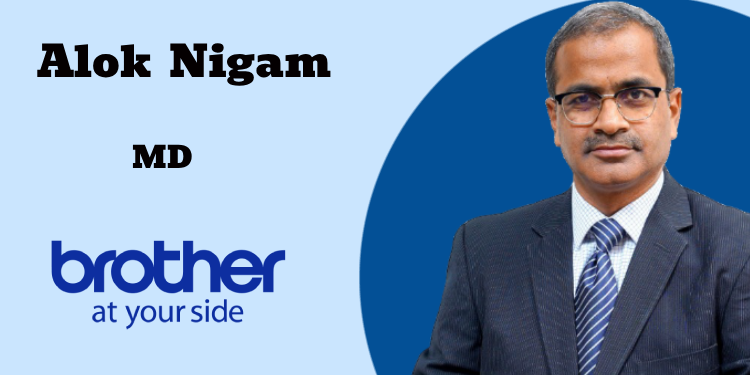
Brother India, a Japanese multinational has a long-standing presence in the Indian market across printers, sewing machines, and label printers.
The brand says that it is currently seeing strong growth in Tier Two and Three cities and aims to capture 25% market share in the printer segment driven by rising demand from schools, small businesses, and local government bodies.
Medianews4u.com caught up with Brother International India MD Alok Nigam
Q. What is Brother India’s game plan to achieve a 25% market share over the next two years?
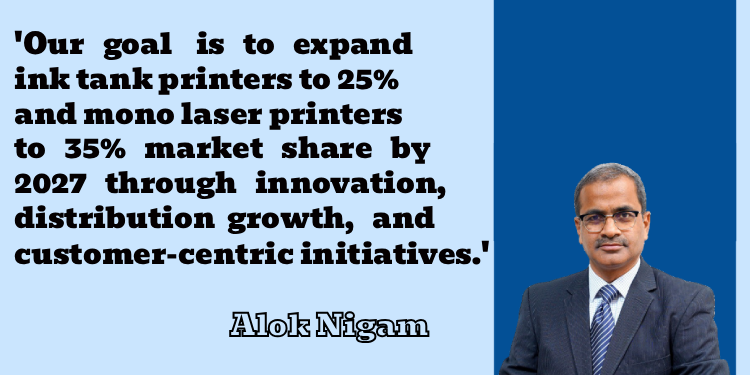
Our focus over the next two to three years is to strengthen our position in the Indian printing market. Currently, we hold around 7–8% market share in ink tank printers and approximately 15% in mono laser printers. Our goal is to grow these segments to 25% and 35% respectively.
We are approaching this through a multi-pronged strategy. First, we are expanding our product portfolio with 17 new models designed to cater to the diverse requirements of Indian customers, ranging from home offices and small businesses to educational institutions and government organisations. Second, we are investing heavily in increasing our presence in Tier Two and Tier Three cities, where we are witnessing strong demand growth.
Third, distribution is a major focus area. We aim to double our dealer network from around 5,000 today to 10,000 by 2027, which will significantly strengthen our market reach.
Alongside these initiatives, we are enhancing our presence on e-commerce and adopting localised marketing campaigns. Through a combination of product innovation, market expansion, and customer-focused initiatives, we are confident about achieving our growth ambitions.
Q. Is the main focus going to rest on schools, small businesses, and local government bodies in Tier Two and Tier Three cities?
Yes, that is where we see the maximum growth potential. Tier Two and Tier Three cities are evolving rapidly, and institutions such as schools, coaching centers, small businesses, and local government bodies are increasingly seeking reliable and cost-effective printing solutions.
Our products are designed with these segments in mind. They are durable, easy to operate, and provide low running costs, which are essential for high-usage environments. Small businesses and government offices particularly appreciate the long-term savings and the reliability our printers offer.
Moreover, we believe that catering to these regions goes beyond just supplying products. We are building a strong ecosystem of dealers, local service centers, and on-ground activations, ensuring that customers in smaller towns receive the same level of service and support as those in metros.
Q. How do product specifications and rugged build quality give Brother an edge in the Indian market?
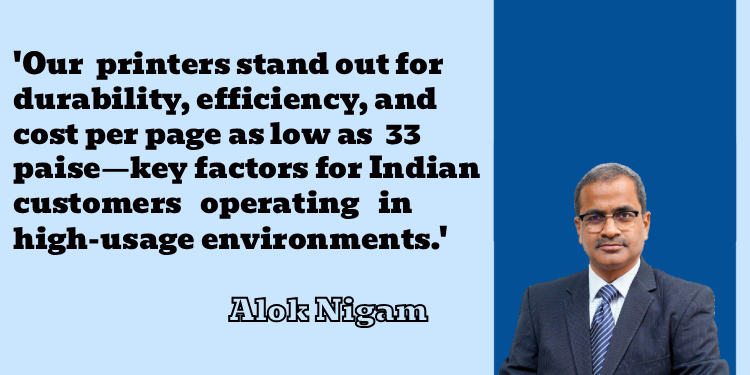
In the Indian market, customers prioritise reliability and the total cost of ownership. Our printers are engineered to deliver on both these fronts. They come with features such as high-speed printing, duplex capabilities, wireless and mobile connectivity, and an extremely low cost per page—some models go as low as 33 paise per page.
Beyond features, what sets us apart is the build quality. Indian customers often operate in high-demand environments where printers are used extensively. Our machines are robust and built to perform consistently under such conditions. This durability helps us address the market’s concerns about frequent maintenance and non-genuine consumables.
By providing reliable, high-performance products at an efficient cost, we have been able to meet the expectations of customers across different sectors in India.
Q. From a marketing perspective, what will be the key priorities and channels of focus?
Our marketing priorities over the next two years are centered around three core pillars: strengthening our dealer network, increasing our on-ground engagement, and enhancing our digital presence.
We are putting significant effort into partner enablement, ensuring our dealers have the right training, tools, and promotional support to effectively represent Brother in their local markets.
On-ground marketing will remain critical, especially in Tier Two and Tier Three cities. Here, our approach is hyper-local, involving city-level activations, product demonstrations, and workshops to build awareness and trust.
Digital and e-commerce are equally important. E-commerce already contributes around 17% to our sales, and we are investing in creating regionally targetted campaigns and video-led content to engage new-age buyers.
Q. What kind of marketing activities and innovations can we expect in the coming months? Will sustainability be part of the messaging?
In the months ahead, our marketing activities will focus on experiential engagement and storytelling. We are organizing partner workshops, hands-on product demonstrations, and educational tie-ups to give potential customers a first-hand experience of our products. Digital campaigns featuring practical use cases and testimonials will complement these initiatives.
Sustainability is an integral part of our approach.. We also promote energy-efficient printing modes and are working to raise awareness about recycling and responsible usage. Our future campaigns will highlight not only the productivity of our printers but also the role Brother is playing in sustainable operations.
Q. Is there scope for more creativity in B2B marketing?
Yes, B2B marketing has evolved significantly, and creativity is at the heart of building stronger engagement with business audiences today. For us, creativity comes in the form of telling sector-specific stories that directly showcase the impact of our solutions.
We are creating campaigns for verticals like education, healthcare, and logistics that illustrate how our printers reduce costs and improve efficiency in these specific environments.
We are also collaborating with SME communities, vocational schools, and government programmes to make our messaging more relatable. Storytelling, case studies, and real-world examples will continue to play a key role in our B2B efforts.
Q. How important is on-ground marketing through retail presence, events, and workshops?
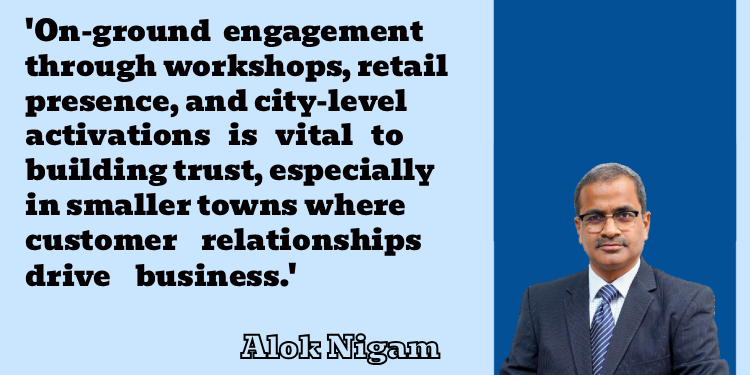
On-ground marketing is extremely important for us, particularly in Tier Two and Tier Three cities where customer trust is built through experience. Our strategy involves a strong retail presence, city-level events, and workshops for schools and small businesses.
These initiatives give potential customers the opportunity to interact with our products, understand their features, and experience the reliability and cost savings first-hand. Such engagements build credibility and often result in faster adoption. They also allow us to connect directly with our customers, which is invaluable in markets where relationships drive business.
Q. What is Brother India’s LinkedIn strategy for B2B thought leadership?
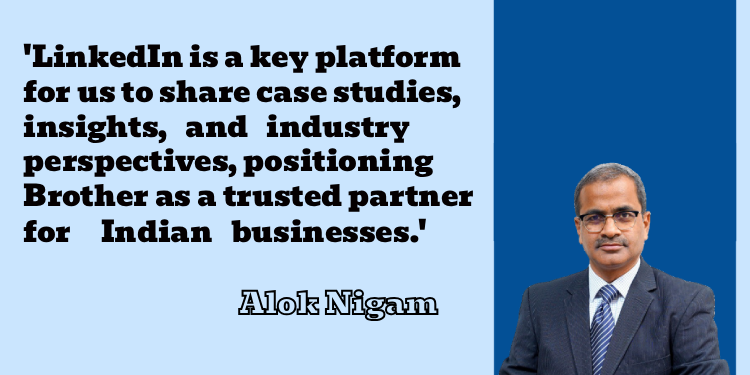
LinkedIn plays a vital role in how we communicate with the business community. Our focus is to share meaningful content, including insights, case studies, and industry perspectives, that reflect our expertise in printing solutions and business efficiency.
We are using the platform to highlight the real-world impact of our products on SMEs, educational institutions, and government programs. By engaging with industry professionals and decision-makers on LinkedIn, we are building stronger relationships and positioning Brother as a trusted partner for Indian businesses.
Q. Is Brother India working with content creators to build awareness via platforms like Reels and YouTube?
Yes, we see great value in short-form and video-led storytelling to reach a broader audience. We are working with content creators, technology reviewers, and SME users to create engaging Reels and YouTube content.
These videos include how-to guides, product demonstrations, and user stories that show our products in real-life scenarios. This approach helps us connect with younger entrepreneurs, small business owners, and first-time enterprise buyers, especially in regional markets where visual content is more impactful than text-heavy promotions.
Q. What role is data analytics playing in growing the distribution and service center network?
Data analytics is central to how we plan our growth and maintain service excellence. We use it to track regional demand, analyze sales performance, and evaluate service response times. This data helps us identify the best regions to expand our dealer base and where new service centers should be established.
With these insights, we can manage inventory efficiently, respond quickly to customer needs, and ensure consistent service quality across the country. Data-driven decision-making allows us to scale in a structured and agile manner, while maintaining the reliability that customers associate with Brother.