Ormax’s Ormax WhatNext is a dedicated vertical designed to partner with promoter-led brands, MSMEs, and founder-driven businesses in unlocking their next stage of growth.
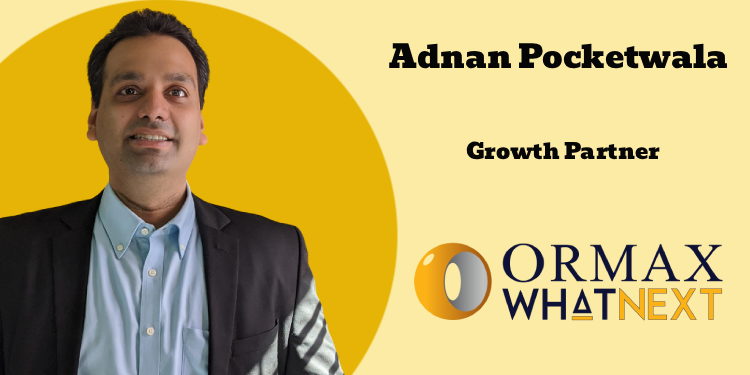
Adnan Pocketwala leads Growth Planning at Ormax, answering the all-important question: What Next. He helps MSMEs and founder-led brands reframe categories and craft meaningful growth—just like when we launched Ormax WhatNext to fill a much-needed gap in the ecosystem, offering founder-aligned strategy and storytelling
Medianews4u.com caught up with Adnan Pocketwala Growth Planning @ Ormax – Answering the all important ‘What Next’.
Q. Ormax WhatNext is focussed on teaming up with MSMEs and founder-led businesses to help them tap into growth opportunities, create forward-thinking brands and navigate the ever-changing market landscape. What does this entail?
At Ormax WhatNext, we have always found that founder and promoter led businesses come with incredible conviction and a deep understanding of the business side of things, but they often need support in telling their story the right way.
Over the years we have worked with promoter driven businesses and MSMEs helping them with every aspect of growth, be it defining what the brand stands for and for whom, identifying the real consumer need they should focus on addressing as well as what their brand should look like.
Moreover, our work also involves helping drive internal culture change and bringing alignment within the key decision makers in terms of what their next stage of growth will need to be built on.
In essence, we work across four critical layers of growth. First, the opportunity, spotting the real gap in the market that’s worth chasing. Second, the product, refining or reimagining the same. Third, the proposition where we work closely to define the role the business should play in people’s lives, beyond just function. And finally, the brand, what it should stand for, what it should look like, and how it should behave and sound.
In short, our work is about marrying the founder’s instinct with market insight, so the business doesn’t just grow, but grows in the right direction.
Q. Today is it even more difficult to create forward-thinking brands with the advent of AI and rapidly shifting technology?
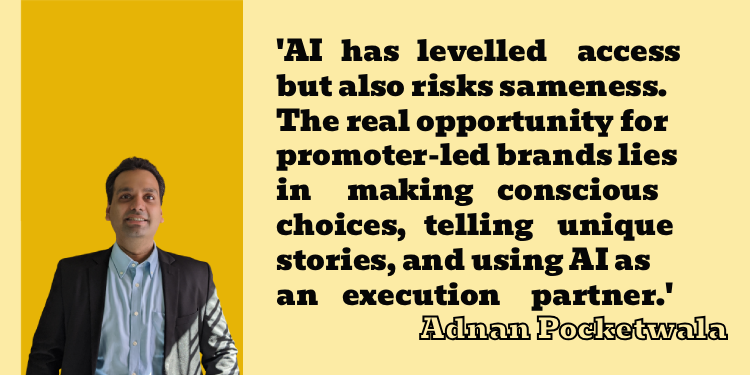
If anything, I would say it has become more critical, not more difficult to craft a forward thinking brand.
AI and technology have levelled the playing field to such a great extent that everyone now has access to the same tools, GPTs that can churn out insights, ad copy, visuals, even campaign strategies.
But, the danger is that when everything starts looking, sounding, and behaving the same, differentiation dies. And that always favours the larger brands disproportionately, who can shout the loudest and the most often. What someone referred to as a Darwinian reality, where its survival of the strongest.
I think for promoter led brands, the real opportunity is to realise the power of making conscious choices and tell their own unique story and then let AI and tech do its magic in terms of execution and fine tuning. Play to its strengths, rather than hand over the thinking.
Q. What is the USP of Ormax WhatNext compared to other brand advisory firms?
I would think our USP lies in two foundational pillars. First, our roots have always been in understanding consumers and categories, which is where we instinctively start each assignment from even today. We don’t walk in with ready-made answers or recycled frameworks.
We always go back to the drawing board and relook at what the data says. We start afresh, never claiming to rely on past expertise and thinking done for someone else. And we do this ourselves, never outsourced, because this thinking is the foundational evidence to build the business and brand on. Hence, the term evidence based consulting.
The second is that we call ourselves a brand practice, because our assignments don’t end with a deck or presentation, in many cases, we become advisors and a part of the team as the brand and business takes shape.
Sometimes that means being guardrails to the thinking done, sometimes it means rolling up our sleeves and helping with everything from website design, photo shoots, briefing agency partners, setting up data systems or even building the first marketing team.
One thing we realise is that many times promoter driven firms and MSMEs lack the marketing muscle which needs to be built over time and hence need active support and handholding in the early stages which is where we step in to bridge the gap.
Q. What role do founder-aligned strategy and storytelling play in penetrating new markets and challenging existing brands?
Starting any new business may be easy, but building a business that lasts we all know is difficult.
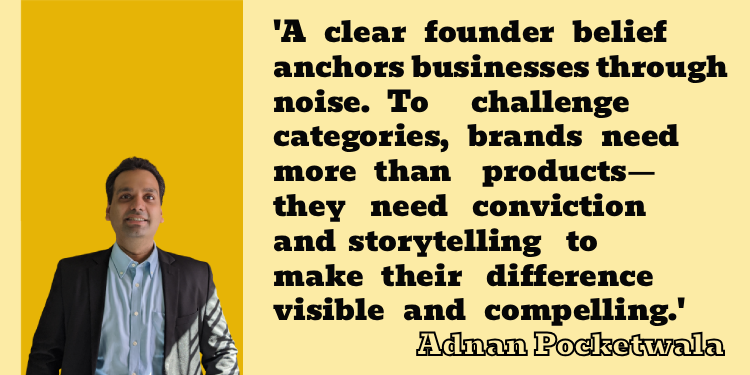
The early years are full of noise, and the only thing that keeps a founder steady is a clear sense of belief in what they set out to build.
Without this alignment the business starts to chase market trends and operates from what the market demands and that is what kills a brand.
To break into a new market or challenge an existing category in essence means one will need to have more than a product ready, one will need to have a point of view which is different, and this is where alignment and story telling both play a critical role. One brings conviction and the other makes that conviction visible and compelling.
Q. What role does a challenger mindset play in helping brands succeed in a competitive market?
To be able to break into and succeed in any competitive market, one has to operate like a challenger and that means you cannot play it safe. You will need to stake a stand and challenge the norm. You will need to disrupt what is seen as a given today to not only be noticed, but bring change.
The fact is that no consumer wakes up in the morning wanting to rethink his purchase decisions, we operate out of routines and the only way to change that is to make a person ask themselves a different question and in turn rethink their choices.
A challenger mindset gives one permission to take a different approach and not copy paste what others in the market are already doing. Else we have all been part of board rooms where one wants to break new ground, but also asks who else has done this before and how do we know it will work.
Q. Why do MSMEs need to think like brands, not just businesses?
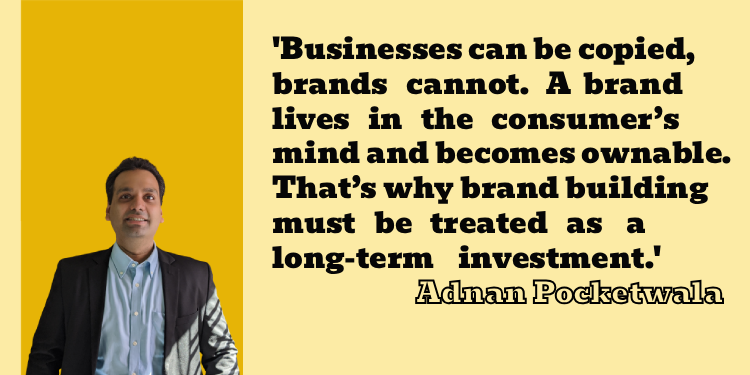
I think everyone needs to think like a brand because the brand is the only thing ownable.
Businesses are not ownable, they can be copied. Brands are ownable, once you own a thought in the consumers mind it becomes yours and only yours. Hence brand building must be seen as an investment into the future.
Q. Right now which are some companies that Ormax WhatNext is working with?
Where, giving names is not possible at this stage we are currently working on a number of interesting assignments including a Pharma contract manufacturer who wants to enter newer categories and needs the world to see what they bring to the table beyond certifications and quality checks.
A fashion house who is seeking a space to rebrand one of its divisions and stop internal cannibalisation. A coffee plantation wanting to launch their own D2C speciality coffee in a crowded and congested category.
A real estate business wanting to launch a luxury store that sells premium products across categories. All in all some very interesting challenges to work on and solve.
Q. One area is to help companies who have hit a speedbump or are stagnating. Is data analytics going to play a crucial role here in helping the concerned company course correct?
Where data analytics is definitely key to any business and helps in growing a business or identifying a potential problem, much of our work actually revolves around understanding people and cultures where more than analytics and data, human understanding and stories play a more important role.
Data may tell us where to play, which category to enter and which to avoid, but it is the why people behave the way they do within a category that helps isolate the white space to build a brand or course correct.
We have seen a brand fail for simple reasons such as consumers not knowing how much to apply and hence either over or under using the product and then dropping out because they felt it was unsuitable to them. In instances like this, data tell us there is a problem, but to solve the problem we need to go back to the consumer and understand where the real issue is hidden.
Q. What is the business model of Ormax WhatNext and is it linked to delivering outcomes?
At Ormax WhatNext we primarily work on two business models, the first is project based where it is a pre-defined outcome that one works towards and delivers.
The other is a mentorship and advisory initiative where we work as partners and internal stakeholders across all facets of building the business and even shaping leadership.
Q. What are the synergies that exist between Ormax WhatNext and the parent Ormax? how will these be leveraged?
Ormax WhatNext is built on the foundational and core skillset of the parent Ormax which started as India’s first specialist consumer understanding firm.
Like I mentioned earlier, even today all our work starts from the consumer and category, and what helps us do better is this ability to truly unearth what will resonate with the end consumer and where possible tensions lie hidden.
Where, OrmaxWhatNext goes beyond, is to support the business and promoter with key decisions downstream which include brand strategy, brand identity, brand architecture, product roadmap, design, communication etc.
Q. Why is indoorism an issue for marketing where everything encourages consumers to just sit at home and where marketers often just let algorithms do the work in terms of decoding consumer behaviour?
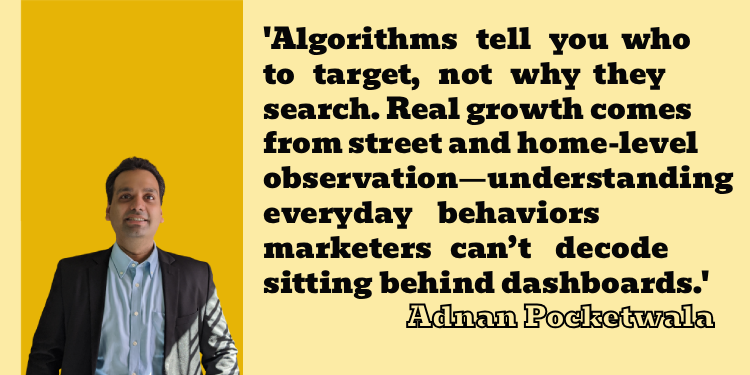
Indoorism is an issue in marketing because unless you have walked the streets, been in homes and seen how the consumers interact and behave with your category, you have a very limited view point of what role you play in the consumers life. Algorithms tell us who to target and when, but why does the person come searching is best understood on the street.
A very small example would be to know why women still use cloth instead of sanitary pads or what women do when they face heavy flow days. These real learnings and observations from homes and meeting people, help brands solve the right problems that eventually drive real growth.
Q. Is the role of the CMO evolving or is there no need for a CMO any longer?
The way I see it, the need for a CMO has never gone away, it’s the understanding of what a CMO should actually do that’s got diluted.
Somewhere along the way, the role became about approving campaigns and digital spends, when in reality the CMO’s real job was always bigger: to define what the brand should stand for, the few associations it should build in the consumer’s mind, and to make the entire business a stakeholder in delivering that brand experience across every touchpoint.
Yes, today the CMO wears multiple hats, brand builder, growth marketer, even data and tech integrator. But the real value of a CMO lies in their ability to see the big picture and orchestrate it.
While other functions operate in silos, the CMO’s role is to bring the whole orchestra together, so that the brand plays in harmony. It’s this ability to unify that makes the role indispensable today.