Marketing sports infrastructure is unlike marketing any other sector, it’s not about aspirational products but about enabling ecosystems where talent can thrive. In a country where cricket stadiums are familiar but certified tracks, football and hockey fields, safe playgrounds, and multipurpose arenas are often overlooked, the marketing challenges and opportunities are immense.
Gallant Sports & Infra is looking to revolutionise India’s sports infrastructure landscape by delivering state-of-the-art, sustainable solutions for institutions, communities, and athletes. With a strong commitment to innovation, inclusivity, and environmental responsibility, Gallant is helping foster a healthier, more active India—one world-class facility at a time
It was launched in 2016 and is based in Gurgaon, Haryana.
MediaNews4U.com caught up with Gallant Sports & Infra marketing head Richa Kapoor
Q1. India does not have a sports culture unlike the US, China and Australia. Does that make the task of marketing sports infrastructure far more challenging compared to those markets?
Yes, it does add complexity. In markets like the US, China, and Australia, sports are deeply ingrained in the cultural fabric families, schools, and communities naturally prioritise sports.
In India, the culture is still largely academic-focussed, and sports are often seen as extracurricular rather than foundational. This means when we market sports infrastructure, we are not just selling a product, but also advocating for a mindset shift. The challenge is greater, but so is the opportunity—to help shape a culture where sports become as integral to everyday life as education.
 Q. Are there learnings from those markets from a marketing perspective that can be applied here?
Absolutely. From the US, we can learn how to create aspirational stories around community facilities. China shows us how government-backed campaigns can accelerate adoption when linked to national goals. Australia’s community-driven sports participation demonstrates the power of grassroots.
At Gallant, we are adapting these learnings: combining aspirational branding, working with government programs like Khelo India, and building accessible grassroots centers like Gallant Play, which make sports part of everyday community life.
Q. Gallant Sports executes around 100 projects annually, with budgets ranging from Rs. 50 lakhs to Rs. 1 crore. How will this be scaled up? How will ‘Khelo India’ and the hope of hosting the 2036 Olympics help in this regard?
Scaling requires three levers policy support, private participation, and grassroots demand. Khelo India is already sensitizing schools and institutions to invest in infrastructure. The possibility of India hosting the 2036 Olympics creates a 10-year window where sports infrastructure will not just be desirable but essential.
We anticipate greater public-private partnerships, CSR-led investments, and a multiplier effect where states compete to upgrade their facilities. Gallant is preparing by building modular, scalable infrastructure models and expanding our project delivery capacity to 200+ projects annually in the next 3 years.
Q. What are some of the major projects that Gallant Sports is currently working on, including initiatives like Gallant Play Centers and tie-ups with bodies such as FIFA and FIH?
Some of our marquee initiatives include:
- Gallant Play Centers: Developing multi-sport community hubs that bring world-class facilities within reach of neighborhoods.
- International Collaborations: Tie-ups with FIFA (football) and FIH (hockey) to deliver certified playing surfaces that meet international standards.
- School & University Projects: Upgrading institutions with Olympic-grade infrastructure, ensuring students have access to facilities at par with global benchmarks.
These projects are about creating ecosystems, not just venues—where talent discovery, community engagement, and sports education converge.
 Q. What progress is Gallant Partners making in penetrating the tier two and three towns and cities?
Tier Two and Three cities are our biggest growth story. Nearly 60% of our new projects are now outside metro cities. We see strong demand from schools and local governments who want to offer opportunities previously limited to urban centers.
Gallant Partners enables local entrepreneurs and institutions to set up sports facilities with our expertise, creating sustainable sports ecosystems in smaller towns.
Q. What are the strategies Gallant Sports uses to market sports infrastructure — a product that delivers value but is often not seen as aspirational?
We focus on three storytelling pivots:
- Performance – showcasing how infrastructure directly impacts athlete success.
- Health & Lifestyle – positioning facilities as investments in well-being and community health.
- Legacy & Pride – linking infrastructure to local identity and national pride.
By turning infrastructure into a narrative of aspiration, we make it more than just a physical asset—it becomes a symbol of progress.
Q. Could you talk about the marketing efforts being done to educate stakeholders (schools, corporates, governments) on why infrastructure is the foundation of performance?
We use case studies, workshops, and pilot projects to demonstrate tangible ROI. For schools, it’s about higher admissions and student development.
For corporates, it’s employee wellness and CSR impact. For governments, it’s talent pipelines and community development. Our communications always anchor back to the idea: “No athlete can perform without the right stage.” Infrastructure is that stage.
Q. Is there an opportunity for corporates to view and invest in sports infrastructure through their CSR initiatives?
Yes, and this is a massive opportunity. CSR can go beyond sponsoring events to creating permanent assets—multi-sport facilities, school grounds, or public play areas.
Such investments leave a lasting legacy, directly impact communities, and align with national goals like Fit India and Khelo India. Gallant has already partnered with corporates to execute CSR-driven sports infrastructure projects, and the interest is steadily growing.
 Q. Are corporates expressing interest in end-to-end sponsorships of multi-sport community facilities?
We are seeing the beginnings of this trend. Forward-thinking companies are exploring sponsorship of entire community centers where branding, engagement, and long-term social impact converge.
Unlike a one-time event sponsorship, this creates a sustained presence in people’s lives, linking the brand with health, youth, and progress. Gallant Play Centers are designed to facilitate exactly this type of engagement.
Q. While cricket stadiums are well-known, awareness of other types of sports infrastructure is limited. How does Gallant Sports tackle the challenge of building visibility for this category?
We tackle it by normalising multi-sport infrastructure in our communication—highlighting football turfs, basketball courts, hockey pitches, and indoor facilities in the same breath as cricket.
We also partner with federations and schools to run tournaments and events that showcase these facilities. The more they are used and celebrated, the more they enter public consciousness.
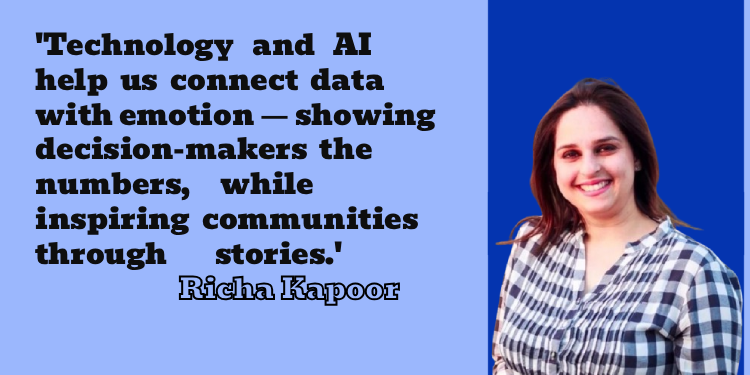
Q. Sports infrastructure is largely B2B/B2G (schools, governments, corporates), but its impact is B2C (communities, kids, athletes). How can technology, including AI, help Gallant Sports communicate effectively with decision-makers while also inspiring end-users?
Technology helps us bridge this dual audience. AI-driven data insights allow us to show decision-makers the measurable outcomes—health improvements, talent identification, community engagement levels.
At the same time, digital platforms, apps, and immersive content allow us to tell inspiring stories directly to parents, children, and communities. This dual communication loop ensures buy-in at the top and adoption at the grassroots.
Q. To what extent is the objective of marketing about reframing infrastructure as an investment in health, talent, and community development, not an expense?
This is the core of our mission. Marketing for us is not about selling grounds or turfs—it’s about shifting perception. Every rupee spent on infrastructure saves multiple rupees on healthcare, builds employability through sports careers, and strengthens community bonds.
We are constantly reframing the narrative: infrastructure is a long-term investment with social, economic, and national dividends.
 Q. What are your views on new sports like Pickleball and Padel that are growing in popularity in neighbourhoods?
These emerging sports are exciting because they lower the barrier to participation—easy to learn, accessible, and social. They are driving community-level adoption, which is exactly what India needs to widen its sporting base.
At Gallant, we are already integrating Pickleball and Padel courts into our projects. These sports are not competitors to traditional games but gateways that bring more people into the culture of active living.